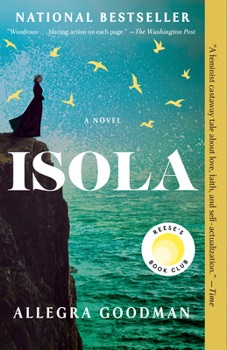
This Cambridge, Mass author provides an historical tale of misadventures, disloyalties, and superstitious beliefs in 1542-45 France, New France and in between.
When the aristocratic wealthy Marguerite de la Roque is orphaned, her guardian forces her to accompany him on a ship to Canada, specifically to an island in the Gulf of St. Lawrence. There, because she has disobeyed his orders, he abandons her, with her husband, her nurse and her infant son on the small deserted island. All but Marguerite die, leaving her to fend for herself, for two years, before being rescued by a Basque fleet and returned to France. There, still denied her heritage, she eventually resorts to establishing and teaching at an all-girls school.
Throughout, all the devout characters pray incessantly, apparently never questioning why their pleas are never answered.
This story is based loosely on true events, but the embellishment is so extreme that it could have been shortened by at least 1/3 without loosing its message.
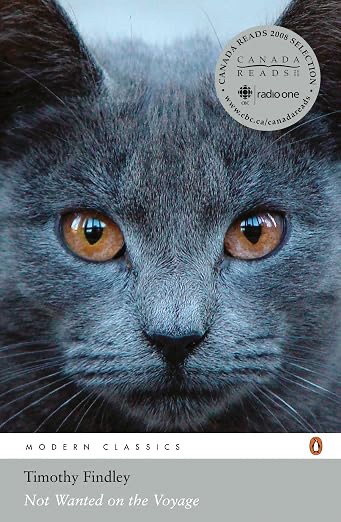
In this delightful fantasy novel the late Canadian novelist and playwright imagines the world with all its quirks and beliefs in the age of 600 year old Noah. Messages are delivered from even older Jaweh to Noyse Noah by strange flying angels.
In the first part of the book, Noyse Noah’s sons, Shem, Ham, and Japeth, and their wives, along with a host of other creatures including a dog named Barky, a cat called Mottyl, other cats named Abraham and Sarah, various Faries, a Unicorn, a lemur named Bip, pink and ruby red doves, a dragon and a groundhog called Whistler, all become worried about the rapid changes they see around them. But even Shem, Ham, and Japeth, Noah’s sons are not privy to the Edict from Jaweh to the strict, taciturn, bossy Noah. All the creatures are seemingly able to communicte in English.
When Jaweh finally appears in a black shuttered carriage, he is described in hilarious terms, with a beard to his waist littered with bits of food and knotted tats, and frail with arthritic hands. At the end of all this mysterious magic realism in Book One, Noah and Jaweh go for a secretive walk and then Jaweh, unbeknownst to Noah, dies.
As Noah builds the ark, the mysteries deepen and the family is suspicious- and increasingly divided. One even smuggles a one-eyed pregnant calico cat on board. (Hence the calico coloured cats that are always female). As the ark is lifted off the mountaintop with its cargo, the life of the animals becomes very difficult but usual enemies work together to make the best of it while an aging and senile Noah tries to maintain control both the identity of one of his son’s child’s paternity and the fate of the passengers, many of whom are burnt on an altar. One faction enlists demons in a plot to commit fraticide.
I usually dislike magic realism and talking animals in novels, but this story is so ingenious and original that I found it quite enjoyable. Findlay’s imagination is beyond compare.
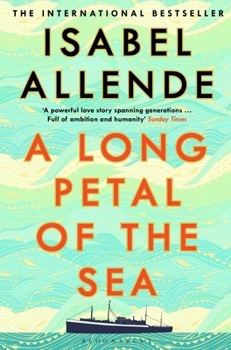
This prolific South American novelist, now exiled to the United States, comes highly recommended by my wife. In this historical novel, she vividly describes the horrors of the 1936-39 Spanish Civil War (an oxymoron) as many thousands of Republicans die and millions flee to France and then to Chile, to escape the horrors of the winning Franco fascists, supported by the Catholic Church.
Later when, with the help of Chilean Nobel laureate poet Pablo Neruda, thousands sail to Chile, the plot becomes exceedingly complex. In 1973, the legitimately elected socialist government of the author’s uncle Salvador Allende, is ousted by the brutal dictatorship of Augusta Pinochet, with Nixon and Kissinger’s aid and encouragement, and that of the Vatican, leading to more slaughter and separation of families. Affairs and lost illegitimate children with unpronounceable names will lead to some confusion if readers are not careful. I suspect that the atrocities of the Pinochet regime are a bit exaggerated but there is no doubt about it’s cruel repression.
There are a lot of affairs but the sex is described discretely. What saved this book from a poor rating from me is the writing style- straightforward and in places almost poetic, with very vivid depiction of some of the characters, amid their turmoil.
No one recommended this book to me, but I was vaguely familiar with the story, and, when browsing in the library, decided to borrow it, on a whim. This New York journalist, advice columnist, and author of several books, accused Donald of Trump of sexual assault and rape, and, many years later, decided to sue him. This book provides the details of her two suits, resulting in convictions and an 85 million dollar award in 2023. To her credit, now aged 81, she has vowed to give most of the award to many of the charities and NGOs that Trump despises.
The court proceedings are truly detailed to the point of boring endless fussing about the wardrobes, physical appearance, and demeanour of all of the participants. This wardrobe-challenged reviewer never could understand or believe that the truth could be swayed so forcefully by such factors. The whole U.S. judicial system is shown to be pedantic to the point of being irrational, obsessed with minute details and definitions.
The money-hungry lawyers for Trump are portrayed as not caring about the truth, hardly a surprise, given who they have agreed to defend.
There is no doubt that the author was greatly traumatized, not only by the rape, but by the accusations and threats to her life that resulted from the public accusation and trial. Her considerable own acknowledged character flaws are fully exposed, but she must be lauded for her bravery in pursuit of justice. We need more people like her.
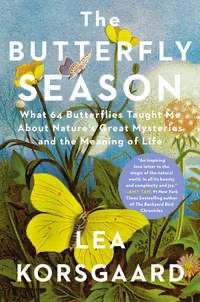
In this nature documentary, a Danish journalist sets out to find at least one of every one of the sixty species of butterfly in her home country, in one year. Along the way she waxes eloquent about the transience of life, metamorphosis, the interconnectedness of all life forms on earth, the destructiveness of Homo sapiens, and the meaning of life. She quotes from various philosophers and religious scholars, and seems to embrace a somewhat nebulous spirituality, bemoaning the myth of continuous human progress and the rapacious destruction of the natural world that inevitably accompanies the dominance of humans over all other life forms.
She joins other butterfly enthusiasts, and invokes the long history of metamorphosis, and butterflies in particular, in the lives and thinking of many scholars and philosophers from Ovid to Freud.
For those readers like me who are geographically challenged, a full page map of Denmark and it’s many islands would have been useful as we follow her around the country, in her searching.
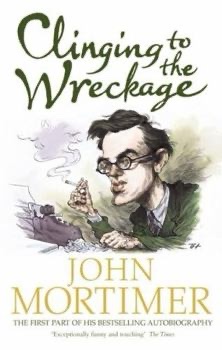
This is one of a few books on our shelves that I had not read, though my wife had, even though the author was one of my favourite humorists. In this autobiography, the late British barrister sees the absurd, dry humour in almost every aspect of life in law practice mainly with divorces and probate in London as well as in his domestic life with his blind father and his demanding mother,-“she who must be obeyed”.
Unfortunately, this autobiography covers only 60 years of his long life and barely mentions his most famous books and TV roles as “Rumpole of the Old Bailey”, the quirky fictional barrister that made him famous and earned him a knighthood. Many other now obscure or forgotten works that have not aged well are featured, as are numerous friends and fellow actors. There is still a bit, but not enough, of the dry humour of Rumpole, along with some serious discussion of the uniqueness of the British legal system and an excellent defence of freedom of the press as it relates to obscenity laws; that now seems quaint.
One memorable quote: “… the great advantage of an English public education is that no subsequent form of captivity can hold any particular terror for you.”
There is really precious little about his private life, including two divorces multiple affairs, and an illegitimate son.
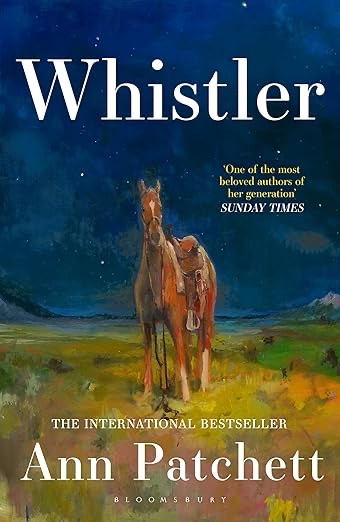
This American novelist has written several books, among which I quite enjoyed The Dutch House, but less so Tom Lake. This is her latest, set mostly in New York and Massachusetts in the last half of the 20th century.
Two semi-closeted prominent gay men are married to straight women, one briefly, the other seemingly forever. One is portrayed as a likeable caring curious philosopher/editor. A car accident in which the child of one spouse from a previous marriage narrowly escapes death is used as an excuse for divorce, but it seems divorce and marital infidelity is everywhere in this high society.
The book attempts to become philosophical, particularly about the meaning of death. But much of it seems to me to be banal and ethereal, particularly as characters speak to the recently deceased to supposedly help them to escape bardo, something vaguely equivalent to purgatory.
One character chooses to be buried in a ecologically friendly rapidly decomposing mushroom casket. Such caskets actually exist and appeal to me.
The connection to the fabled fictitious rescue horse Whistler seems contrived.
This book has received wide praise by reviewers, but I found it tedious, wordy and less than memorable.
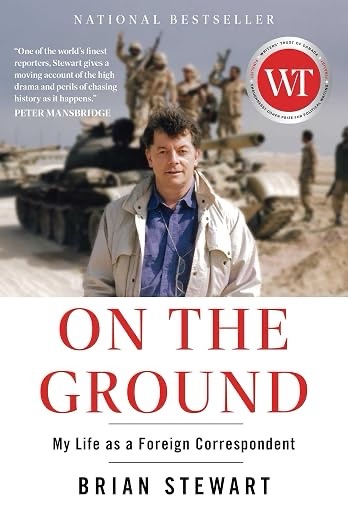
This 84 year old well-known retired Canadian foreign correspondent provides an insider’s perspective of world events in this compelling autobiography. The first chapter is morbidly depressing as he covers the 84-85 devastating famine in northern Ethiopia, killing millions, but becomes somewhat uplifting as he shames the rich world into action with his coverage.
Starting out as a newspaper journalist, he morphed into one of CBC’s, and briefly, NBC’s foremost TV foreign correspondents, covering crises, wars, famines, and genocides in five continents in the late 60s to 2000, mostly in the eighties and nineties. He seemed to be attracted to war zones and took great risks to get the behind-the -scenes stories, resulting in several close calls and leading to frightening flashbacks and what was diagnosed by a psychiatrist as a conversion reaction but also must have elements of PTSD.
Interviews with such people as Margaret Thatcher, Henry Kissinger, and Nelson Mandela provide rich context. His many friends and coworkers included the late Barbara Frum, Mike Duffy, Tom Brokaw, Jean Drapeau, Joe Schlesinger, and Lord Conrad Black. Even when Black’s political views moved to the right to support Trump, while the author’s moved leftward, they remain lifelong friends.
I greatly admire the dedicated media folk such as the author who risk their lives to provide meaningful insight into a chaotic world. This book highlights the critical role of independent media.
One interesting quote, perhaps not the best, but it struck me: “ It shook me again how easy it is to step over a moral line in war, when the deadly becomes routine.”
This book is a must-read lesson in 20th century history. I may get it on to our book club’s list.
This documentary brought back many fond memories, and some not so fond, of my childhood.
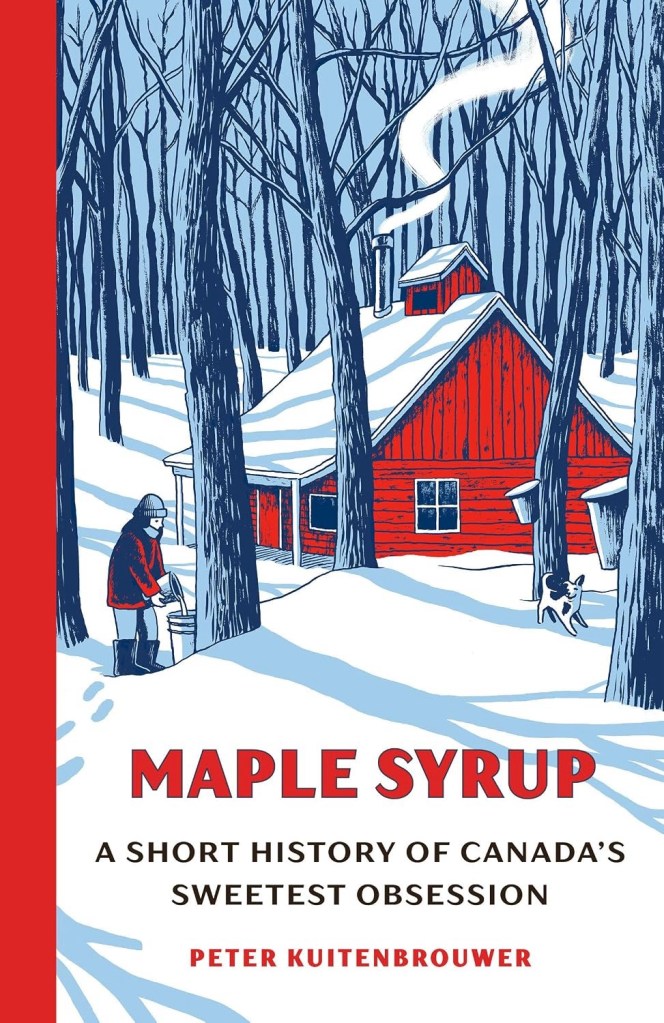
The author, a small league maple syrup producer from Toronto and Madoc, Ontario chronicles the fraught history of producing maple syrup and maple sugar from the earliest records of First Nations using entirely wooden tools to the modern huge industry using suction lines and reverse osmosis. Along the way there have been countless legal and ethical battles, mostly in Quebec, which produces more of the syrup than anywhere else, much of it from tapping trees on Crown Land and on ZECs (Zone Exploitation Contrôle) leased from the Quebec government. The industry in Quebec is mired in controversy with large cartels dictating prices and monitoring operations. One sophisticated heist in 2012 of over half a million gallons of syrup from the strategic reserve was the largest theft in Canadian history.
With a short season of highly variable suitable weather of at most 2 months, the undertaking is at best a risky investment. When the sap is running, it can also be labor intensive with 24/6 work. (On Sundays, even if the sap spilled over the full buckets, many producers refused to work, my father included.
My experience as a preteen was slogging in deep snow to drain buckets into pails and take the sap to a 500 gallon tank on a horse-drawn sleigh to be delivered to a bigger tank by the sugar shack containing the Grimm and Sons Co. long evaporator, fuelled by wood. My father tapped about 800 trees. On a good year that produced about 200 gallons of syrup from 40 times as much sap. He sold it to various town folk. The visits to the sugar shack by pupils from the nearby one room schoolhouse was an annual highlight. In my teens, I helped construct a new sugar shack on the edge of the forest, no longer used.
There is now constant conflict with the logging industry, but my father, with an innate sense of sustainability, only cut down old unproductive trees and used the wood to heat the evaporator, the house, and some nearby one-room schoolhouses.
There is a 1906 law prohibiting mixing of maple syrup with cane sugar, but last week we bought some “maple flavoured” syrup at the Camp Voyager shop.
There are some limitations to this documentary. Lanark county is described as east of Ottawa in one place and (correctly) as west of it in another. Nowhere is there discussion of what chemical compounds in the syrup give it the distinctive aroma, taste and colour, getting darker later in the season. 0ver 98 % of the solid material is sucrose, just like cane sugar, but one would think that in the age of mass spectroscopy, the other compounds should have been identified by now. There is no discussion of taps per tree, as some overzealous producers use several on large trees, perhaps compromising their health and longevity.
Overall, a very informative book.
4.5/5
Thanks, Vera
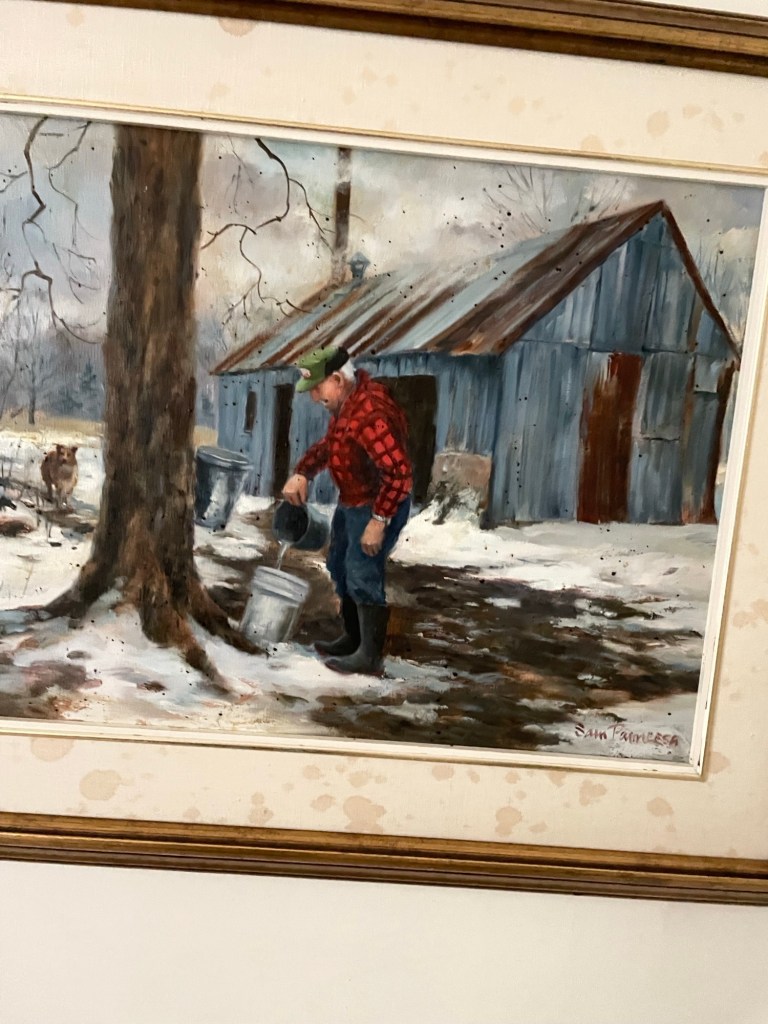
A painting of my father with his dog Ginger, gathering sap near the sugar shack.
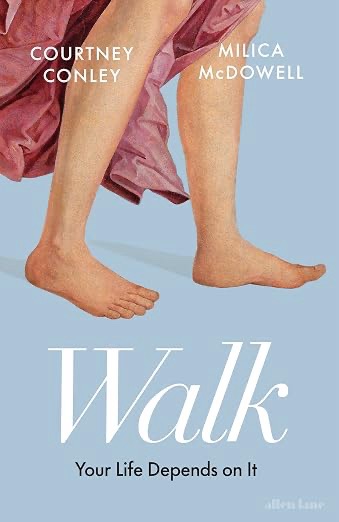
When I realized that the authors of this book were practising chiropractors, my physician bias immediately made me sceptical about its message, expecting snake oil. I soon realized that there was more to it than meets the eye. The first chapter explains the vital signs in language simplistic enough for an average Grade five student to understand and makes endless claims about the health benefits of walking that conflates correlation to causation. Perhaps patients harbouring unrecognized cancers or vascular diseases walk less than their peers because of that rather than the less walking causing the cancer or vascular disease.
The authors never miss a chance to disagree with mainstream medicine advice and argue for the exact opposite approach to many foot, knee, hip and lower back injuries or pains, but are often very convincing in their recommendations. But this oft repeated smug self-congratulatory writing becomes a bit annoying for this retired physician.
The chapter on choosing shoes is loaded wth sage advice like choosing thin soles and low heels to let your foot muscles do the work of walking, and using the foam insert in most store shoes to match your foot size by standing on it.
The many recommended exercises include such details as toe yoga which now makes sense to me and strength exercises and rucking. They have ironically convinced me to vary and reduce my gym routine of one hour every other day flat on the treadmill at four kpm with holding the heart rate bars, to variable speeds and variable inclines with hands free and perhaps even some slow backward walking for less time and less distance. I already do a variety of other strength and balance exercises and over the last year have averaged over 12,000 steps per day but probably not very efficiently.
This book about exercise physiology, much as I hate to admit it, was very useful to me.
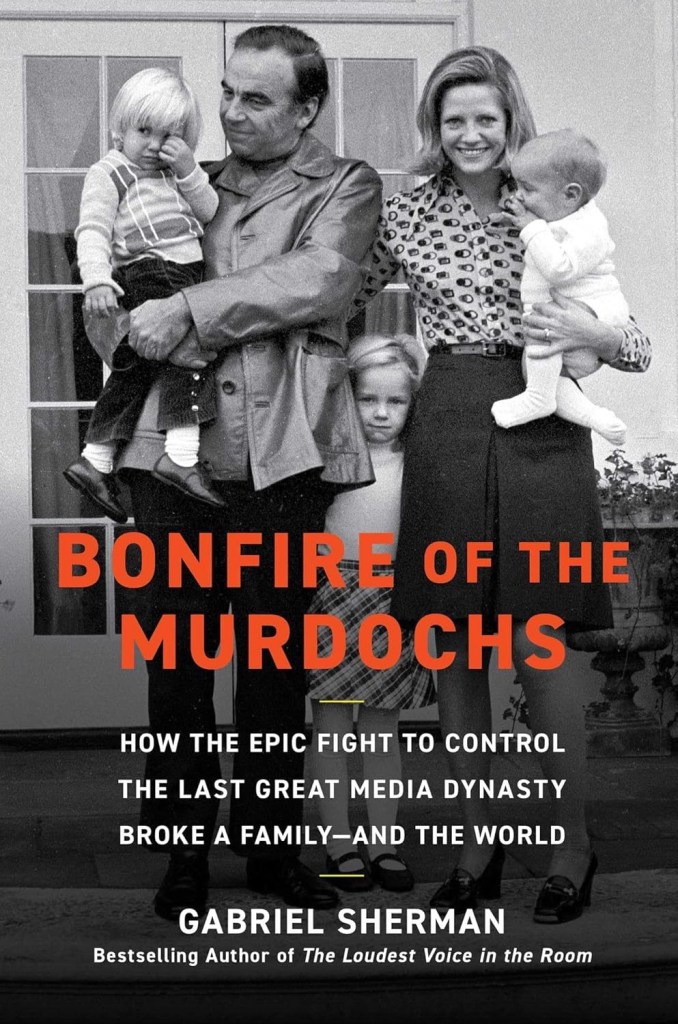
This documentary of the long history of the Murdock family is a bit frightening.
Most readers will be aware of the existence of the powerful conservative multimedia mogul Rupert Murdock, and perhaps some of the dysfunctional family dynamics. But fewer will know of the extent to which Rupert has been willing to bend the truth and blatently lie both to friends and family and in his media outlets, to maintain his billion dollar lifestyle and influence. At age 94, he maintains control of media outlets on three continents, and has alienated most of his family and his five wives, by sly legal manoeuvres to ensure that his son, Lachlan who shares most closely his extreme right-wing views will be able to continue the influence- peddling via editorials and TV programs, without any regard for truth. « The truth be damned; give them what they want to hear. »
A sad tale of a cold callous totally amoral man, but, unfortunately, one with vast power and influence. Remind you of anyone else?
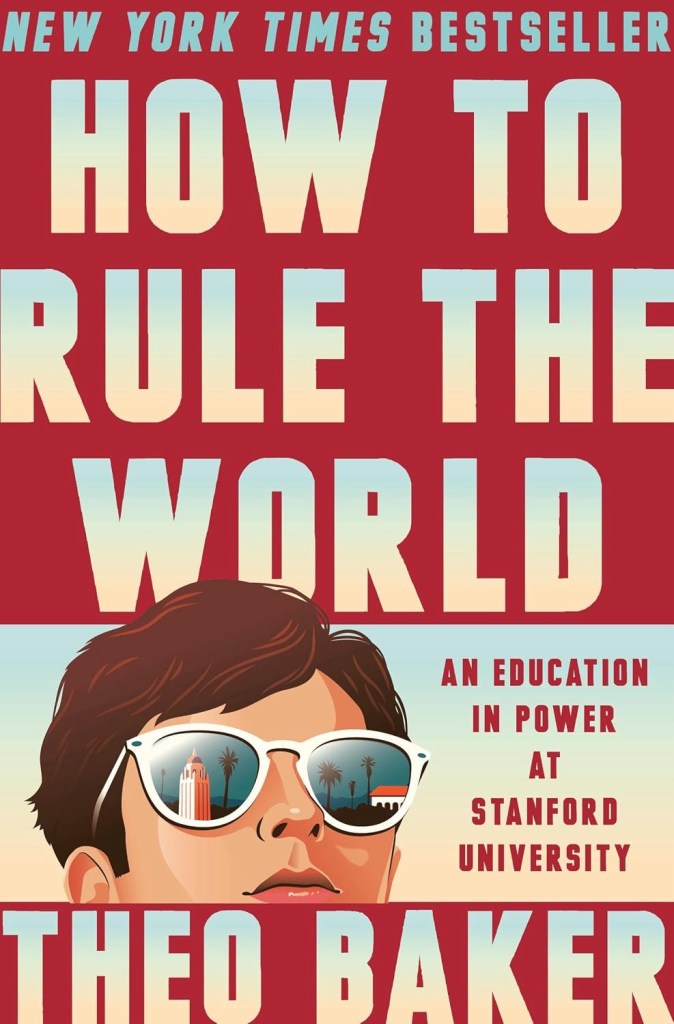
The author of this semi autobiographical book, a precocious 17 year old self-described nerd, was an undergraduate at Stanford when he wrote this true tale about the rarified life there and the love-hate relationship between Stanford and the adjacent Silicon Valley. When he found what appeared to be deceptive or even fraudulent data in the president of Stanford’s published scientific research, the explosive accusations lead to campus wide controversy, and eventually to the president’s ouster.
What the author calls Stanford within Stanford consists of restrictive rules about student behavior, and a focus on wealth and power with students and faculty alike starting up billion dollar companies with vague goals and luring in Venture Capitalist companies.
Much of this story relates to the fraudulent or doctored scientific studies published by prominent authors with inadequate oversight, and brutal academic politics within the university community. I can certainly relate to this. The findings of my very first laboratory research, when submitted for publication in manuscript form were sent to the author of a widely cited paper that I directly refuted, for peer review. His paper must have been doctored or even fraudulent, but had lead to a universally accepted theory for ten years, before being debunked.
The author graduated from Stanford in 2026, and is certainly someone to watch.
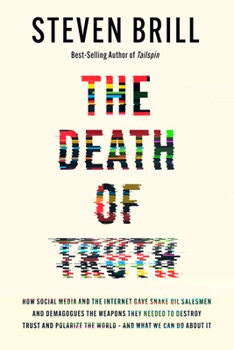
This American journalist and founder of NewsGuard provides a frightening picture of the development of all-pervasive internet companies intent on maximizing followers without regard for the truth of what they are following. He relates this in part to an obscure U.S. amendment to a law in 1996 that left the policing of content largely to the companies themselves. The other major factor cited is the multibillion dollar programmatic advertising industry that results in ads being shown on line indiscriminately, sometimes with conflicting content.
The problems with fake news, conspiracy theories and blatent lies being taken seriously by ordinary folk is not confined to the U.S. as documented by dozens of examples of unidentified Russian, Iranian and Chinese trolls promoting snake oil cures, verifiable lies, and interfering with elections, around the world with outrageous fake news together with impressively doctored and convincing photographs and videos.
AI amplifies the problems as these unthinking powerful programs are never able to discriminate between truth and lies. But as he outlines in the 21 pages of suggestions to improve the online content of news, these same AI systems at least are not subject to the same First Amendment law protection of free speech.
That short chapter on how to minimize the impact of fake news, and blatent lies on the internet was written before Trump won the 2024 election (with Russia’s help) and now seems risibly naive, but includes some useful suggestions, if only they could be implemented in the U.S. But they would do nothing to stop other rogues.
A very depressing but informative book, well written and seemingly neutral politically.
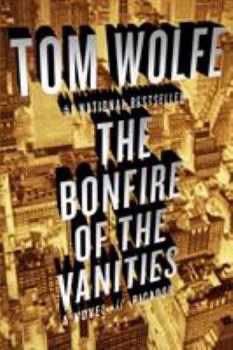
In this thriller, the late New Yorker portrays his home town as one deeply divided by race, corruption, and self-serving ultra rich Wall street investment bankers and stock market traders. No one escapes his scorn, except for one black youth in the slums of the South Bronx who suffers apparently irreversible brain damage from a hit and run car accident.
That accident is central to the story as it involves one of those Park Avenue investment bankers and his secret lover.
The coverage stokes community outrage, enhanced by dishonest sensationalist print press and TV overage, black anger, and a dishonest clergyman and by equally unscrupulous lawyers for both the prosecution and the defence.
Set in the 80´s the overall picture of New York society is certainly not flattering and British immigrants bemoan the crudity of the Irish, Jewish, and Italian natives. When the bond trader tries to explain his work to his six year old, it’s meaninglessness becomes laughable.
There are problems with this narrative. I doubt that any « subdural concusssion », repeatedly mentioned, exists let alone causes permanent coma, and if it were a subdural hematoma it would have been treated surgically.
I fortunately have little experience with courtroom proceedings nor do I read many John Grisham or Michael Creighton novels, but it seems to me that no judge would ever tolerate, much less use, the very obscene language or the interruptions and shouting here portrayed
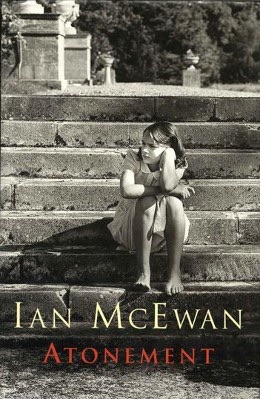
After reading What We Can See, I didn’t relish another McEwan novel, but had nothing more enticing available at the OPL, and Vera insisted that this was his best.
The complex plot includes a false accusation of rape and a prison sentence, the dramatic rescue of soldiers at Dunkirk, and several attempts of the young girl who accused the man of rape to correct her testimony, the last as she is suffering from vascular dementia as an old woman.
The narrator of an audiobook has a powefull influence on it’s degree of enjoyment. In this case, the staccato high pitched rapid-fire heavily-accented voice varying between inaudible whispers and shill shouts had the effect on me of inducing a losing battle with my eyelids, that kept wanting to close.
I think I would have enjoyed this book far more as an physical book or an ebook.
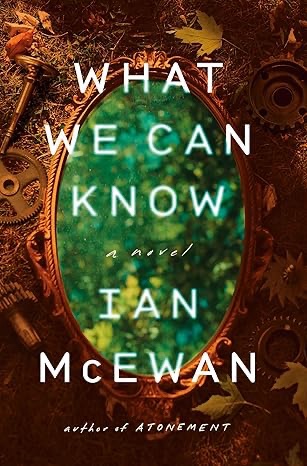
This the fourth of this British novelist’s books that I have read and not his best in my opinion. Certain themes seem to dominate all of these books, especially poetry and problematic sexual trysts.
This one is divided into two parts. The longer Part One in twenty-one chapters is set mostly in 2121 , where an adored long poem by the famous but fictional Francis Blundy called Corona for Vivien, dedicated to his wife is sought by academics and is said to be « the most precious document in the world ». Most of the documentation is of what has happened to the world in the preceding 100 years, including an Inundation, several nuclear wars, and a takeover of America by Nigeria. The population has decreased to four billion. Britain has become a series of islands. AI has become a national resource with limited access. One theory of the missing document is that somehow the fossil fuel industry paid for and destroyed the only copy because of it’s content. But the stress of caring for a demented husband has not dissapeared and is described in exquisite detail.
Part 2 with no paragraph breaks is set in the present time and narrated by Vivien, as she further expands on caring for her demented husband (not Francis). She is obsessed with sex and documents that the adored Francis is actually a self-centered sexual addict and criminal willing to do anything to satisfy his desires. Both characters seem to regard marriage vows as mere suggestions.
The whole premise of this novel is weak and the result is a dissapppointing dystopian futuristic story.
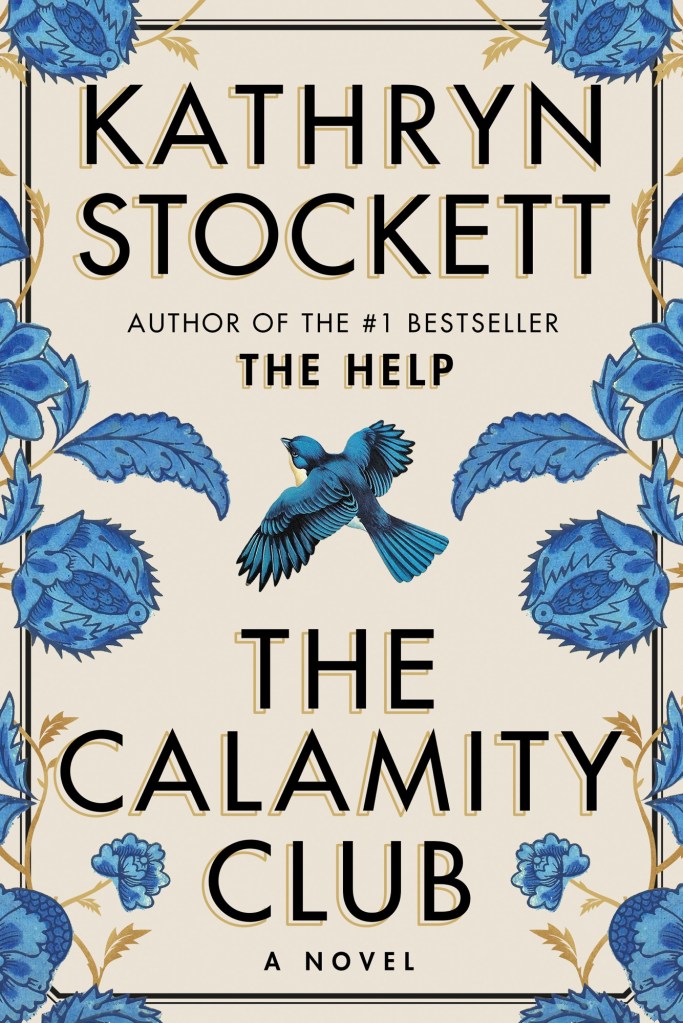
This Jackson Mississippi author of The Help is back with a very new massive tome set in Oxford Miss. in the deepest part of the Depression i.e. 1933. Extreme poverty, racism, misogyny, religious fanaticism and hypocrisy, mental anguish, alcoholism, family separation, eugenics, unemployment -this novel has all of that and much more.
The author switches seamlessly from writing from the viewpoint of an adult to the limited world view of a bright but charming persecuted and simple11 year old uneducated orphan, apparently, abandoned by her single mother, and confined to a cruel religious nut’s orphanage.
The plot is very complex with a host of characters but they are generally not hard to keep straight.There are many suprise twists almost all unpredictable but realistic. The title comes from a secret temporary brothel run by desperate women out of the house of a temporarily absent high society lady, unbeknownst to her.
Ole Miss University, the alma mater for my daughter’s master degree figures prominently, so she may wish to comment, but I really, really enjoyed this book and learned a lot about the deeply flawed past culture of the old South.
This late scientist tries to make sense of the supposedly unique human characteristic of linguistics. He discusses the roles of Charles Darwin and Alfred Russell Wallace at length in a way that flatters the former. Then he is on to the life of the rogue Noam Chomski with his various theories of linguistics including his insistence on recurrsion, then it’s denial.
I did not understand a lot of the discussion, but it seems to me that there is something self-limiting about using words to try to understand the science of using words. And we are definitely not alone in linguistics, although we seem to be less able to understand the languages of some animals than they do of ours. “Sit.” “Lie down.”
Economics is traditionally called The Dismal Science, but I think the term should be reserved for linguistics- or perhaps for nutrition.
The best thing about this audiobook is its brevity.
This London, England teacher of creative writing wrote this novel as a former basketball star and white shoe lawyer. Twelve years after his wife has had an affair and his children have become adults, he decides tentatively to leave her and goes on a long uncharted car trip to Las Vegas and Los Angeles with no definite plans for his future.
Everything about his life is tentative, including his vague plans to write a story about crossing America and playing pickup basketball as he does so, and meeting up with old friends, and former lovers.
The writing is set in modern times and mostly narrated in short sentences in the first person singular. He is self-absorbed and describes many mundane shallow everyday life events. There is nothing approaching any deep overriding philosophy. There is little mention of any country other than the U.S.A.
The medical problems he encounters near the end of the book are so rare, but precise, that I doubt anyone who has not experienced them could have dreamed them up, but any doctor who still does physical examinations should be able to diagnose it easily. Apparently few do. But some of the hospital experiences seem unrealistic. Is this at least in part autobiography?
An Arizonan adventurer outlines his experiences in hiking the length of the Grand Canyon and the multiple hazards that inevitably entails. The title subtitle is misleading in that the “spectacular misadventure” should be pluralized.
The history of the small long-persecuted Havasupai and larger Hualapai native tribes is interesting, but somewhat peripheral to the story, although the latter’s air-tourism of the canyon is difficult to justify.
In only one way can I relate to these multiple stories of misadventures. I have visited the Grand Canyon and can appreciate why people become addicted to the views- its beauty can never be adequately described in either words or pictures. About 14 years ago in late winter or early spring my daughter and I hiked down the Bright Angel Trail about half way to the canyon floor. When she slipped on hidden ice under red dust, and fell, she fortunately fell uninjured to the right as to the left would have been a 2000 foot drop. At that point we turned around – I found the climb up easier than the descent. She is much fitter and athletic than I am and has done several hikes there, including the Rim-to -Rim hike.
The writing is chronologically straightforward mostly first person singular, but also wordy. It could easily have been trimmed to 300 pages if an editor or publisher had insisted. The Epilogue adds nothing to the story.