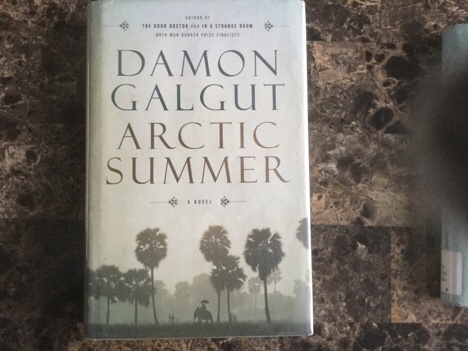
This book by the Cape Town writer is called a novel, but thoroughly blurs the distinction between fiction and biography, relating as it does to the life, travels, and writings of Edward Morgan Forster. It could, perhaps more accurately, be described as an embellished biography although there are several older extant biographies of E.M. Forster. The title allegedly was considered by Forster for an novel he was planning.
It is clear that E.M.Forster led a troubled life, related in large part to his secret homosexuality at a time when openly gay relationships were rare and despised. Forster never acknowledged his sexual orientation to his family although he had both casual and deeply loving relationships with several men, at least two of whom were married with children, and one was an ex-Muslim. He, or at least the character portrayed in this ‘novel’, seems to have had a very wide ranging emotional scale ranging from deepest despair to sublime elation, combined with
profound self-doubt and constant introspection. Is the ability to experience emotions on a very broad scale a trait that is more common in homosexuals?
The detailed description of sexual encounters in many novels generally disappoint me. Call me a prude, but I don’t think that graphic descriptions of deployment of a wide variety of combinations of appendices and orifices in pursuit of thills is necessary or contributes much to the literary value of novels generally. I would rather those combinations whether heterosexual or homosexual be left to my imagination than be described in great detail as occurs here. Younger readers may well disagree. But there is a very important and under-appreciated vast difference between yielding to hormonally-driven lustful momentary urges and the far more complex interplay between sexual activities and what is called love, and that distinction is made very clear in this account. The protagonist was capable of both activities, including sadomachoism, but certainly never confused them, and the depiction of the strong emotional bonds between men in this book-those bonds that have little to do with genitalia- rival those of the great romance novelsj
A couple of good quotes
“He had learned to distrust purity- or the idea of purity, rather because the real thing didn’t exist. Everybody was by now a blend; history was a confusion; people were hybrids.”
“A failure to decide is a sort of decision.”
This book will be greatly enjoyed by anyone in a sexual minority, and many straight people as well. My only real criticism is the overemphasis on sex generally and the unnecessarily detailed description of the mechanics of copulation. For some readers, that may be its big attraction.

 The Passionate Reader