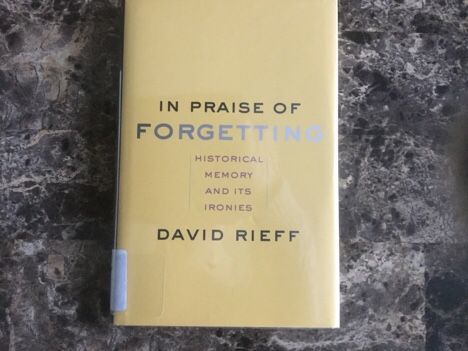
Convoluted, dense, depressing, difficult, disjointed, dismal, ephemeral, erudite, gloomy-
these are just a few of the adjectives from the first half of the alphabet that came to mind as I read this short but weighty book. Add ‘opaque’.
With wide-ranging quotes from philosophers, historians, politicians, writers and social scientists there is no doubt that Rieff, the son of Susan Sontag, is a knowledgeable deep thinker. But either his ability to put his thoughts and arguments into plain easily understood language or my comprehension is deficient. He seems to assume that all readers are familiar with the arguments and counterarguments of the often obscure (to me at least) people he quotes.
The only quote I chose (below) is one of the more easily understood sentences and may be the best summary of the thesis of the whole book. But why use short words and simple sentences when long words and convoluted sentences can convey the ideas almost as well?
“…far too often collective historic memory as understood and deployed by communities, peoples, and nations- which again is always selective, more often than not self-serving and historically anything but unimpeachable- has lead to war rather than peace, rancour and resentment (which increasingly seems to be the defining emotion of our age) rather than reconciliation , and to the determination to exact revenge rather than commit to the hard work of forgiveness.”
Even though I accept that its central thesis, that it is often better in the context of historical wrongs for individuals, societies, and nations to forget than to remember may be valid, I cannot recommend this book to anyone. I conveniently have forgotten where I saw or heard the review that induced me to get it from the library.

 The Passionate Reader