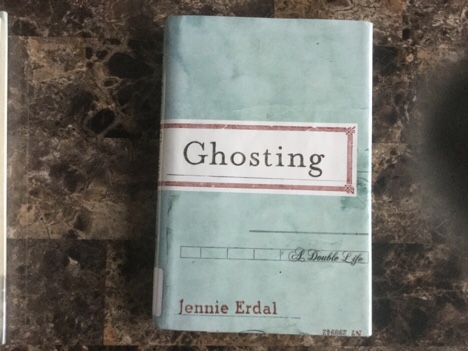
“Autobiography is unreliable. A lot what we remember is designed to shield us from painful truths.” There is no recognition of the irony in this statement in this autobiography of this Scottish polyglot writer. Educated in languages and classics, she fell into a job as a ghostwriter for a rich, flamboyant, egotistical, tyrannical, obsessive compulsive London publisher whom she names Tiger. She never reveals his real name nor the publishing house he owned, probably because he is still alive at age 89, so I will not either, although those details can be readily found. This is Erdal’s first book under her own name, although she ghostwrote several books that were published under Tiger’s real name, along with many newspaper articles, book reviews, and short biographies. Tiger had access to many members of British high society, spent lavishly and was an uncompromising control freak who could make the lives of his employees, mostly young beautiful women, pure hell.
Much of the writing is consumed with what it means to be a writer, the love-hate relationship between the ghostwriter and the putative author, and the construction of fictions, both in writing and in memories. The discussion of the almost infinite ways to relate sexual encounters in works of fiction is superb and nuanced. Many of the disagreements between the female twice married ghostwriter and the married male putative author relate to this difficult area. Should it be explicit, mechanical and pornographic or more subtle, leaving details to the imagination? I may be called prudish, but I prefer the latter, especially if the book is to be discussed or read in mixed polite company. There is no suggestion that their relationship was in any way sexual, although they spent weeks together away from their respective spouses, and often swam together in the pool at his isolated French mansion, au natural. Tiger’s wife is only mentioned tangentially once in the whole book, attending a high society party. Perhaps this is due to his non-British societal misogynist background.
There are hilarious recollections of Erdal’s early childhood in a strict parochial Scottish Presbyterian family, and her gradual discovery of the outside world including that of sex. And there are eternal and insightful reflections on the meaning of loss- of a parent, a loved one, a marriage, even a favourite dog.
A great quote on self presentation and self image: “We all wear masks; it’s just that some masks are worn so tightly that they begin to consume the face behind them.”
I enjoyed this book, as will anyone who is even peripherally involved in the world of books and publishing.
Thanks to fellow blogger Simon Thomas (Stuck In A Book).

 The Passionate Reader