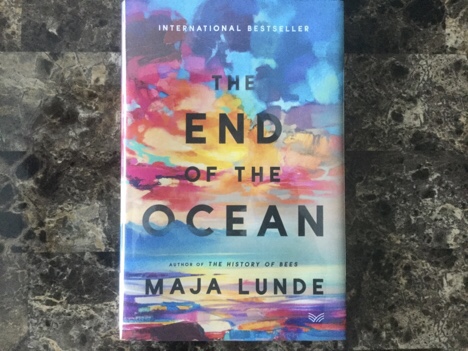
In this remarkable story, alternating short chapters are narrated by Signe, a single Norwegian environmental activist and journalist and by David, an unemployed former desalination plant worker in northern France. The settings are respectively in Rigfjorden and Eidesden, in the beautiful pristine fiords of Norway starting in 2017 and in a refugee camp in the north of France in 2041. There is no hint of what connects Signe with David and his young daughter, Lou, until late in the second half of this dark story. The latter are in danger of dying of thirst and starvation, languishing in a filthy French refugee camp, fleeing from drought and fires devastating Southern Europe. It is like reading two parallel novels until the connection between them is revealed near the end of the story. Although they never meet, the connecting thread (limited life-sustaining potable water) is symbolically powerful.
There is abundant drama and uncertainty, particularly with Signe alone in the stormy North Sea in a battered old sailboat, and in the filthy refugee camp. Very timely commentary with balanced viewpoints deals with the ethics of responding to peaceful but unlawful civil disobedience, and the conflicts between economic development and preservation of a way of life and of the environment. Families disintegrate over differing beliefs about the need to address the serious consequences of man-made climate change. There are no heroes or heroines; all of the characters are realistic flawed human beings. But Lunde, like John Irving, has a knack for making the reader like even the scoundrels. There are no easy answers to the big questions and Signe’s repeated reference to feeling as though she is stuck in a frequently agitated snow globe is a beautiful apt analogy that could be applied to the whole species.
David’s sexual exploits with equally filthy Margarette seem unrealistic for a stinking, starving unwashed refugee who claims to love his missing wife and infant son, and don’t add anything to the story. If fact, in my humble opinion they detract from the stark realism of the rest of the story. But many authors espouse the advertising mantra: “Sex Sells.”
The uniting theme of the urgent need to deal with looming climate change is a stern warning to all readers. I am in no position to judge whether or not Lunde’s predicted dire consequences of our collective failure to do so are realistic or not, but the danger should certainly be taken seriously.
One great quote relating to Signe’s parent’s dissolving marriage: “Nothing is uglier than something that was beautiful.”
This is a very modern novel just translated from the Norwegian last month, and one of the best and most timely that I have read in a long time, with cleverly crafted prose, even in translation. I highly recommend it. It is guaranteed to generate lively and possibly contentious discussion in any book club.

 The Passionate Reader