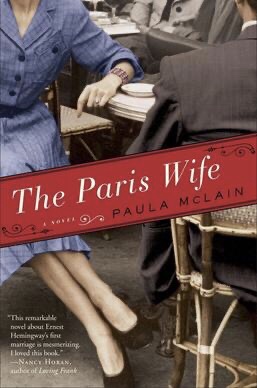
This historical fiction is largely narrated in the first person singular voice of Hadley, Ernest Hemingway’s ‘Paris Wife’, (the first of four) with short chapters in italics giving his imagined perspective. It covers the five years of their tumultuous marriage from 1921 to 1926, when they lived a nomadic life in Europe, much of the time in Paris. The details of their lives, travels and friendships are carefully researched for accuracy and although the designation of ‘historical novel’ is applied, only the extensive dialogue and the imagined description of the intense emotions are really fictional. There is an extensive documentary annotation of many points, not included in the pagination noted.
The 1920s Paris artistic community is often portrayed as happy, carefree and vibrant, but as detailed here, it was marked by intense jealousies, shallow unhappy lonely lives, libidinous marital infidelities, consumption of incredible amounts of booze and sometimes cocaine, pretences, and mental illness with wildly fluctuating emotional highs and lows. Not one of the famous authors in the Hemingway’s circle of friends, including Ezra Pound, F. Scot Fitzgerald, James Joyce, and Gertrude Stein could in any way be considered admirable human beings worthy of emulation. In fact, as portrayed, by modern criteria, they would all be considered to be morally bankrupt degenerates with no consciences and defective self control, or mentally ill. Several would be diagnosed as schizophrenic or bipolar.
Sexual excesses and marital infidelities, for which Ezra Pound was famous, were the norm and were generally taken for granted by the tolerant spouses. Friendships were fragile, professional jealousies were rampant and what most people would consider normal human relationships just did not exist. Everyone seemed overly sensitive to perceived insults, moody, needy, and craving praise and fame.
Nothing illustrates the relationship between mental illness and creativity better than the data on suicides, estimated to be twice as likely in artistic types than in the general population.
I do not understand the complex multifaceted relationship between artistic ability, amoral behaviour and mental illness. I have often been disappointed, on reading biographies, to discover the deep moral flaws of many novelists and writers whose work I admire, including Robert Burns, Shakespeare, Leon Tolstoy, Graeme Greene, Salman Rushdie, E.M. Forster and John Mortimer among others. But as I looked at this list, I realized that there are no women authors on it. Are they more likely than the artistic males to be admirable as human beings as well as artists?
As a portrait of the era and the famous characters, this is a very good read. I can now add several more names to the growing list of artists whose work I admire but whose lives I would not want to emulate. But it seems almost hypocritical to admire the work of creative reprobates, whether they be painters, writers or musicians. But then no one has ever accused me of being normal either.
Thanks, Rhynda.

 The Passionate Reader