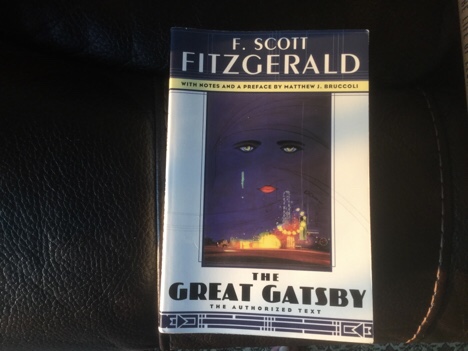
This old classic is on the schedule for our upcoming book club discussion. I could not get it in any form from the library, so spent $2.74 to get the ebook from Amazon to read on my Kindle ap. What showed up was unreadable with fonts constantly changing from microscopic to bold huge, sometimes within a single word. Fortunately, a friend lent me this Scribner/Simon and Schuster edition.
Set on Long Island, and narrated by the chance neighbour of the wealthy title character, the life of NewYork aristocrats in the early 1920s is portrayed with all their pretences, mysteries, lies, bigotry, and overt racism. Nothing is as it seems to be on the surface, with criminal activities and cartels; intrigues, and love triangles keep showing up.
The writing is lyrical, almost poetic, and the intense emotions of the characters are well described. It is generally not difficult to keep the main characters straight, and the few unsolved mysteries at the end are not important. But I did not find any profound insights into life either- this is pure entertainment without a message for the reader. To have sustained its appeal to readers over 95 years, there must be more to it than I detected-either that or a vigorous marketing campaign. Perhaps the book club members will enlighten me further about its lasting appeal. Not the greatest mystery novel, crime story, romance, or adventure, there are nevertheless features of each of these. But there are no admirable characters, nor even lovable rogues, and Gatsby should now be in contention as the fiction world’s best prototype psychopath.
I may have been negatively influenced in my assessment by recently reading The Paris Wife, a fictionalized account of the artistic community of expats in Europe in the 1920s. In this, F. Scot Fitzgerald is portrayed as an amoral, adulterous, alcohol and drug addicted itinerant. But it occurs to me that if we boycotted works by the morally bankrupt, we would miss out on enjoyment of some of the world’s greatest paintings, literature, music, and even sculptures.
In summary, a light and pleasant six hour read, but neither edifying nor educational.
Thanks, Din

 The Passionate Reader