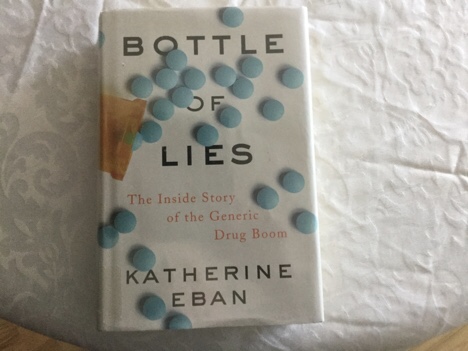
This new and extensively-documented expose of the dangers of generic drugs is alarming enough to make anyone who reads it reluctant to take any medication, not just the generic versions. Almost no one in the industry escapes the analysis with their integrity untarnished, except for a few frustrated obsessive-compulsive FDA inspectors. Their documentation of pervasive fraud, lies, bribery, deceit, and unsafe manufacturing processes are almost routinely ignored or downgraded by higher-up bureaucrats insensitive to their mandated need to protect the public and responsive only to political pressures and the public perception of the need for cheaper drugs.
The first half of the book deals almost exclusively with the criminally flawed manufacture and distribution of hundreds of generic drugs by the now defunct Indian company Ranbaxy, whose bosses reaped huge financial rewards by promoting fraudulent unsafe practices and remain free of criminal charges. But the problems are not limited to foreign companies, given the complex worldwide supply chains that all pharmaceutical companies are obliged to use. The brand name companies that research and develop new drugs are not above using dirty tricks either, often tweaking their formulations to extend patents, using suppliers of dubious integrity, and questionable manufacturing practices in their own laboratories.
One of the most disappointing revelations is the complicity of the FDA bureaucracy. Whistleblowers are silenced or ignored and given no encouragement or legal protection. The practice of giving foreign manufacturers advance notice of inspections ensures that they can clean up the books and the plants, deceive the inspectors, and escape censorship. Eban documents that there were at one point at least 180 manufacturing plants using “dual-tract” production practices, one for first world countries with some degree of oversight, and a second hidden production line for drugs destined for third world counties, mainly in Africa. They knew where no one would detect the defective, inactive or contaminated drugs, not the least of which were AIDS drugs.
I recognized many of the drugs discussed as ones I frequently prescribed. And I can relate to the annoying but essential practice of unannounced public health inspections. We were obliged to buy a second office refrigerator exclusively for the vaccines we used and to keep a detailed log of the temperatures in it 24/7, with regular reporting and a backup battery pack.
For some drugs, the requirement for generic companies to show “bioequivalence” the brand name drug is meaningless. The demonstration of similar blood levels to that of the brand name drug does not take into account the pharmacodynamics of timed release nor the bodily distribution. One of the drugs I prescribed a lot (ursodeoxycholic acid, at one point extracted and supplied from gallbladder bile in Canada Packers slaughterhouses) is absorbed from the gut and acts in the liver and bile ducts but never enters the systemic blood in any significant amounts. Whenever I had suspicions that a generic drug was not as effective as the brand name one, it was my practice to write “no substitution” on the prescription for the brand name version. Does this still work? But sometimes it was impossible to know if either or both versions were defective.
Thanks, Kathy.
This book is a valuable consumer’s guide to the pharmaceutical industry, as valuable for medical practitioners and pharmacists as it is for the public. I anticipate that it will be deemed alarmist by many in the industry, but it is so extensively documented that only willful blindness could lead to denial of its importance. It largely overlooks the ethical lapses of the brand name pharmaceutical companies but these are equally disturbing, as amply documented by Gerald Posner’s Pharma, which is a natural companion work to this one. To be informed in this area is to become a sceptic about any claims on any bottle of any medicine.

 The Passionate Reader