My son must think I am failing or need help in the difficult task of aging successfully, and he is probably right. I usually carefully avoid any self-help books, especially those with “How to…” in the title, but since this was a gift from him, I tried to struggle through it without being too closed-minded.
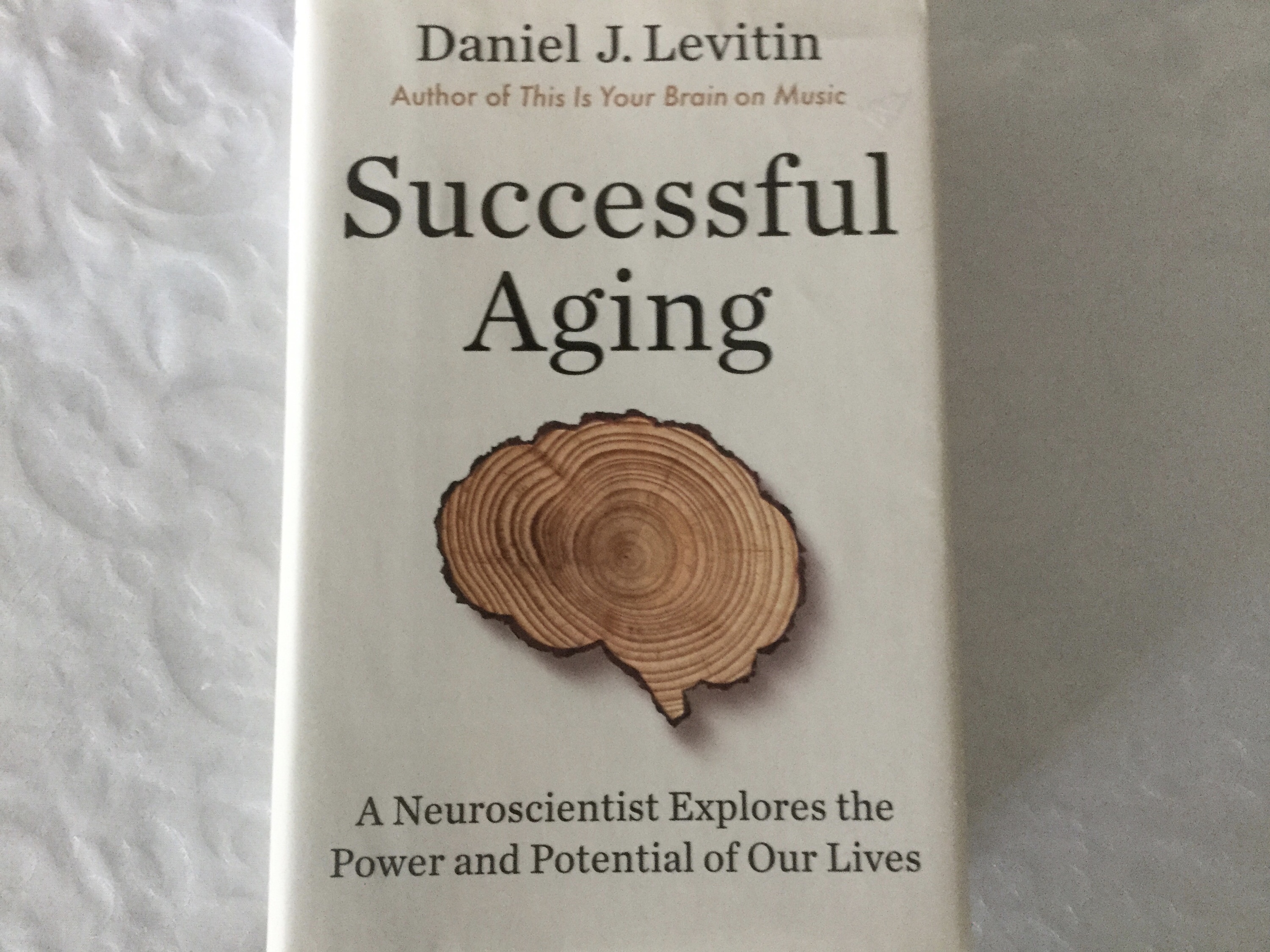
There are hundreds of facts transmitted in this tome, many of which are counterintuitive. The author is a sixty-something neuroscientist (and musician) who has worked in several universities and has extensive knowledge and experience in the field of changing brain functions with aging.
The COACH acronym standing for Curiosity, Openness, Associations, Conscientiousness, and Healthy practices recurs throughout the book, as does the theme of the interactions of culture, genes and opportunity. In places Levitin seems to come close to endorsing the philosophical doctrine of determinism, with its denial of free will, but then emphasizes that we are in control of much of what we do. Laced with personal anecdotes and observations as well as interviews with a wide variety of elderly notables, there are bits of good advice scattered throughout, along with a sprinkling of humour.
Chapters on diet document the abysmal state of dietary sciences with almost all epidemiological studies using surrogate markers for risks arising from dietary habits, such as blood levels of LDL cholesterol as a surrogate for atherosclerosis. There are dubiously useful recommendations to be routinely screened for low sex hormone levels in blood and to use hormone replacement therapy liberally. Screening healthy subjects for almost any disease has been shown by thoughtful physicians like H. Gilbert Welsh in Less Medicine, More Health, to usually cause more harm than benefit. As a general comment, I would add that blood is a tissue that is too easy to biopsy, and the findings often do not reflect what is going on elsewhere. Recommendations to make frequent visits to physicians is equally questionable.
You can skip the chapters on sleep if you have read Matthew Walker’s Why We Sleep, as those just largely reiterate Walker’s conclusions and recommendations.
The careful analysis of the huge commercial industry selling ‘brain exercises’ to stave off cognitive decline concludes that it is largely a scam, but pharmacological means of doing the same are still mostly of unproven benefit. Playing competitive bridge may improve my ability to win master points in bridge, but will not help me mount a wall TV., or calm an agitated friend.
This is not an easy read. The details of neuronal pathways and brain anatomy were difficult for me to keep straight, even though I have studied them and read extensively about neuroscience developments. There are hundreds of statements of ‘associated with’ and ‘linked to’ that imply causation without further evidence such as a dose-response relationship or a plausible physiological mechanism. “Other drugs associated with depression include estrogens, blood pressure medication, statins, and opioids.” But to be fair, Levitin, at least occasionally, acknowledges that the direction of causation is not clear.
It is also needlessly wordy. Does any reasonably educated reader need to be told that “The further you are from the equator, the more extreme will be the difference in light between summer and winter months.”? Like many scientists writing to educate non-scientists, Levitin seems to forget to aim for a targeted readership.
There are also factual errors. The Symbiosis program of McMaster University is in Hamilton, Ontario, not London, as a McGill professor should know. Citing Jeanne Calment’s as the longest documented life is almost certainly wrong; her daughter is thought to have stolen her identity after her death thus extending her apparent lifespan by twenty years. The extensively studied life-extending properties of resveratrol in red wine was debunked in a 2006 Danish analysis of 100,000 grocery store receipts. It seems that red wine drinkers live longer than beer drinkers simply because they also eat healthier foods.
Although some of the advice here was new to me, most of it falls into the category of common sense, an uncommon commodity. I am not about to change much in the way I age after absorbing this advice. I maybe should switch from curling to tennis, bridge to poker, and crosswords to chess to challenge myself with new skills , but there are some pleasures in life not worth giving up for the chance to live an extra few years in diapers in a locked ward. And Levitin is adamant that no one should ever retire, but if I persisted in medicine beyond my ability to be competent, some poor patient would likely die needlessly. The trick is to find something after retiring that still gives you a sense of being useful.
I do not intend to go quietly into that good night, but to slide into the grave sideways, hollering “what a hell of a ride”.
A difficult read that will appeal to a selective readership, perhaps worth scanning by most oldsters for a few suggestions.
Thanks, Ian.

 The Passionate Reader