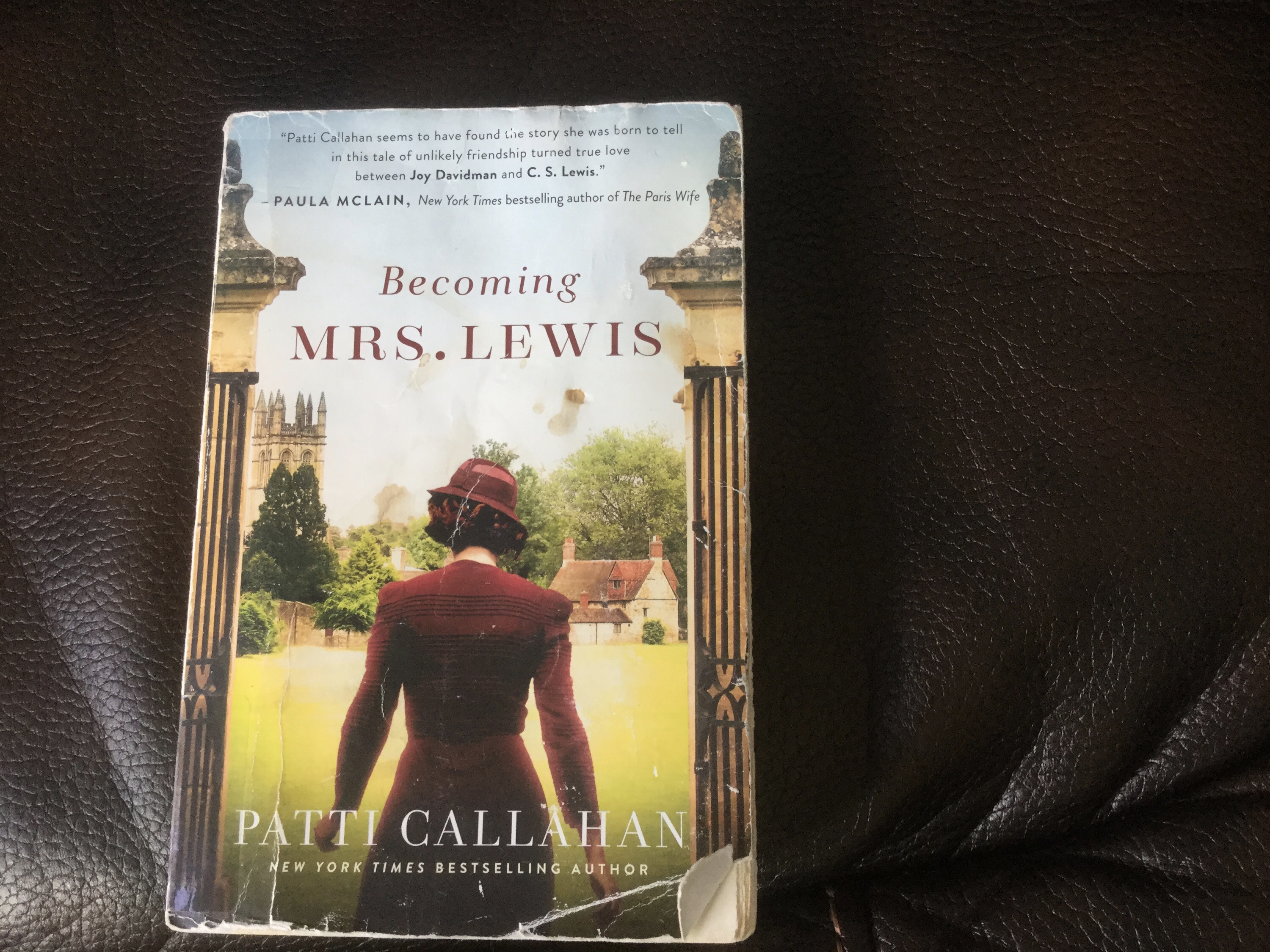
My wife sent me to get this fictional autobiography from the library for her book club discussion. As I walked home with it and realized that it was a first person singular fictionalized autobiography of the American poet and novelist Joy Davidman and her friendship/romance with Oxford professor C.S. Lewis, I decided to read it too. C.S. Lewis was a staple of my teenage reading- not the Narnia children’s chronicles, but everything he ever wrote in defence of Christianity. Mere Christianity was practically a fifth gospel according to my parents and The Problem of Pain, Miracles, The Screwtape Letters, and Surprised by Joy were required reading. Lewis’ death on November 22, 1963, was mourned in our house more than that of JFK who was killed the same day. Only much later did I find critical flaws in his superficially persuasive eloquent arguments for Christianity.
C.S. Lewis was the quintessential mid-twentieth century insular Oxford academic, buried in books, set in his ways, shunning and fearful of intimacy, brilliant but blinkered to the realities of the rest of the world. Joy Davidson was a troubled abused atheist, who, like Lewis and St. Paul had a sudden conversion experience to Christianity that changed the rest of her life. Relating that mystical experience in a letter to Lewis led to their long friendship/romance and eventual civil and then religiously sanctioned marriage, the latter only after she was diagnosed with terminal cancer.
As a love story this is unusual, based as it is on mutual interests in classical literature, writing, mysticism and mythology, as well as religious beliefs. Their greatly embellished imagined conversations are filled with platitudes about God’s will and the mysteries of His ways, especially after Joy is diagnosed with terminal cancer. The expressed fear of death seems incongruous with their deep faith in a better life to follow, but this contradiction is integral to almost all religious beliefs. The risible rigid hypocrisy of the Church of England’s refusal to sanction the remarriage of a divorced person fortunately eased before I was remarried in Huron College’s chapel by an Anglican priest.
Neither protagonist was any saint. Lewis was a chain-smoking, heavy drinker, friend to many but fearful of intimacy or commitment to anyone. Davidman was an insecure libidinous divorcee escaping from an abusive marriage who practically begged prudish Lewis to have sex with him (and failed until after her diagnosis of terminal cancer and their belated church- sanctioned wedding). She was always complaining about being broke but still managed to find money for travel, fancy clothes, and endless quantities of whiskey, sherry, and beer. Neither seems to have paid any attention to any issues outside of their white Western culture.
There are some minor discrepancies with the lengthy fawning 1988 biography, Jack. A Like of C.S. Lewis by his friend and fellow-writer George Sayer, which I read years ago. I was surprised that it was not acknowledged by the author in her Suggested Further Reading.
As a reflection of the times in white academic Britain, the real characters of Lewis and Davidman, and the conservative religious views of the era, this is an enlightening read. As a novel of friendship that became a romance, I suspect women will enjoy it more than men will.

 The Passionate Reader