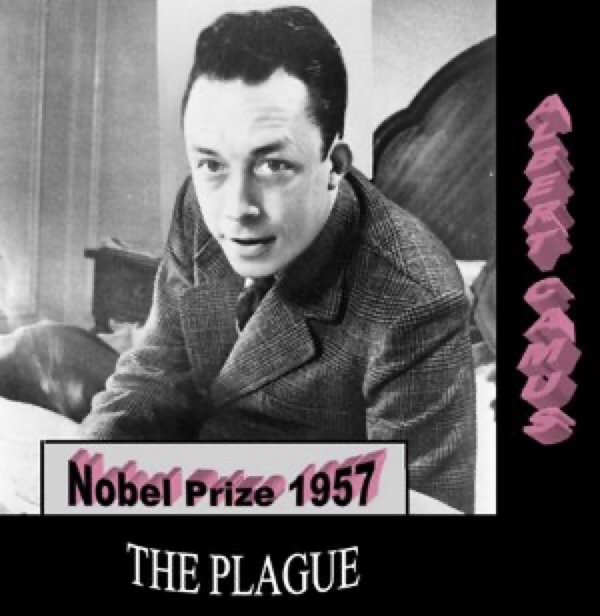
This seemed like a timely novel for our current situation. In the Algerian port town of Oran, an epidemic of plague results in a huge death toll, mandated lockdown, isolation of the town of 200,000, and social stresses. The parallels are indeed very impressive with the separation of family members, endless debates about what authorities mandate, economic collapse, and individuals introspectively questioning the meaning of their lonely lives. But there are also striking differences that we should appreciate. With personal letters prohibited due to fear of disease transmission, the residents are forced to use limited access to telephones and telegraphs for communication, in the age before email, the internet and FaceTime, and many had no means of communication with separated loved ones at all.
There are other parallels to more recent social history. A priest, in a long sermon, calls the plague God’s punishment for the evil deeds of the townspeople, like evangelicals calling AIDS his punishment for homosexuality in the 1980s. The daily fluctuations of the radio announcements of the number of deaths and corresponding fluctuating moods of the populace seem familiar in the age of Covid, but in 1947 no one had the TV talking heads and self-proclaimed experts on social media mouthing off ad nauseum. The other obvious parallels include anxieties about shortages, hoarding, and some folks’ interpretation of the pestilence as fulfillment of ancient prophesies. Information fatigue sets in as the epidemic drags on, and all emotional responses become blunted. “No one experienced great feelings anymore, but everyone experienced banal feelings.”
Camus inserts much of his absurdist philosophy and a hint of his anarchistic political leanings into the story by discussing his views as the dissident ‘narrator’s opinion’. Only toward the end do we find out who the narrator is.
There is a strong theme throughout the story of the meaning of separation, whether by death or by enforced quarantine. In an undated Afterword by Tony Judt, he makes the case that the whole story is an allegory for the trials of the French during the Nazi occupation, something that was not obvious to me at this chronological and geographic remove.
The writing style is reminiscent of Faulkner- baroque, ornamental, and polished with long esoteric discussions about the nature of good and evil, religion, and the purpose of living by all the characters all of whom are threatened by, and in proximity to, death. Part III consisting of musings about flattening emotional ranges and fading memories of those one is separated from, was a bit confusing, vague and disappointing to me.
An interesting, timely reminder that the challenges that we face with Covid-19, and the varied responses, are far from unique in history. Although this story is fictional, there is nothing unrealistic about it. I quite enjoyed it.

 The Passionate Reader