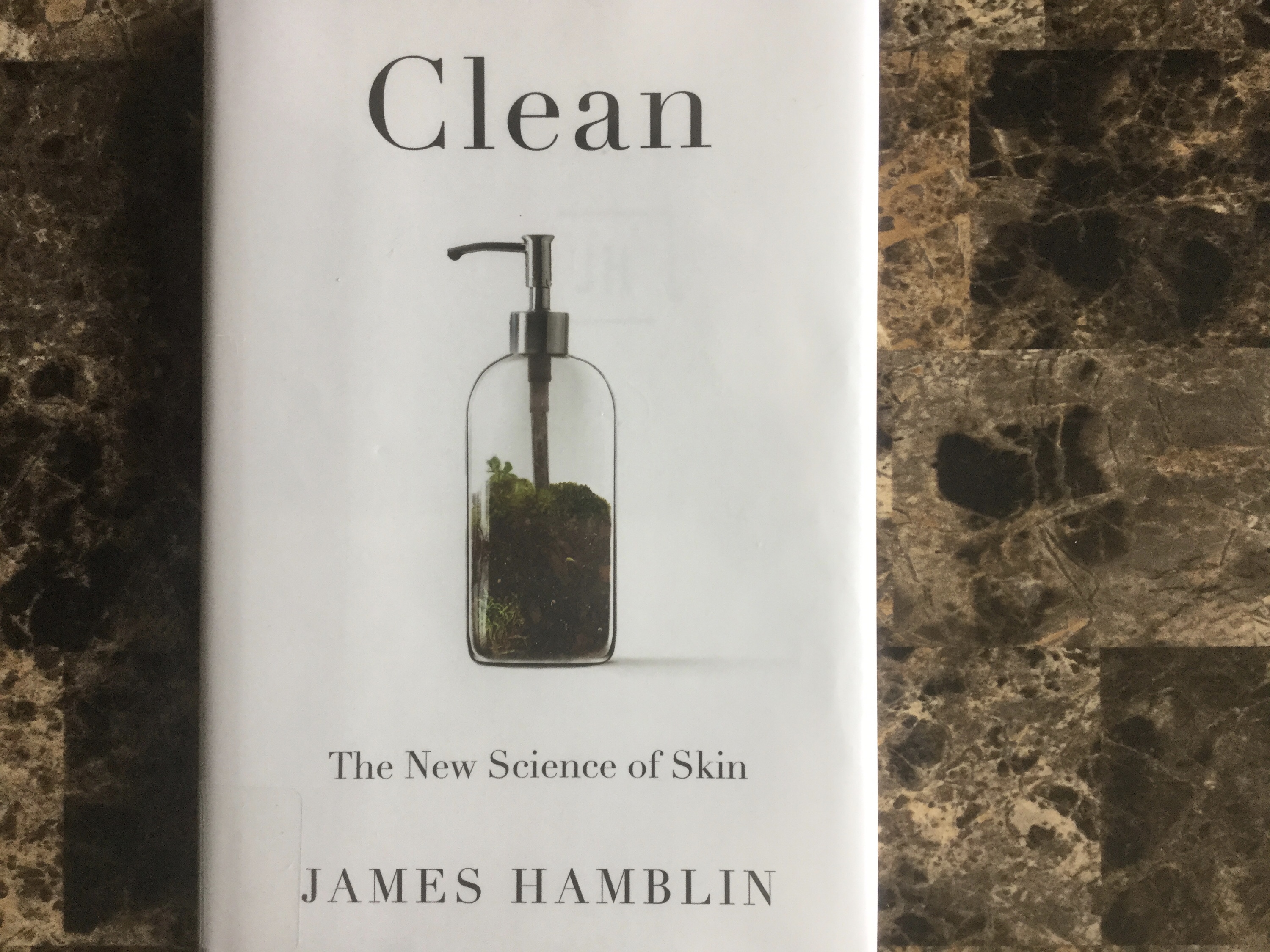
This modern crash course on skin care was discussed in the July/August issue of The Atlantic. I have long been skeptical about the need for a dozen or more products with fancy names lined up on the washroom counter or in the shower, and got this book hoping for confirmation of my skepticism, a form of what psychologists call confirmation bias. The American physician author does not disappoint in this regard, trashing an industry that is largely unregulated and regularly makes ludicrous claims for expensive products.
The focus is largely on the role of the skin biome, the 1.5 trillion bacteria that live on the average human’s skin, feeding on dead skin cells and oils produced by sebaceous and apocrine glands. The author does not take showers or baths, but does cleanse his armpits and groin regularly, and washes his hair and hands frequently. He does not seem to have become a social pariah as a result of neglecting to wash the rest of his skin, travelling extensively and interviewing a variety of experts in dermatology, microbiology and the cosmetics industry, and his girlfriend has apparently not abandoned him. There is also discussion of the later beneficial effects of skin exposure to a wide variety of environments early in life.
There is a lot of compelling information about the harm done by overzealous use of soaps, detergents, shampoos, moisturizers, toners, anti-aging agents, and a variety of other products with enticing names and vague inventive promises thought up by advertising gurus. There is a fundamental difference between soaps (solid products made from lye and animal fats and packaged in paper) and liquid detergents, also commonly but falsely called soaps, made from byproducts in the fossil fuel industry and packaged in plastic from the same industry. We all constantly emit up to 1000 distinctive volatile compounds from our skin, that apparently allow trained dogs to detect Parkinson’s disease and some cancers. I was skeptical of these claims when they first were made several years ago, but the evidence is becoming compelling. This ‘volatolome’ may be as uniquely individual as a fingerprint. Will this some day be used in law enforcement identification of suspects?
The aptly titled ‘Lather’ chapter exposes the 3 billion dollar annual skin care products industry in the U.S. for the fraudulent rip off of gullible consumers that it is. It certainly leads to questions about the wisdom of allowing unfettered capitalism. Admen shamelessly prey on the vanity, fears, hopes, and perceived need to conform to an impossible standard of beauty of everyone who does not like the wrinkles, creases and blemishes they see in the mirror. A host of additives, including stem cells, vitamins, collagen and enzymes do nothing for skin health; some have entirely fictional names made up to sound impressive. Years ago, a friend doing a postoperative shave on the Canadian president of Proctor and Gamble asked for the patient’s shaving cream. The patient claimed that he never used any because of all the chemicals Proctor and Gamble put into it to stimulate hair growth; such is the blatant hypocrisy and cynical manipulation of marketing in much of the industry. It is worthy of a Michael Moore documentary; from his slovenly unwashed appearance, I somehow doubt that Moore patronizes the cosmetics industry.
The writing is straightforward prose sprinkled with bits of wry humour and the subject is well researched. There is no complicated medical or scientific jargon that would be difficult for someone with a limited education to understand. There is no discussion about the major problem of itch associated with systemic diseases that occupied a major portion of my research career in a past life, but that is really only a very minor and personal criticism of this insightful book. A more substantive criticism is the exclusively American focus in discussing legal and regulatory issues.
Will I change my skin care routines after reading this? Already, more than twenty years ago, hearing a rant from Danny Finkelman (Finkleman’s 45s, CBC radio)I stopped using shaving cream; he pointed out that there was no basic difference in the effects of shaving cream and soap. I doubt that any shampoo is better than soap for my sparse hair. I will continue to sparingly use insect repellant and sunscreen on my exposed hide as necessary. I may be more careful in checking the labels on soaps and deodorants. I may also experiment a bit, but in the interest of domestic tranquility, I am not going to give up showering.
As a well-written iconoclastic eye-opener of relevance to everyone with an interest in the health of their biggest organ, this is a great read.

 The Passionate Reader