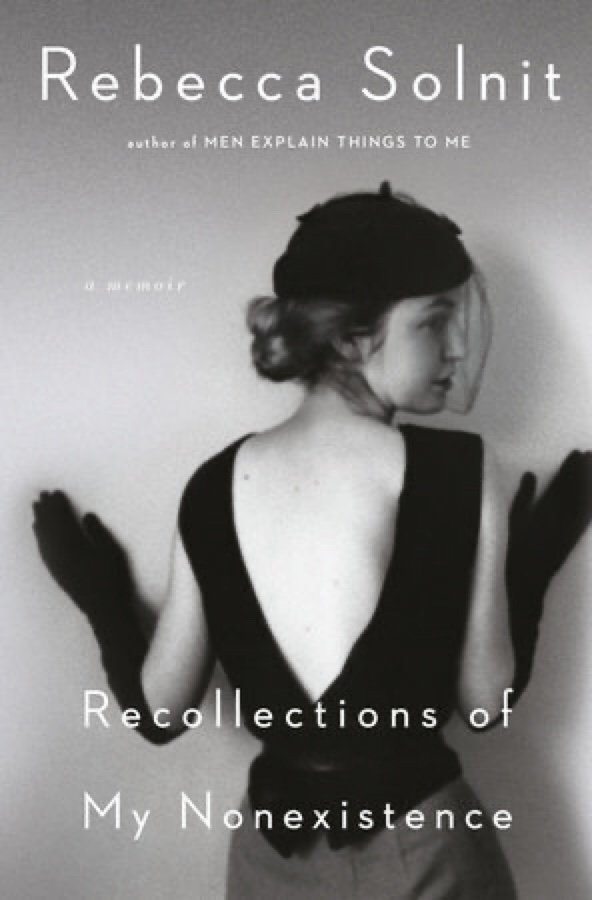
I borrowed this very modern memoir from the library as an ebook after reading a review of Solnit’s earlier book A Paradise Built in Hell in The Atlantic, and her Wanderlust in The New Yorker. The first part is a collection of random musings about the author’s past troubled life as a single white student in ever-changing poor San Francisco neighbourhoods in the 1980s. Later chapters deal with her intermittent interactions with fellow feminists, activists, essayists and artists of widely varying backgrounds, (my least favourite part). In the last few chapters, she strikes a slightly more upbeat note, acknowledging that some limited progress has been made in the fight for gender, ethnic and cultural equality, while continuing to push for reform. It is peculiar that a feminist writing in 2020 never mentions the misogynist currently in the White House.
Her background as the grandchild of a holocaust survivor, and the child of an abusive father, as well a being repeatedly abused by men in her teens undoubtedly contributes to her dim assessment of men, whom she considers to be generally misogynistic and domineering. But unlike more radical feminists, she acknowledges that there are good men in the world and describes, in discrete terms, her heterosexual yearnings and relationships with long term boyfriends. She eloquently points out the pervasive vulnerability of women in literature, mythology, comics, movies, video games, and theatre over millennia. She relates that her dreams include being able to fly to escape from street attacks, but dreams of levitation are common and are thought by some mystics to have religious connotations. (Mine are just as a shortcut to get to some place I need to be quickly.) In some places she seems to border on paranoia, noting that she recently gave up a very peculiar habit she claims to love, of walking alone for hours in dark inner city streets. I have to question whether that habit was formed in part to feed her apparent peculiar need for insecurity and existential angst. What came first?
A quote in relation to her experiences of childhood and early adulthood abuse: “All this menace made it difficult to stop and trust long enough to connect, but it made it difficult to keep moving too, and it seemed it was all meant to wall me up at home alone, like a person prematurely in her coffin.” The title reference to nonexistence refers to how she feels about most of her early life that she rates as being so meaningless as to equal nonexistence in a male-dominated world.
Her earlier essay “Men explain things to me,” written in the course of one morning, is the origin of the now officially accepted English word ‘mansplaining’.
This book will undoubtedly become a sort of feminist gospel. But even this old, white, somewhat privileged male quite enjoyed it, and gained a new perspective on several issues. I have requested a hold on her Wanderlust (all about walking) from the library.

 The Passionate Reader