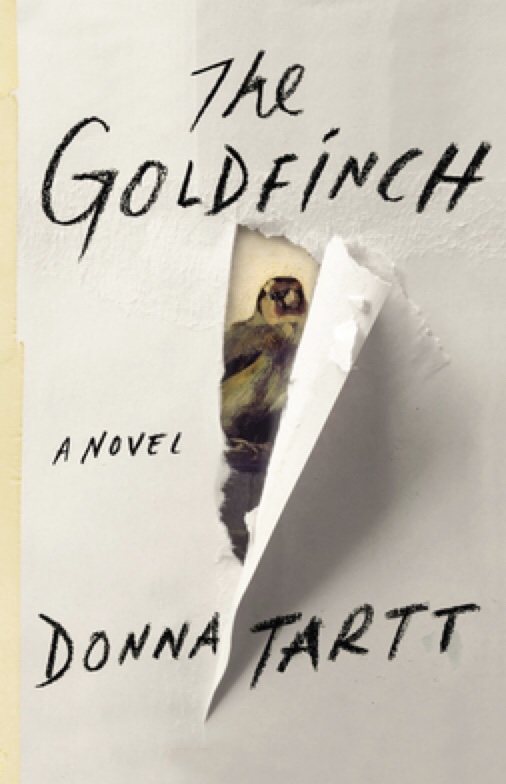
I can’t recall who recommended this coming-of-age novel to me, but I am sure I would not have picked such a long story (according to Libby, I took 38 hours to read it) without a friend’s recommendation, even though it won the 2014 Pulitzer Prize for fiction. It is narrated throughout in the first person singular voice of Theo Decker, a deeply flawed teen whose father had abandoned him and whose mother had been killed in a terrorist attack at the New York museum where he, amidst the chaos of the explosion, stole the precious 1654 Carel Fabritius painting called The Goldfinch. The complex plot loosely follows the course of that lost painting through the murky underworld of New York City art and antique dealers, the criminal gangs of Las Vegas and European capitals, then back to New York, over the course of more than a decade in the early twenty first century. (There are no anchoring dates in the story at all.)
The plot is very complex, but the shady characters are not hard to follow. They are elaborately Dickensian and none are without major flaws except the idealized and idolized dead mother of the narrator. There are vivid realistic descriptions, not just of characters, but of their experiences, such as the narrator’s rambling thoughts just after hitting up pure heroin: “ …in whatever wink of consciousness remained to me, I felt I understood the secret grandeur of dying, all the knowledge held back from humankind until the very end; no pain, no fear, magnificent detachment,…. freed from all the human pettiness of love and fear and grief and death.”
But there are problems. Tartt introduces the reader to a word salad smorgasbord of neologistic jargon like that uttered by stroke patients with expressive aphasia. One advantage of reading ebooks is that it is easy to to look up definitions but I found neither definition nor translation for such words as fubsiness, parceltongue, poofter, am-scraped, pappadums, antiquairies, antieckhandels, phantasmagorica, and fableheft. Is the insertion of such nonsense into a text the secret password into the elitist society of creative writers? And the last 25 pages reads like philosophical nihilistic musings of the author directly addressed to the reader, almost totally disconnected from the rest of the story, a sermon delivering her take on the meaning of life.
When I discussed this novel with two friends, one said she hated it, and the other said he loved it. I am somewhere in between. I admire the author’s ability to weave such a complicated plot into a unified whole, but it did not restore any faith in those semi-anonymous individuals who choose books for major awards.

 The Passionate Reader