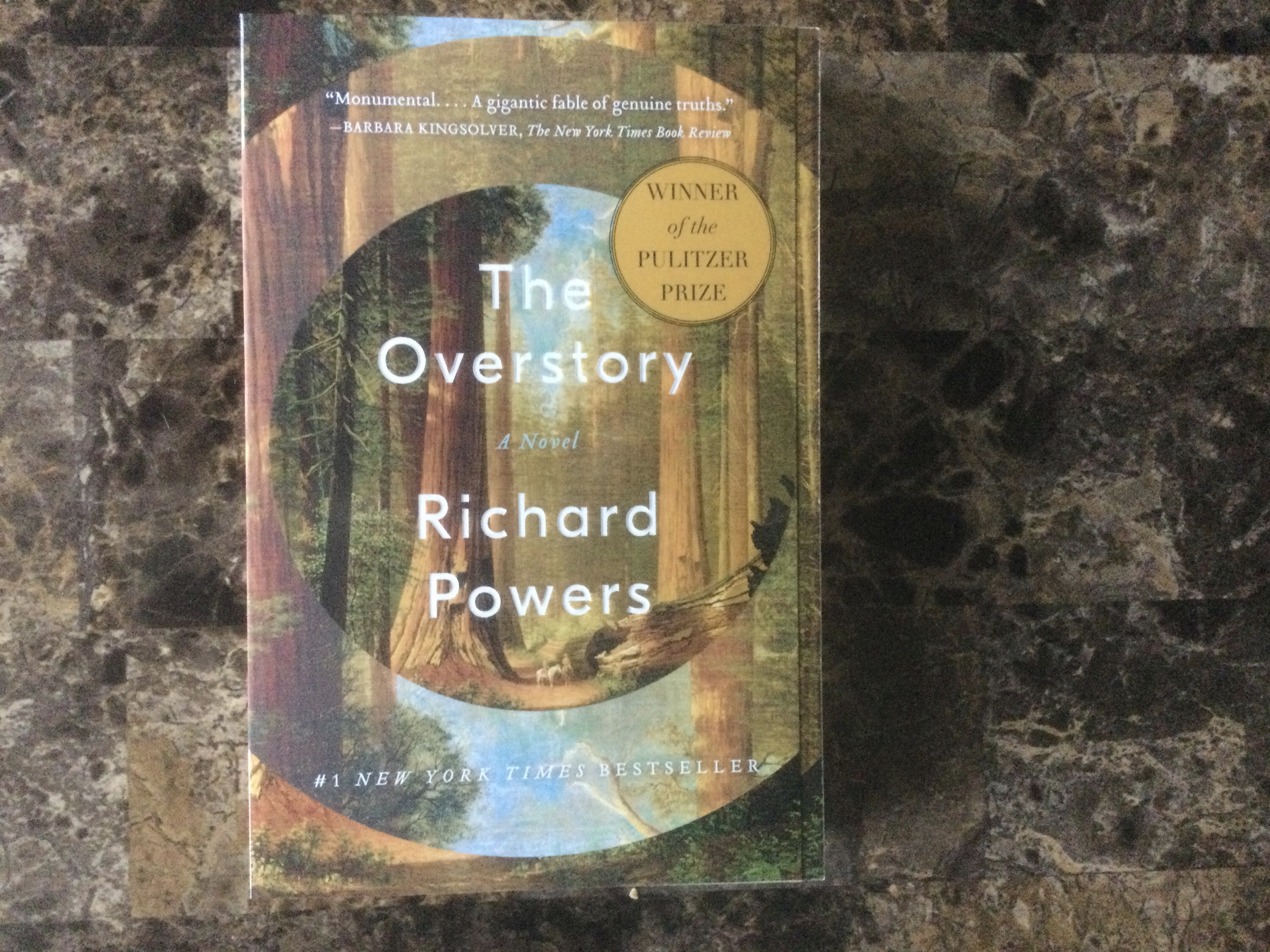
Cleverly divided into major sections named Roots, Trunk, Crown, and Seeds this epic pan-psychic allegorical story starts off with eight seemingly unconnected tales of the early lives of unusual or even bizarre disparate American misfits. I was almost ready to give up until I hit page 114, but my daughter had assured me that the seemingly unrelated weird stories all were complementary and conjoined. Then tears of joy blurred the pages as I read the life story of the entirely fictional but fascinating Dr. Patricia Westerford and her laser-focused efforts to understand the secret lives of trees, and their means of communicating to each other, to us, and to the whole living world. Like some of the unusual dedicated scientists and preservationists on PBS’s Nature, her quaint quest is extremely endearing. She is a fictional character, but both her character and the surprising science she relays to the reader seem to come directly from the notable U.B.C. Professor of Forest Ecology, Dr. Suzanne Simard, and her TedTalk about trees.
And, sure enough, in Trunks, the ragbag misfits start to come together in what is made to seem realistic and natural ways, although you may need to go back and reread parts of the Roots section to connect all of the dots. I could not see how the crippled millionaire video-game developer could possibly fit into the story, but late in the Crown section, Powers makes it seem natural to involve him in a major role.
The writing is smoothly poetic with hundreds of stand-alone words and phrases. “High school tries to kill her. Viola, in the orchestra, the maple howling with old hillside memories under her chin.” A hugh number of startling facts are conveyed with nods to the classics in literature, folklore, sciences, mythology, and philosophy. A not-at-all subtle condemnation of unfettered capitalism in the worldwide forestry/logging industry is coupled with a less direct but equally damning critique of legal systems that support it. Dr. Westerford agonizes over the irony of writing and publishing a book promoting forest preservation that will be made from the destruction of forests. As she prepares to address an environmental group called Home Repair she muses “These people need dreams of technological breakthrough. Some new way to pulp poplar into paper while burning slightly fewer hydrocarbons….The home repair they want is just a slightly less wasteful demolition. She could tell them about a simple machine needing no fuel and little maintenance, one that steadily sequesters carbon, enriches the soil, cools the ground, scrubs the air, and scales easily to any size. A tech that copies itself and even drops food for free.”
This is a panoramic, profound, richly interwoven tribute to Gaia, the Greek earth goddess, cautionary, timeless and highly relevant. I cannot think of another novel with such an urgent message. Perhaps Orwell’s Animal Farm allegory comes close, with its very different message for a very different age.
I highly recommend this book. But read the e edition, listen to the audiobook, or borrow the paper one to avoid further destruction of trees.
Thanks, Alana.

 The Passionate Reader