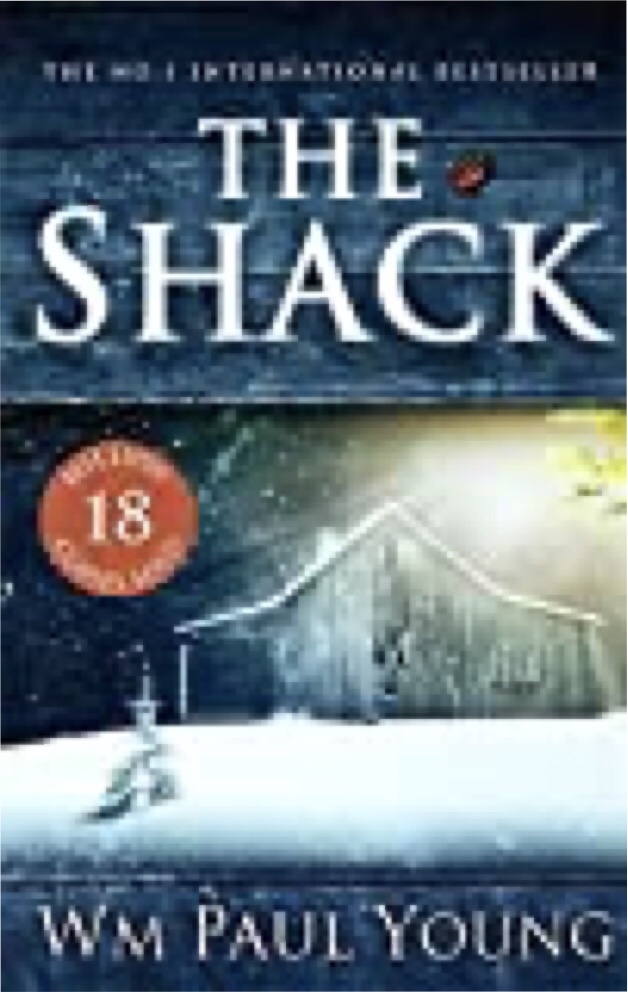
This peculiar novel starts off as a fairly typical thriller/detective mystery involving the the disappearance of a small girl from a family campground park in Oregon. Suddenly, in a Pauline road-to-Damascus kind of experience, after four chapters, it suddenly veers off into mysticism and magical realism as the protagonist, on a secret visit to ‘the shack’ encounters God the Father as a cheery, chubby black woman with a southern accent, Jesus, as a Middle Eastern man, and the Holy Spirit as a wispy small oriental woman. Over two days this trinity work to enlighten him on the mysteries of the universe, and relieve the lingering burden of his grief from losing his daughter. Mystical allegory, trite aphorisms, magic realism (he walks on water with Jesus), plain magic (resurrection of the dead) and surprising theological lessons based loosely on early Christian teachings is mixed into a theological/philosophical discourse that could fill a whole semester in a theology or philosophy course. Most of these lessons would fit better into a Unitarian discourse than the sermons of dogmatic evangelical Christian clergy. Jesus reveals that he is not religious and not a Christian. The life outlook of the protagonist is forever changed for the better.
Much of the teaching from the Trinity on that weekend is an attempt to reconcile the notion of a loving omnipotent, omniscient deity with the universal human experience of physical and mental suffering. Like C.S. Lewis’s The Problem of Pain or Rabbi Harold Kushner’s When Bad Things Happen To Good People, this attempt does not quite succeed, in my opinion. There seems to be no questioning of the existence of human free will, or of the problematic doctrine of original sin.
An ingenious twist just a few pages from the end kinda, sorta explains the earlier journey into fantasyland and at least brings the story back to earth. The story has been adapted to a 2016 movie starring Sam Worthington, Octavia Spencer, and Tim McGraw that I have not watched but it might be worth a peek.
There is far too much ethereal spirituality with unquestioning acceptance of the existence of a benign deity that interacts with us here for this secular humanist. But just as reading the political works of those whose outlook is opposite of your own is sometimes useful, I gained a new understanding of how deeply religious folk think from reading this book. It is better to engage and try to understand than to blindly oppose. I am sure that many even semi-religious folk would enjoy it more than I did.
Thanks, Joanne.

 The Passionate Reader