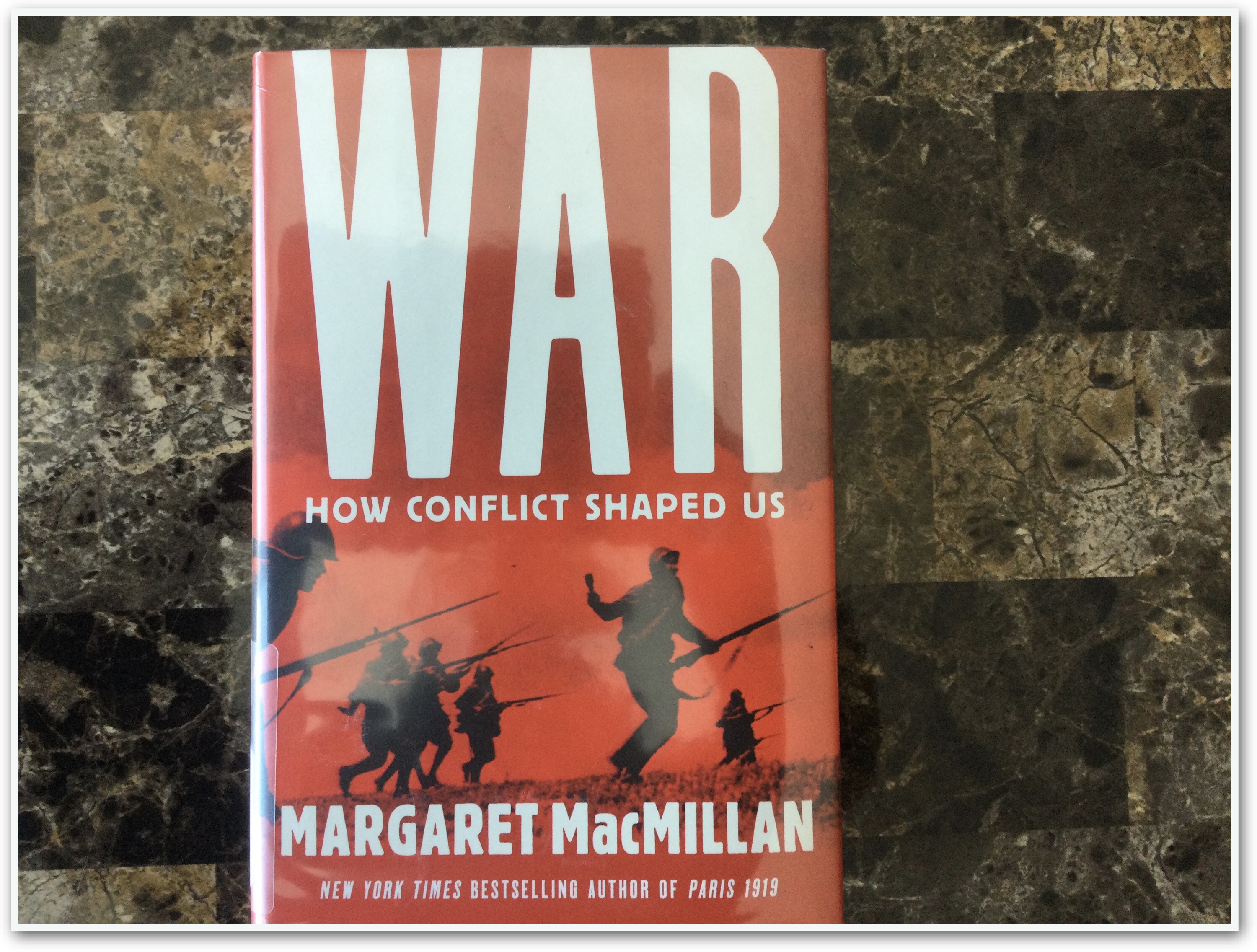
One of dozens of books about the history and basic nature of war, this newest one by the Toronto-based emeritus professor of history garnered a rave review in The Globe And Mail. In ten dry chapters that flit erratically over several millennia and around the globe, dozens of wars and hundreds of battles, most of which I had never heard of, are analyzed from different perspectives.
Steven Pinker’s contention in The Better Angels of our Nature that we have never had it so good is challenged, the evolution of the nature of war, and the changing definition is discussed, with the blurring of the distinction between combatants and civilians, and the remarkable contributions of modern technology. I was neither impressed nor will I long remember the data enumerating hundreds of casualty numbers at different times, and endless descriptions of battles I never heard or cared about. And I hardly needed to be reminded about the obvious critical importance of mobilizing the public support and of maintaining the supplies of food and resources for the combatants.
The chapter on the role of civilians, including the blurring of distinctions between civilians and combatants in a total war where most civilian workers are contributors to the effort, and the morality of targeting civilians is informative, particularly in detailing the critical fast-changing role of women.
In discussing the ephemeral efforts to develop and enforce international rules for war “Like ants with their nests, we laboriously build up a more or less agreed structure, only to see it kicked apart by the heavy foot of war.” This is the only quote I could find that is in an even vaguely imaginative writing style.
This may be the definitive history of war for military leaders and academic historians to study for years to come, but for ordinary civilians, the eight pages Conclusion is the only part I can recommend.

 The Passionate Reader