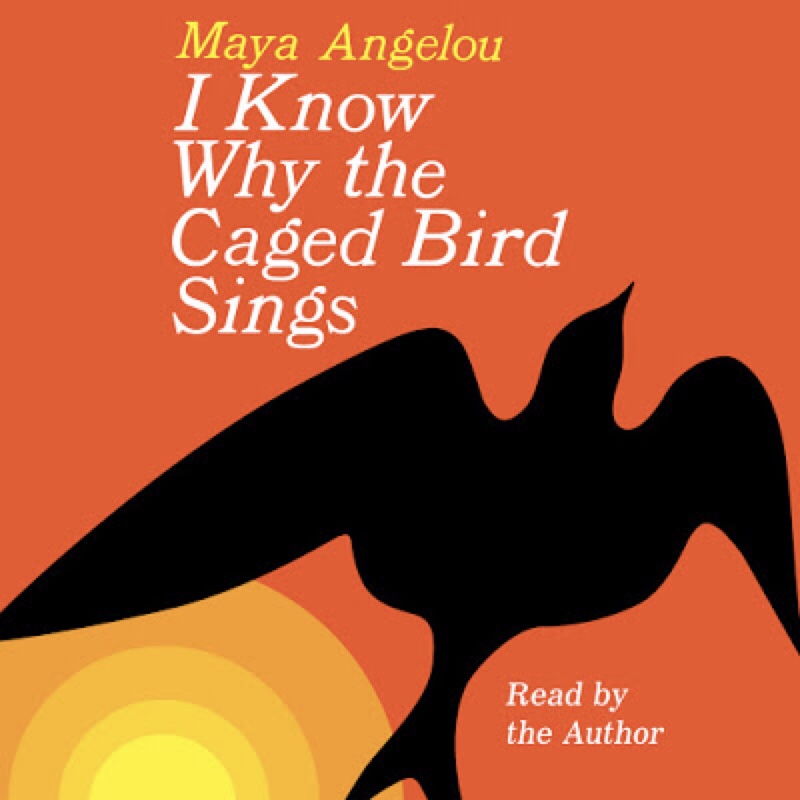
I am humbled by the realization that I knew nothing of the work of this late poet, memorialist, novelist, and Black activist’s until recently. A few weeks ago I watched a taped interview with her and immediately knew I had to read this, her most famous work which is variously described as an autobiography or as autobiographical fiction. From the interview where she discussed her rape at age nine, and her experiences in segregated 1930s and 40s small town Arkansas, it is clear that this is mostly autobiography, though perhaps a bit embellished.
Her divorced California parents sent her at age three and her brother aged four to be raised by their grandmother in Jim Crow Arkansas in the depression. Later she visited with her mother in St. Lois and even later with both parents in California. Her writing is fittingly poetic and her intelligence shows through in spite of her underprivileged life, her lack of formal education and her many hardships. The lives of blacks in the 1930s and 40s Deep South is vividly described. The entrenched racism is realistically described but she refuses to succumb to bitterness and hate. There is abundant humour, particularly as she describes the hilarious antics and hypocrisy of the black charismatic “holy roller” churchgoers. It is not clear how much of her religious education she abandoned in later life, but one great quote gives a hint. “I find it interesting that the meanest life, the poorest existence, is attributed to God’s will, but as human beings become more affluent, as their living standard and style becomes to ascend the material scale, God descends the scale of responsibility at a commensurate speed.”
Her lack of even rudimentary sex education led to great confusion and consternation and an unwanted pregnancy in her late teens. But she learns to love and treasure her newborn son as the book ends.
This is a wonderful biography of a fascinating, beautiful perceptive woman. Highly recommended.

 The Passionate Reader