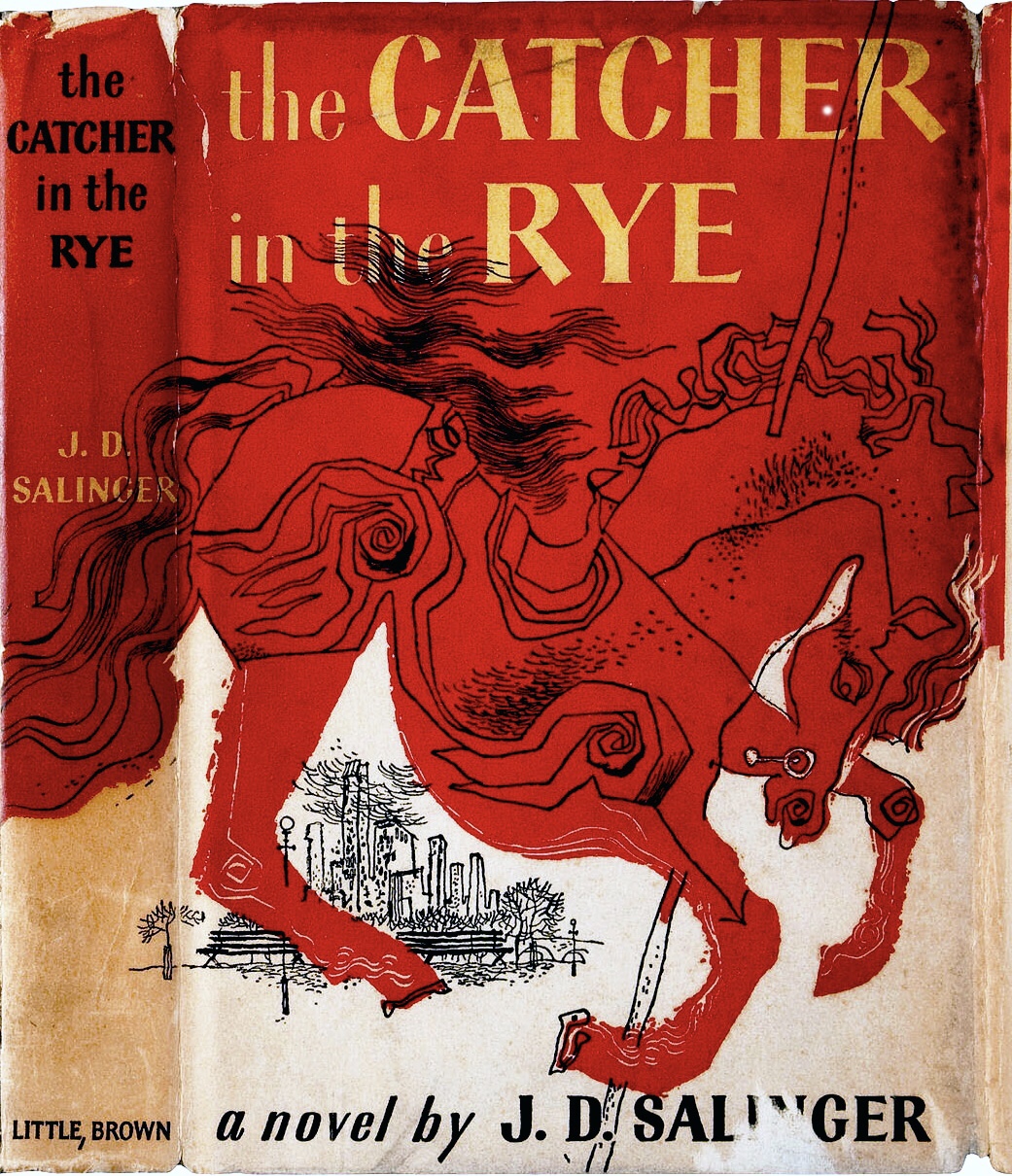
Probably too late to benefit, but trying to at least partially compensate for my deficient knowledge of classic English literature in my circumscribed youth, I recently read the e-edition of this old standard novel. I suspect that the abundant foul language, irreligious and sacrilegious focus and and references to ‘deviant’ sexual practices kept it on the censored list of books we could study in my high school days, in the WASPy puritanical rural Ontario of the 50s and 60s.
Narrated in the first person singular voice of the immature, impulsive New York City teen, Holden Caufield, it’s staccato declarative musings and observations are related in the crisp short vernacular slang and profane sentences of the 1940s. There is no flowery poetry here, and the writing is reminiscent of the sparse language favoured by Ernest Hemingway.
Ageless issues of teenage insecurity, angst and rebellion, exaggerated cynicism about everything adult, and prevalent self-doubt and self-loathing, are fully explored. The narrator has an extremely flighty short attention span, remarkable emotional lability and cannot seemingly form durable emotional bonds with anyone. It is as if this was an early description of what later became medicalized as ADHD, with a pinch of Asperger syndrome thrown in for flavouring. And there are some hints of what later became known as post-traumatic stress disorder for which Salinger had been hospitalized not long before writing this story, after fighting on Utah Beach on D-Day and helping to liberate German concentration camp victims. This seems to complete the recipe of psychosocial ingredients for this novel- combine ADHD with Asperger syndrome and PTSD.
This is the most famous of J.D. Salinger’s works and he admitted late in his life that it was semi-autobiographical. Growing up in the 1920s and 30s New York city culture, he failed to fit in, left several schools without completing required coursework, and was always somewhat of a misfit, becoming a reclusive Vermont backwoods hermit for the last thirty years of his life. Although he married three times, his relationship with women was always strained, and his search for meaning in his life lead to obsessive Zen Buddhist practices and endorsement of Scientology at different times. One gets a picture of an author as troubled and mentally unstable as his fictitious subject, Holden Caufield.
As a throughly urbanized teen’s account of coming of age a decade or two before my coming of age in an totally rural environment, there is little in this story that I can relate to on a personal level. But at least I can now discuss Holden Caufield with my urban neighbours without displaying complete ignorance.

 The Passionate Reader