This richly documented influential environmental science screed has never been out of print since its publication 59 years ago. I recently read the 1992 edition, with a long introduction by Linda Lear, in my attempt to make up for my neglect of classics in my previous life.
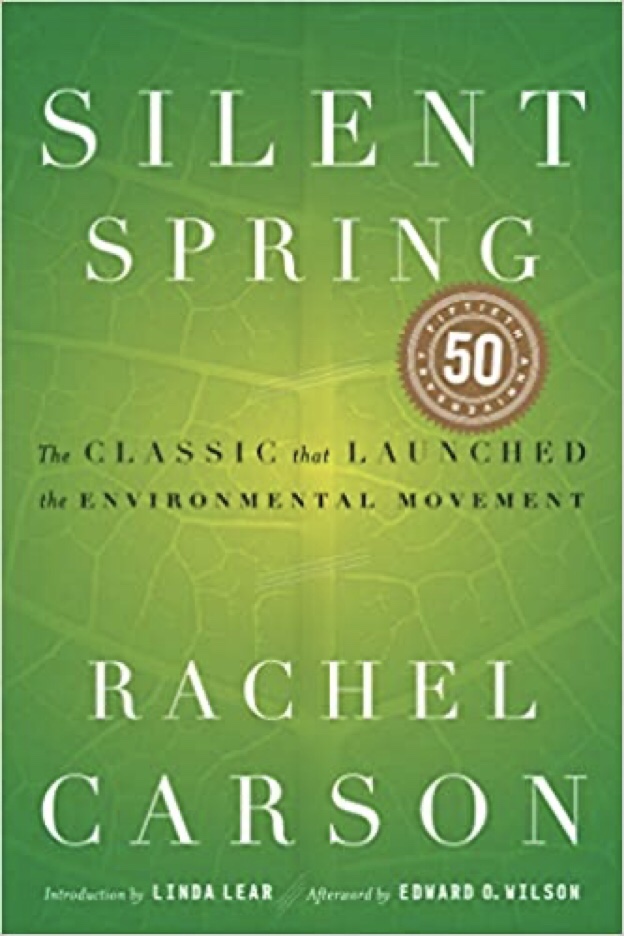
Rachael Carson was an American-trained marine biologist who never had a long-lasting institutional affiliation; her earlier writing earned her enough to allow her to pursue her broad interests in sciences independently. Her knowledge of entomology, chemistry, physiology, radiation science, and ecology was astounding and is presented in well-organized, logical segments, (but sometimes with biting sarcasm when discussing the then-burgeoning powerful chemical industry producing tons of toxic insecticides and herbicides). She had contact with leading environmental scientists, biologists, and entomologists from around the world and quotes them liberally.
The cozy relationship described between lobbyists for the chemical companies and the U.S. Department of Agriculture seems analogous to that described between Big Pharma lobbyists and the FDA in Gerald Pozen’s Pharma in more recent times.
Emphasizing the delicate balances in nature, the case for using natural products for control of both vegetable and animal pests seems compelling. The examples of the law of unintended consequences are numerous. The cited examples of toxic and at times fatal effects of synthetic pesticides, in many species, including Homo sapiens, are shocking. Carson’s documentation of these ultimately kickstarted the environmental movement that lead to actions such as the banning of DDT and the delayed establishment of the Environmental Protection Agency in the U.S. Yet almost 60 years later, the defoliant in Agent Orange is still readily available to spray, wherever you please, as Killex. It seems we are all slow learners when it comes to sharing nature with other species.
The introduction of foreign species to control native pests, which Carson advocates with some caveats, has a long history of problematic unintended results, witness the devastation wrought by rabbits and cane toads deliberately introduced into Australia. The whole concept of foreign invasive species is a bit problematic- in many places Homo americanus is the main foreign invasive species and from a broad Gaia perspective, Homo sapiens is the most destructive invasive foreign species on earth.
The discussion of cellular respiration and the effect of toxins on cellular respiration took me back more than 50 years to the painful introduction to the Krebs cycle in biochemistry class.
It seems that no one ever refuted any of the hundreds of science claims presented here, although the book was scorned by those in the powerful chemical industry.
Two quotes will suffice to demonstrate Carson’s wisdom as well as her vast knowledge. “By their very nature, chemical controls are self-defeating, for they have been devised and applied without taking into account the complex biological systems against which they have been blindly hurled.”
“The ‘control of nature’ is a phrase conceived in arrogance, born of the Neanderthal age of biology and philosophy when it was supposed that nature exists for the convenience of man.”
This is a great educational read, as relevant today as it was 60 years ago. Unfortunately, Carson died shortly after this book was published, denying her the accolades she deserved and us of more of her brilliant insights.

 The Passionate Reader