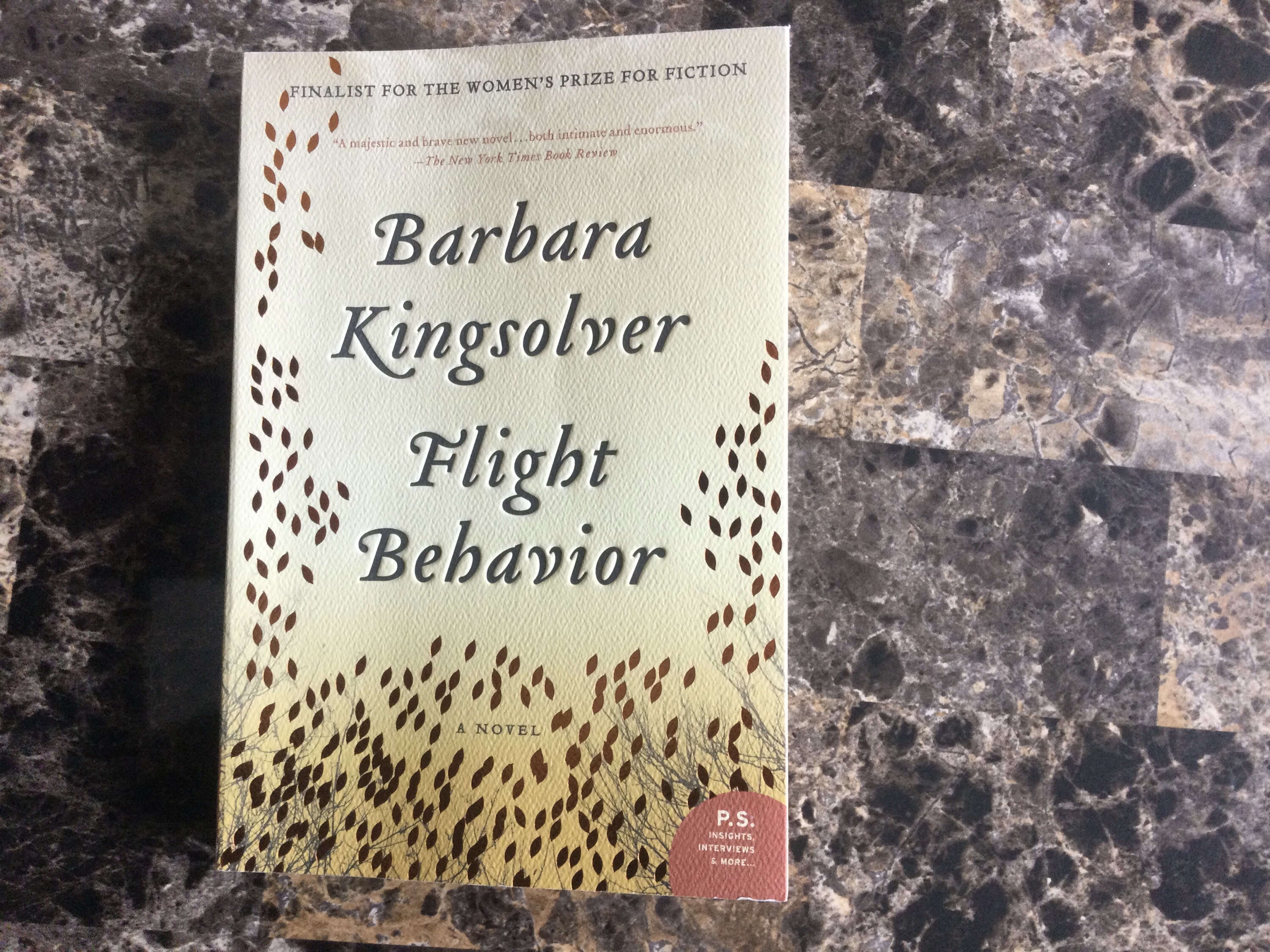
This beautiful novel can be interpreted in two ways. In one, it is a passionate, desperate plea from the author to every reader to take the climate crisis seriously and to do whatever one individual can do to reduce the effects of global warming. On another level, it is a charming fictional account of the life of a simple, impoverished, uneducated southern Appalachian Kentucky farmer and mother thrust into the world of ecological disasters by factors beyond her control as she discovers a huge collection of endangered Monarch butterflies who have gone astray because of global man-made changes to their migration routines.
Along the way there are important insights into the conflicts between commercial developments and ecological preservation and between a world view based on religious beliefs and that of a secular humanistic outlook. The turbulent family dynamics of the impoverished Turnbow clan, struggling to survive in the hollers of Appalachian Kentucky are typical of those in many disadvantaged southern states. The quirky characters are realistic and believable. The innate reproductive instincts of sheep, butterflies and humans are described in language appropriate for any ten year old.
The writing is lyrical (an overused word, but nothing describes it better) with hundreds of apt metaphors, similes and vivid descriptions of scenery, dialogues and interesting diverse characters.
One very nit-picky criticism. “ ….this was a living flow, like a pulse through veins”. Why do novelists insist on pulses in veins, rather than in arteries?.
I had previously read and reviewed Kingsolver’s Unsheltered, which is probably why my daughter sent me this one for my birthday. Although I enjoyed Unsheltered, this earlier nuanced fiction is a far better story. Highly recommended.
Thanks,
Alana

 The Passionate Reader