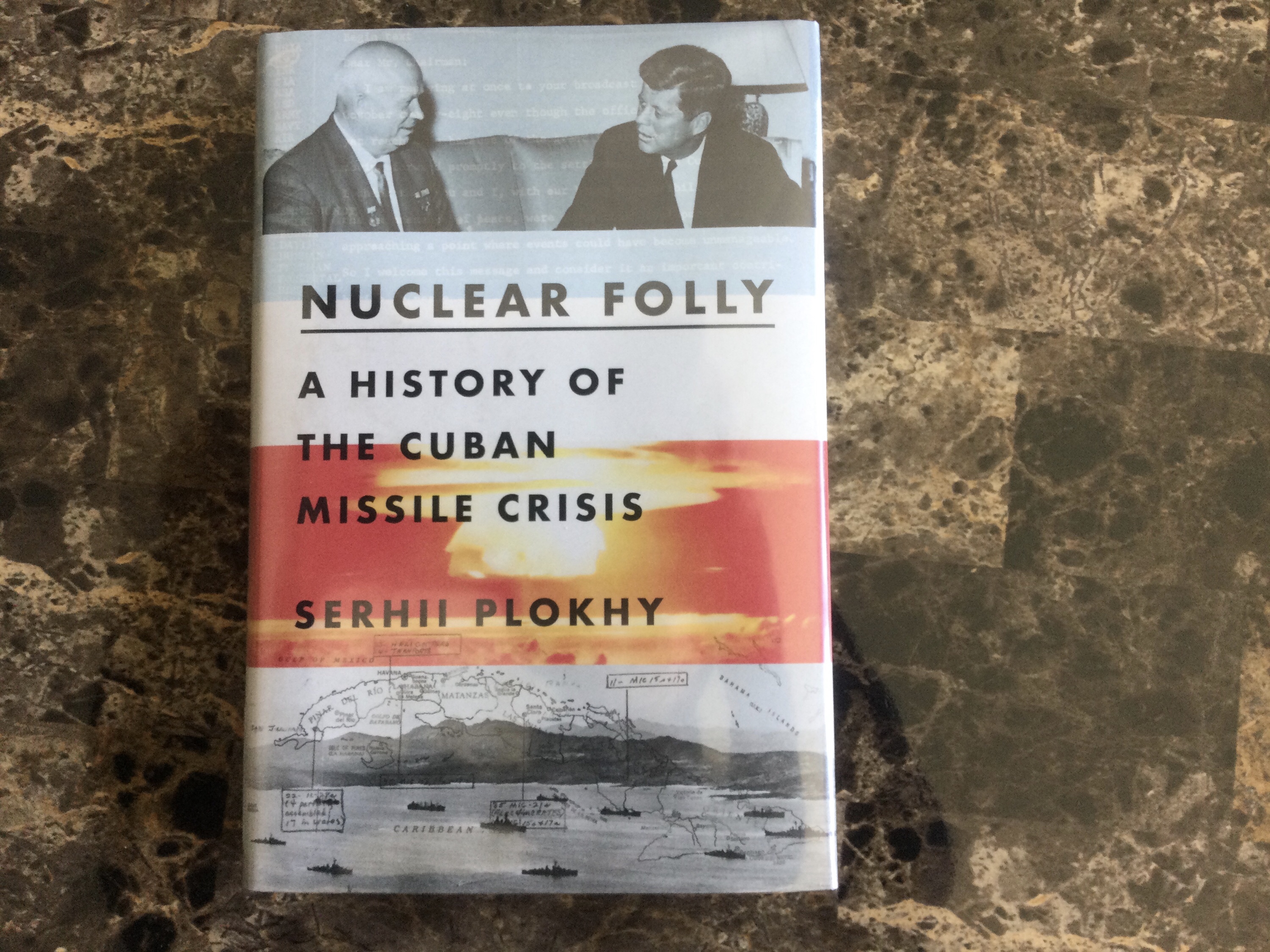
By way of background for those youngsters who were not terrified by the newscasts at the time, in October, 1962, in the midst of the Cold War, the Americans discovered that the Soviets were secretly delivering missiles of all kinds, including nuclear ones, and setting them up all across Cuba, 90 miles from the coast of Florida. This frightening historical account by a Harvard professor of history was touted by The Economist book reviewer as the definitive account of that crisis and gives a detailed account of how close we came to being thrust into a world-ending nuclear war between the U.S.A. and the U.S.S.R. as a result. The author’s research is exhaustive, based in part on recently declassified archival material.
The details of how close we came to that mutual assured destruction are truly frightening. Over the course of four weeks, mutual distrust, paranoia, misinterpreted communications through intermediaries, and the blinkered world views of Nikita Khrushchev, JFK, and Fidel Castro all contributed to the dangerous brinkmanship. Some of the details of the eventual trade-offs that averted disaster were concealed for years.
Khrushchev, although verbose, mercurial and indoctrinated with Communist ideology, actually presented a strong case for setting up nuclear weapons in Cuba, pointing out that Americans and NATO allies had long had more powerful weapons of mass destruction poised on or near the USSR’s border in Turkey and Italy. Only the mutual recognition that pushing the nuclear button would destroy both nations and much of the rest of humankind prevented the tragedy, but both leaders came close to losing control of their decision-making to military hawks. At least two planes were shot down contrary to the explicit orders of superior officers.
Modern leaders cancelling the nuclear weapons limitation and test ban treaties seem to have ignored the lessons from this near disaster. The willingness of both superpowers to disregard the sovereignty of smaller nations such as Turkey and Cuba is striking, and has persisted.
I was struck by the vast number of precision weapons available at that time, and the hugh waste of resources in the building up of military forces and weapons. The delays in communication caused by manual translation and telegraphy through embassies don’t apply in the modern era, but instant communication among political hotheads does not necessarily reduce the danger and may increase it if emotions come to take precedence over slow deliberation.
For a civilian scientist, the most interesting story is the inadvertent wandering of an American U2 recognizance plane into Soviet air space in the far north because the pilot got lost. Unable to use usual navigation instruments between the magnetic and true North poles, he relied on old-fashioned sextant and stars but was led astray by a vivid display of the northern lights.
As a striking reflection of the times, no woman’s name appears among the hundreds of senior decision makers in America, Cuba or the Soviet Union. The only women even mentioned by name are JFK’s duped trophy wife, Jacqueline, his 19 year old secret lover Mini Alford (one of many), the wife of John McCone, the Director of the CIA who kept him away from an important meeting because they were on their honeymoon, and the terminally ill wife of a Soviet apparatchik. It may seem out of place for this western male, but I can speculate about what would have happened had half the players in this drama been female. The situation might not have developed into a crisis at all, and it would probably have been resolved more quickly and equitably.
There are hundreds of long, foreign, unpronounceable names of people and places, and military acronyms for fleets of ships and planes- sometimes as many as a dozen introduced on a single page-far too many for any casual reader to keep track of.
Dedicated historians, military planners, political leaders, and senior government bureaucrats may enjoy and benefit from reading this dry , account, but for ordinary citizens, it is best used as a bedtime sedative taken in small doses, although it might induce nightmares. But the relevance to our current situation with the risk of accidentally triggering a devastating nuclear war is undeniable as political leaders still deal with biased world views, missing or erroneous information, and irrational reliance on military might.

 The Passionate Reader