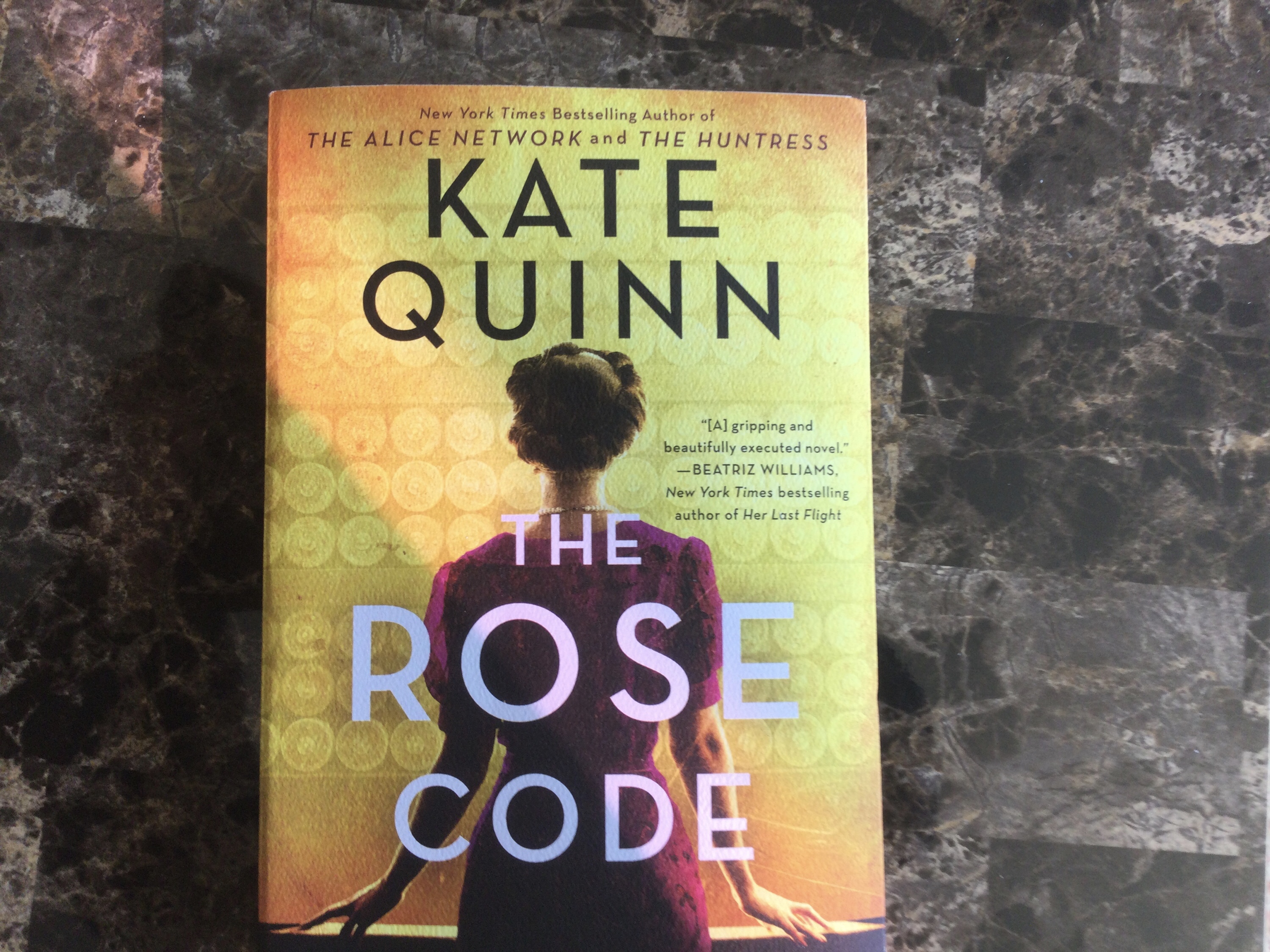
The California queen of historical fiction is back with another realistic and enlightening tale of the effects of World War II, this one based mostly in the now-famous top-secret British Bletchley Park where thousands of men and women tried to decode German military communications. As in The Alice Network, in a long author’s note at the back, she discusses what details of the story are real historical events and characters (a lot) and what were products of her vivid imagination. She has done her homework well and many of the events and characters are real and accurately portrayed including the life of the late Prince Philip of Greece as a sailor and philanderer before he snatched the HRH label by marrying Liz, Lord Mountbatten and the traitor who sold Enigma decoded information to the Soviets.
Three young troubled women, Osla, Mab, and Beth, from very different backgrounds, mature, become close friends and then fierce enemies as they work as decoders, cryptographers and translators, competing for the attention and affection of the scarcer male workers, all sworn to absolute secrecy. Their coworkers include Ian Fleming, Alan Turing, and Kate Middleton’s real life grandmother. They interact with royals, admirals, and various politicians, including Sir Winston Churchill.
The devastation and cruelty of wars have been a staple of historical novels since ancient times, but the randomness of the deaths of civilians is seldom presented as vividly as here in the effects of the bombing of London and Coventry.
The plot is complex and the twists are unpredictable. Short chapters detailing events a few days before the 1947 royal wedding are interspersed with longer ones from before and during WW II. Unique British idioms are captured realistically. Seemingly unconnected encounters and events are never abandoned and all fit in toward the end. There is lots of sex, but it is described more discretely than in The Alice Network. The convenient locking away of eccentrics who know too much in an insane asylum, with complicit doctors, and the barbaric treatment in those institutions is a stain on the history of medicine in that era.
My only quibble is that the tracking down and capture of the real traitor of Bletchley Park in the last few pages is embellished in a weak attempt to develop suspense, to the point of being very unrealistic.
One of the better historical novels of World War II of which there are dozens. In my estimation, it is better than The Alice Network, but not as good as Kristan Hanna’s The Nightingale, although perhaps more historically accurate.
Thanks, Yvonne and Vera

 The Passionate Reader