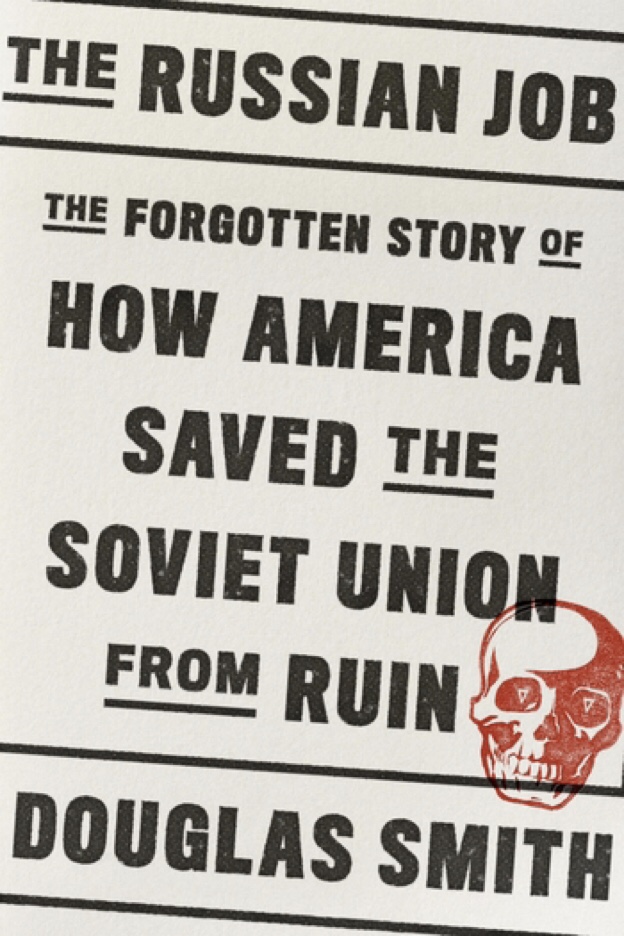
Neglected bits of history that are not taught in most classes have always been of interest to me-anything to enliven the memorization of politicians names and dates of battles that we were fed in school. The Vermont-based authority on all things Russian here provides a scholarly balanced account of a grossly neglected corner of history that I was completely unaware of.
Exactly one hundred years ago a drought and famine devastated a hugh portion of the fledgling Soviet Russia. The Americans, with the American Relief Administration, run by the future president Herbert Hoover, sent hundreds of workers and hundred of thousands of tons of corn, wheat and flour to save the lives of an estimated six million Russians in the affected provinces along with medical and dental supplies, vaccines, and infrastructure materials.This was funded in part by the U.S. government as they supported the Midwest farmers, and in part by private philanthropy such as the Carnegie and Rockefeller foundations and individual Americans. Those workers documented hundreds of cases of cannibalism, some adults murdering and eating their children, others raiding piles of frozen human corpses for meat. An estimated ten million Russian peasants nevertheless died of starvation over the ensuing three years.
The Soviet leaders at first welcomed the aid, but as accolades from the masses for the capitalist Americans grew, their appreciation waned. When, in 1923, the Soviets began exporting 400 thousand tons of grain, even as ten thousand of their own peasants were still starving, the ARA gradually withdrew from Russia. Lenin and later Stalin felt that the program threatened the stability of the Communist regime, and began a propaganda campaign to discredit the massive humanitarian campaign. Later Russian leaders tried to ignore the help they had been given, or characterize it as a disingenuous spy plot to undermine their Communist paradise.
The American workers in Russia almost all formed strong friendships with their hosts and interpreters in the provinces and most longed to go back after the program ended. They had been greeted as heroes working in deplorable conditions there, whereas they were soon forgotten in America. An estimated one in ten of the men married Russian ‘famine brides’, most of whom were former Czarist aristocrats working for the ARA. Inevitably, there were scandals as some Americans tried to smuggle treasures out of Russia and some criminals highjacked trainloads of food for personal gain.
There is brief discussion of similar, though smaller, programs of aid to America’s Russian allies during WWII, and after the fall of the U.S.S.R. in1991 when again many peasants in Russia starved to death. No living Russians will remember the ARA, and few will even be aware of its existence as this great humanitarian effort is still unacknowledged by Putin et al.
I detected no overt American bias on the part of the author of this important piece of largely forgotten history. Though it documents incredible human misery and debauchery, I appreciated it and learned a lot.
A note on the format of books. This was my first foray into audiobooks and it was probably not the best one to start with. I am a terrible speller and the hundreds of long foreign place and people names that are hard to keep track of on audio would, I suspect be easier In print. A map of Russia in 1922 would have been helpful but cannot be displayed in an audio book. I like the feel of a paper book in my hands, but I have become fond of the ability to define an unfamiliar word and the ease of flipping to and from a reference in nonfiction in ebooks. And in ebooks, it takes only a few keystrokes to copy a memorable phrase, sentence or whole paragraph into another document. The audiobook format does have the advantage of showing you exactly how long it will take to read through the book. I took 10 hours and thirty-six minutes to read this, what with breaks to search for word meanings and background facts. So what format do you prefer?

 The Passionate Reader