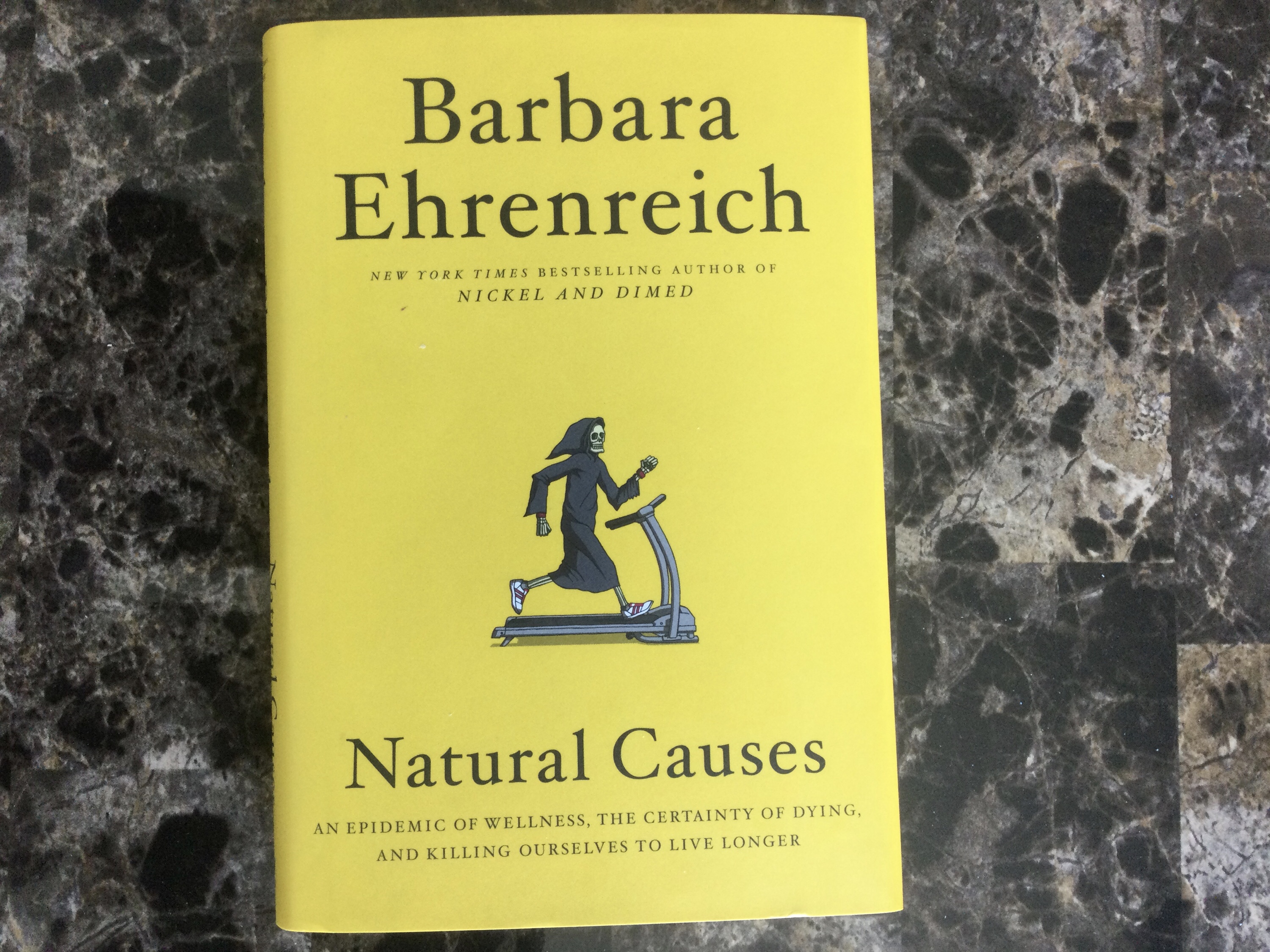
I discovered this book of wide-ranging reflections about life on our bookshelf recently and have no idea how it got there -did I buy it and then forget it, or was it an unacknowledged gift?
The Virginia-based cell biologist, socialist, social critic, and prolific writer, of my vintage provides a delicious dose of uncommonly well-thought-out common sense with a kind of skeptical or even cynical analysis of many trends in modern western culture, sciences, and even philosophy. The roots of the ritualistic modern medicine physical examination are compared with those of perhaps equally beneficial rites of tribal shamans and witch doctors. I feel obliged here to reveal one trade secret – I often did ophthalmoscopic examinations, not because I suspected any eye problems, but because it facilitated surreptitiously getting close enough to sniff the patient’s breath for alcohol or fetor hepaticus, the telltale odour betraying the presence of severe liver disease.
Her scorn for routine health examinations and screening for a variety of illnesses, including many cancers, echos that of Dr. Gilbert Welsh in Overdiagnosed and Less Medicine, More Health, and some of the concerns expressed in my Medicine Outside The Box. But her keen exposure and dissection of trends of questionable value extends to fads in fitness routines, diets, brain exercises, yoga, mindfulness and meditation routines.
Ehrenreich’s background in cell biology leads naturally into later discussion of the functions of various cell types, most notably those of the immune system, but this never gets bogged down in medicalese. The conundrum of immune system cells within us that go rogue and assist cancer cells to grow and spread raises all sorts of issues about agency, the independence of parts of us from other parts, intentionality, etc, and the philosophical debates about free will. Attributing free will to all matter down to the level of subatomic particles seems preposterous, but Ehrenreich makes the case for it convincingly. However, after considering this, it seems to me that this degenerates into a reductio ad absurdum, since molecules moved by writing or speaking this assertion would then be capable of denying it.
Later chapters delve even deeper into philosophical matters as she discusses meaning in life and death, our connections to other creatures and matter, and the nature of self. One great quote: “…with the introduction of ‘self-knowledge’ and ‘self-love’ one enters an endless hall of mirrors. How can that self be known to the self? And who is doing the knowing?”
The book is organized logically and the writing is unerringly interesting with startling metaphors and analogies, and not excessively technical. I only found one very minor possible error. Jeanne Louise Calment is cited as having set a longevity record, in spite of being a sedentary lifelong smoker, dying at age 122. But much later evidence strongly suggests that she died at age 59 with her daughter assuming her identity thereafter to avoid taxes and then dying at age 99.
This is an engaging and informative good read with unique perspectives. Four stars.

 The Passionate Reader