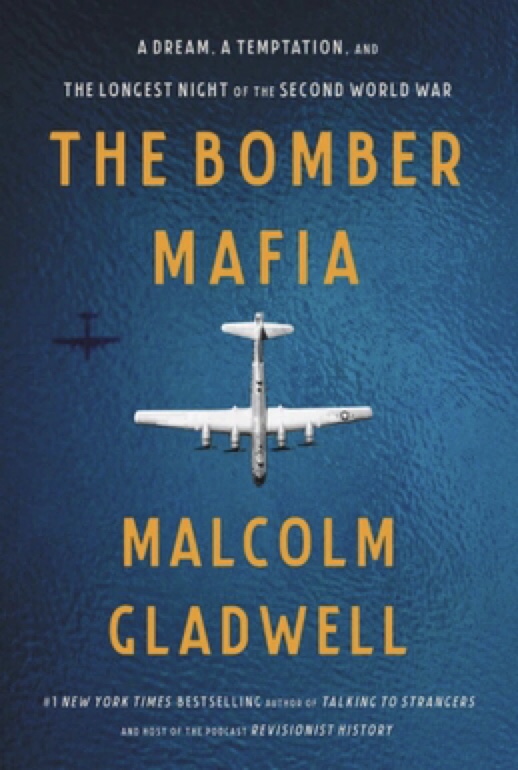
The former English and Canadian writer now living in New York deviates from his usual social commentary to provide some little-known military history of WWII in this book first published earlier this year by his own company, as an audio book.
The air forces were the newest fighters at the beginning of the war and were not even recognized as separate forces from the armies and navies, and their influence on the course of the war was initially under appreciated. Following the indiscriminate bombing of London during the Nazi blitz, leaders in the air forces were divided into two camps as to their proper role. On the one side, there were those who thought that precision bombing of strategic military targets with sparing of civilians was their appropriate contribution. That capability was greatly enhanced by use of the bomb sight device newly developed by Carl Norton.
In the opposite camp were those such as Sir Frederick Lindemann, who had the ear of Winston Churchill, and General Curtis LeMay who won influence in the U.S. war machine, who advocated for indiscriminate mass bombing of German and later Japanese cities to break the morale of the enemies. In spite of the failure of that strategy to break the morale of Londoners, the advocates of mass indiscriminate bombing of enemy cities largely won out. The result was horrendous civilian casualties and such silly efforts as attempting to fly bombers from India over the Himalayas to China and then to Japan, with virtually no success. When dour uncaring Curtis LeMay replaced Haywood Hansel, a member of the ‘Bomber Mafia’ and an advocate for precision bombing, as commander of the air fleet in Guam, the result was the massive carpet bombing of many Japanese city centres with 25,000 tons of incendiary napalm bombs over four months, killing as many Japanese civilians as 100,000 Tokyo residents in a single night raid. The justification LeMay advanced for such actions was that it would obviate the need for a land invasion and shorten the war. This is the same rationale, advanced by Harry Truman for the use of the atomic bomb, as documented in Dennis D. Wainstock’s The Decision To Use The Atomic Bomb, although the more important secret consideration for that decision was to prevent Russia from invading and taking control of Japan.
Curtis LeMay and Sir Frederick Lindemann may be lauded as having contributed more to winning the war, but there is no doubt that Haywood Hansell and The Bomber Mafia won the moral battle and deserve wider recognition.
This starkly dark documentary is narrated by Gladwell himself, with liberally interspersed archival interviews, sound effects and musical interludes, the latter contributing little to its value in my opinion.
Who would benefit from listening to this account? Certainly any military strategists, ethicist, or ordinary citizen who makes a point of pondering the morality of warfare. A good short history lesson.

 The Passionate Reader