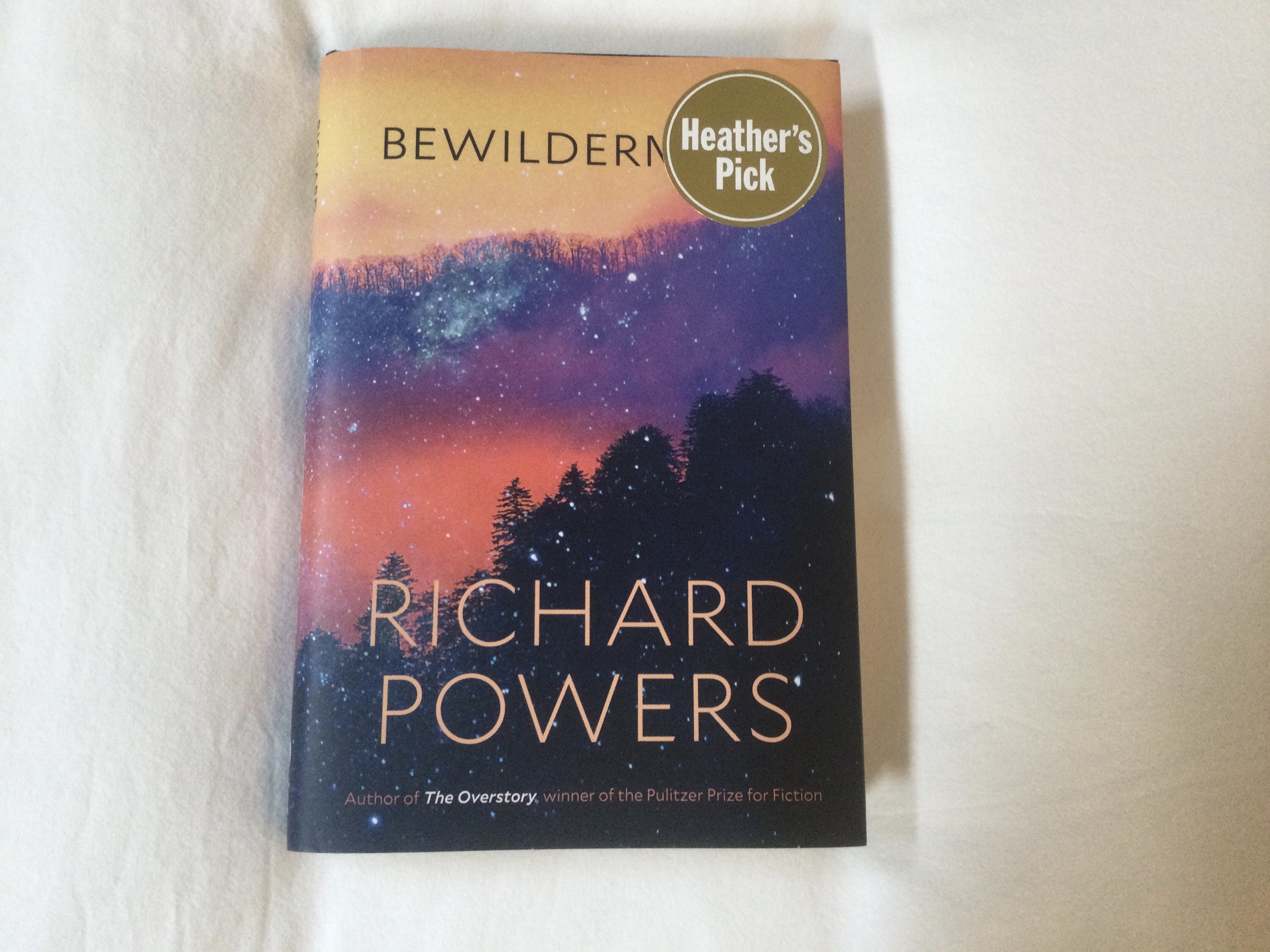
Narrated in the voice of astrobiologist Theo Byrne, this very new novel, set in very modern times, is global in scope and an intriguing delightful read. The widowed Theo is left alone to raise his troubled nine year old son, Robin, who has what modern psychiatric dogma would label as some combination of Asperger syndrome, ADHD, and obsessive compulsive disorder, labels that Theo rejects. Robin is troubled by memories of his late environmentalist, wildlife preservation advocate scientific mother. When a neuroscientist friend of Theo’s connects Robin with his mother’s emotional states as she had recorded them in a functional magnetically resonance imaging machine, his brain wiring is altered to mimic hers with great improvement in his mental state. The technique called DecNef, (for decoded Neurofeedback) is promoted as a treatment for all kinds of mental disorders, and Robin becomes a media celebrity.
Donald Trump is never mentioned by name but his anti-science, anti- democratic, and environmentally destructive policies and legal maneuvers are enacted by the unnamed President, and he cancels the funding for the promising astrological search for life on other planets and the neuroscience research. Greta Thunberg is never named either but is clearly presented in the form of her fictional autistic European doppelgänger, environmental activist Inga Alder.
Interspersed with the earthbound science which may seem farfetched to many nonscientific readers, but which seemed like semi-realistic possibilities to me, Theo and Robin visit imaginary life-sustaining planets and exoplanets, at least in their shared imaginations.
The first and last parts of the story are set in the author’s home area in the Smokey Mountains around Gatlinburg, Tennessee, and the bulk of it is set in Madison, Wisconsin. I have explored both of these cities and can attest to the accuracy of the depictions.
The book has no chapter breaks, but spaces between short sections of narrative prose give it realistic natural breaks; there should be no difficulty for readers to keep track of the few characters. ScFi aficionados will love the visits to other planets. Beautifully integrated, the story leaves readers with no loose ends except for some doubt about Robin’s true paternity. (His animal-preservationist mother is killed in a car accident as she swerves to avoid killing an opossum)
Some great quotes. “The difference between fear and excitement must be only a few neurones wide.” “Life assembles itself on accumulating mistakes”.
A great read, at least as good as the author’s earlier Pulitzer Prize-winning The Overstory.
Thanks,
Vera and Book Browse.

 The Passionate Reader