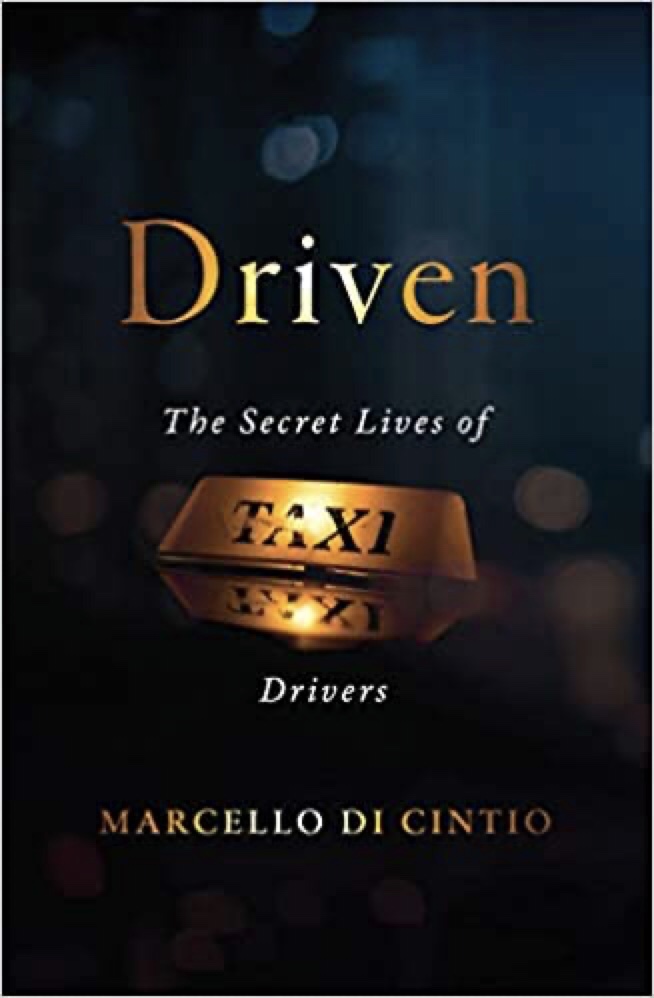
One metric of how much I am or am not enjoying reading or listening to a book in any format is how often I flip to the end to see how much I have yet to read. Another that my wife often notices is how often I find excuses to stop reading and do something else. With this book of 14 short true biographical sketches by the Calgary travel writer, I seldom checked how much I had left to read and found nothing more important to do as I read on, enthralled as Canadian cabbies told stories about their backgrounds, struggles and work experiences. It could have entertained me for longer if the author had found more cabbies willing to chat with him.
The author does not claim that the cabbies he interviewed are a representative or scientific sample, but were the only ones willing to talk to a journalist on the record. And he fills in their stories with notable background information and data. For example, he claims that a taxi driver in Canada is more likely to be murdered than is a police officer. A Pandemic Postscript documents the devastating effect of the early part of the Covid-19 pandemic on the lives of several cabbies he interviewed earlier.
The interviews feature no one who was born in Canada except for one aboriginal man in the far North.They were mostly a diverse group of immigrants from war-torn or impoverished third world countries with harrowing stories of their past experiences. From Halifax to Vancouver to Yellowknife, there are none who started out in adulthood with a goal of becoming a taxi driver, but most expressed gratitude for the opportunities the job provided them.The title has a triple meaning as they are usually driven into the business by severe poverty, and are driven by ambition to succeed and provide a better life for their families as their better-healed customers are driven to and from airports, brothels, casinos, house parties, and shopping malls. Some befriend the prostitutes they supply with customers, or become customers themselves, and some are frustrated poets, writers, engineers or social workers. A joke in Montreal is that the safest place to have a heart attack is in a cab as your driver is likely to be a cardiologist.
The story of how Nathan Phelps escaped from the notorious Kansan Westboro Baptist Church cult to become a Calgary cabbie, public speaker, and minor philosopher is particularly touching and made me cringe to think that I was once a duly-dunked Baptist. But Baptists come in many different flavours and all of my Baptist relatives and friends would be as appalled by the cruelty and extremism of the Werboro Baptists as I am. He muses about the impossibility of an afterlife: “It suddenly becomes that much more important for my life to have some relevance, because this is it.” The author succinctly adds: “ If nothing comes afterwards, everything matters more.”
Dominated by Punjabi immigrants, no member of the Winnipeg taxi cabal, whose members have a bad reputation for abuse and assault, agreed to be interviewed, but the volunteer Ikwe women that he did interview, dedicated to providing safe rides for vulnerable poor and indigenous women of that city stepped in to provide a safe and necessary service and talked proudly about their work. They are to be admired.
Some of the interviewed drivers are more interesting than others. Iranian Mo in Halifax seems to be a charismatic entrepreneurial psychopath with PTSD and an ambition to live a life like the rich businessmen he ferries around in his fancy BMW limo. The Danish Edmonton cabbie is forever finding dubious hidden connections between Shakespearean characters and Bob Dylan song characters and writes poetry and novels. I do not know enough about the industry to take take sides in the taxi vs Uber wars in Toronto and Montreal, but found the tactics of the “Taxi Sheriff” of Montreal thwarting would-be Uber drivers to be ingenious and entertaining.
As I was nearing the epilogue, purely by chance, I listened to a CBC story on the car radio about the billions of dollars that several companies are pouring into the development of flying taxis, some of them driverless, and became concerned for the future of the interesting real drivers in this book.
A very Canadian and very enjoyable good read. Highly recommended.
Thanks,
Floyd.

 The Passionate Reader