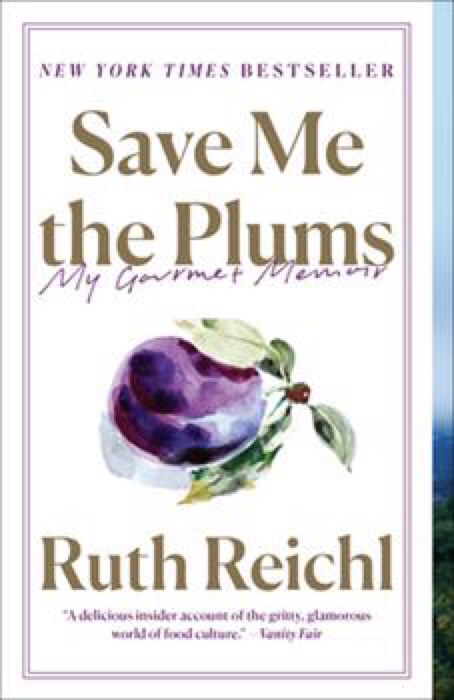
This memoir by the former food critic, restaurant reviewer, and editor of Gourmet magazine provides unique insights into the inner workings of the elitist, competitive corporate world of magazine publishing in an America of the past. Conde Nast, publisher of many magazines, including The New Yorker, GQ, Vogue, House and Garden, and Vanity Fair lured the unassuming, common-sense author and food writer away from the LA Times to the posh offices of Gourmet magazine overlooking New York’s Times Square in 1999.
Unaccustomed to the world of seemingly unlimited budgets for personnel, travel, and wardrobes, she outlines many battles with the staid conservative old guard billionaire owner and a succession of resistant personnel in the upper echelons of the corporate world, revitalizing the magazine with daring content. This included a controversial long piece by David Foster Wallace questioning the ethics of dropping live Maine lobsters into boiling water. Along the way, she interrupted her hectic New York life to go on month-long book tours to promote her own and Gourmet’s books.
The book is replete with descriptions of famous quirky chefs, executives, and writers, including a few names I recognized from their writing in The New Yorker, or from their books that I have read. However most were unfamiliar to me as I am basically a food agnostic and seldom dine anywhere with a Michelin rating. The recipes included are, with one exception, far too complicated for me to attempt or to even understand. The high brow social scene of the New York celebrities with jumbo egos where your seating at a gala dinner is a hint as to whether you are about to be promoted or fired is likewise very foreign to me, but interesting to read about. I cannot imagine living among people who don’t think twice about buying a Paris dress on sale for only $6,500.00.
The pandemonium and fear gripping New York following 9/11 is described in detail as the chefs and staff at Gourmet magazine prepare and deliver food to exhausted firefighters at Ground Zero. As an aside, the author’s description of her mother’s irresponsible actions in the manic phase of her bipolar disorder, buying a house, a boat, and a mink coat that they cannot afford, is a rare accurate depiction of the difficulties in dealing with that phase of a devastating illness, seldom featured in literary works.
On a low-budget 2009 tour of Paris, staying at dingy outer arrondissement hotels and eating at cheap diners, she met an old chef friend who had a profound effect on her, pointing out that riches, fame, servants, limousines, and celebrity status are not necessary for a meaningful life, and should not be major goals in her life. “I had forgotten how money becomes a barrier, insulating you from ordinary life.” When she is ordered back to New York from a book tour later that year, she is sure she is about to be fired, but instead hears that the magazine is being inexplicably abruptly cancelled, including the next month’s issue that was ready to be printed. She seems somehow to not be very disappointed, taking the Paris friends advice to heart.
I am an indiscriminate eater, willing to try almost anything on offer (except liver), and a terrible cook, but I found this book engaging and an enjoyable read, in one sense only peripherally about food at all. I suspect that more dedicated foodies would enjoy it even more than I did.
Thanks,
Jackie.

 The Passionate Reader