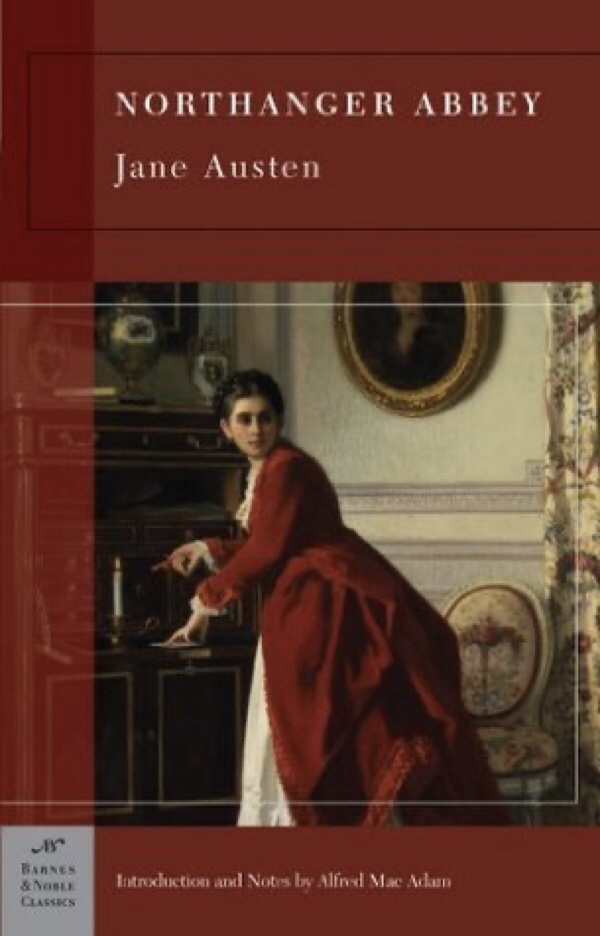
This coming of age novel, written in 1797-98, revised in 1803, and only published in 1818, a year after the authors death, was chosen by someone in our book club for our occasional foray into old classics. The first half is set in the English spa town of Bath, and most of the second in fictional Northanger Abbey in Gloucestershire, a repurposed run down Reformation-era nun’s convent, sometime in the late 1700s.
The most important task of middle-aged women of the era seemed to be matchmaking for their daughters and young maidens in their charge. With rigid rituals of courtship, the girls need to find suitable young men of good breeding and integrity and with means of support. The men likewise carefully direct their sons in their choice of a wife of suitable means and societal standing. Fathers, but not mothers of both sides were required to consent to any marriage, emphasizing the rigid paternalism of the society. The young women were not expected to be smart, educated or articulate. “The natural advantages of folly in a beautiful girl have already been set forth by another author….imbecility in females is a great enhancement of their personal charms.” The precursors of the dumb blond stereotype?
When the 17 year old main protagonist, Catherine Moreland is a guest of one family first at Bath and then of an aristocratic one at Northanger Abbey with its out-of-bounds dark mysterious rooms and halls, described in great detail, she seems to fit the above description of a beautiful dumb girl by imagining the latter site to be an old crime scene, based on her past reading of Ann Radcliffe’s The Mystery Of Udolpho.
There is at least some semblance of a plot and the inevitable happy ending in the second half of the story. The characters can be a bit difficult to keep straight, and are very properly British in their demeanour and outlooks to the point of making the novel seem like a mocking satire. The conversations are wordy and circumlocutory with flowery language and no one directly states what they really think. Some sentences are more than a half a page long, and everyone seems quick to be offended by the smallest perceived slight. Everyone keeps a journal and writes long windy letters in elaborate language.There are painfully long detailed descriptions of people’s clothing, conversations and of public spaces.
Austen engages readers in aside disquisitions to the reader about the art of novel writing, literacy in general, history and politics, and bemoans the poor esteem of novelists.
I actually enjoyed this book much more than I thought I would when I started in to it, particularly the latter half. But I will not be tempted into trying Pride and Prejudice or Sense and Sensbility.

 The Passionate Reader