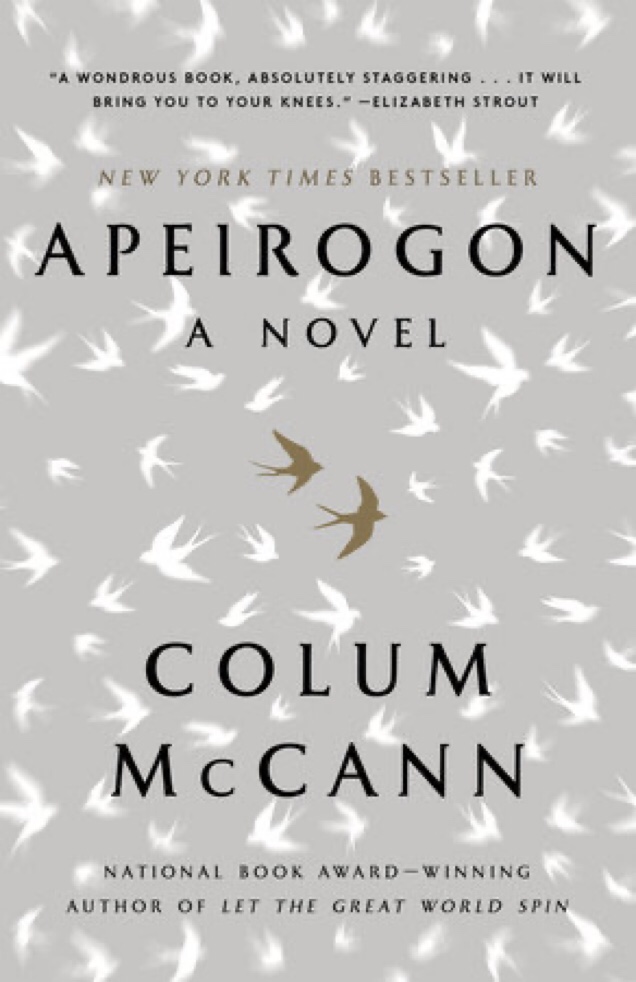
Although this is described as a novel, the two main protagonists, Palestinian Bassim Aramin and Jewish Rami Ehanan are two real men who fought on opposite sides of the Israel-Palestine conflicts but who then formed a real organization called Combatants for Peace. Refusing to assign blame to either side of the eternal conflict, they seem to prefer a two-state solution, but are open to any workable one. They and others also belong to the Parents Circle, a group of Israelis and Palestinians who have had their innocent children killed in the conflicts. Bassim’s 13 year old daughter was shot by a rogue Israeli soldier in 1997; Rami’s 10 year old daughter was blown up by an Islamic suicide bomber ten years later. It is not clear how much of the details of these deaths are real, as the New York author takes a lot of liberties in attributing characteristics and thoughts to the two men although much of the plot, such as the travel of the Palestinian Bassim to Bradford University to study the holocaust seems real.
The story is divided into no chapters but short sections numbered 1-500 then back down to 1, ranging from one phrase or photo to several pages, with seemingly random interspersed treatises on ornithology, and many other random topics. Many of these disconnected sections contain erudite bits of history from around the world, quotations from ancient or modern poets, philosophers and historians and trivial snitches of supposedly factual scientific data that have little or nothing to do with the main plot. What has the average volume of water in a backyard swimming pool got to do with this story? It is as though the author is trying to showcase his vast knowledge of history, philosophy, science, the arts and mathematics, the discipline from which the title derives. At the very middle are two ten page first-person-singular autobiographic sketches of the two men with heartfelt impassioned pleas for dialogue, understanding, and compassion rather than revenge even for the killers of their compatriots and family members. These sketches are separated by a one page explanation from the author about how they met.
Rami’s gripping account of the horrors of the ‘67 Yom Kippur war in the Sinai Desert emphasize the futility of all wars. The discussion of the spin, rumours, and outright lies that circulate to explain the senseless killing of the innocent presents the timeless truth that ‘The first casualty of war is the truth’.
There are some memorable quotes:
“The only revenge is making peace.”
“The hero makes a friend of his enemy.”
“The greatest jihad …..was the ability to talk”.
I confess that I frequently flipped forward to see how many pages were left. This touching story would have been much more enjoyable if it was half the length.
Thanks,
Jeannie
“
“
I

 The Passionate Reader