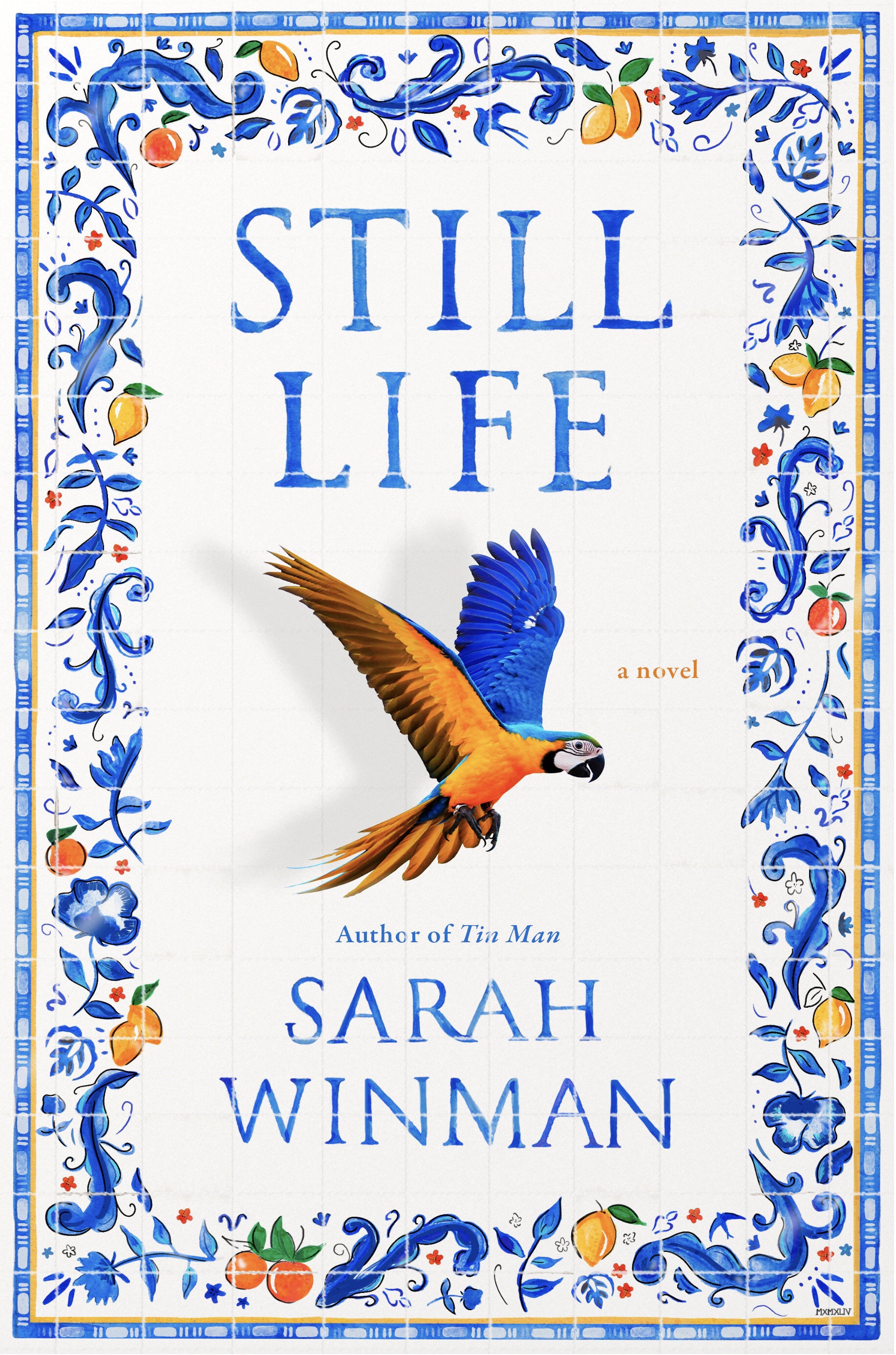
This new rambling incoherent novel by a British author alternates scenes between London and Florence and between the liberation of the latter by the Allies in the Second World War and the early 21st century. It does provide readers with a detailed knowledge of the geography, history and culture of Florence.
Much of the focus is on hundreds of painters, sculptors and museums as interpreted by a knowledgeable British art historian who spends much of her time in Florence seeking to find art lost in the Tuscan hills during the war, and an eclectic group of English itinerant visitors, some of whom settle in Florence. There are endless discussions of hundreds of artists that I had never heard of and of their works. Amateurish spontaneously generated forgettable poetry is spouted by boozy would-be poets. Interspersed Italian words and phrases had me frequently looking up their meanings.
In places the narrative borders on magic realism as a parrot with an extensive and foul (forgive the pun) language dispenses advice, and quotes Shakespeare. One character talks to trees and gets advice from them.
Many of the characters are aspiring artists themselves and there is an over abundance of lesbians and gay men, even considering the known over representation of those in the creative artistic world. One elderly nymphomaniac couples with anyone she can still seduce. The sexual exploits are described in unnecessary detail -there is a lot to be said for leaving something to the reader’s imagination- and foul language prevails not only in the parrot’s talk but in the narrative of the characters who might be expected to have a limited vocabulary and in that of the author whose vocabulary one should think need not include vulgarity. The author seems to regard quotation marks as unnecessary grammatical nuisances and their absence makes the narrative of the characters difficult to distinguish from that of the author.
There is a distinct undercurrent of early feminism and societal acceptance of lesbianism. A perceptive nine year old girl asks why all the Florentine statues are of men.
There are many loose ends left dangling. I doubt that I am the only reader who waited in vain for some explanation of who the dead body buried on top of another body in a park by the boozy clients frequenting an East London pub in the 1950s was, or why he was killed and by whom.
There are a few interesting philosophical quotes:
“ A meager stain in the corridors of history, that’s all we are.”
“All artists are tortured by all they’re not, and by art that’s not theirs.”
I have no accurate estimate of the length of this novel as the Cloud Library book I downloaded has very unreliable pagination, but it must be over 550 pages judging solely by how long I took to struggle through it.
In spite of laudatory online reviews by others, I cannot recommend this novel for anyone except perhaps dedicated Renaissance art enthusiasts or art historians.
Thanks, June S.
⭐️

 The Passionate Reader