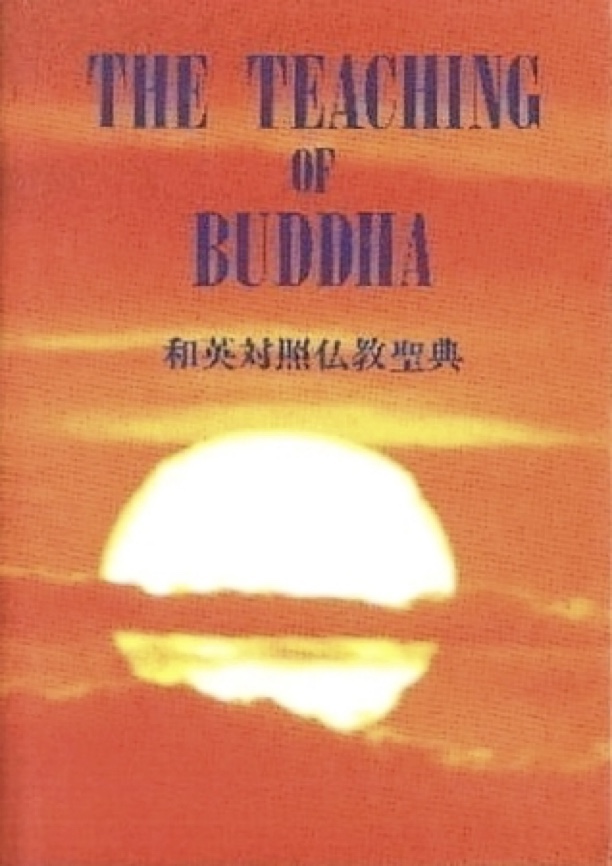
With our Rogers connection down last week, unable to figure out how to navigate my new iPad to download my digital subscriptions and the library not providing for downloading of e or audio books, I scanned our book shelves for something to waste my time on and this one sure is a waste or time. I can hardly believe that it survived our downsizing move five years ago. I suspect that it was a gift from my daughter ages ago, one I had not even checked out. Someone had yellow highlighted several sentences.
Long on ethereal, banal platitudes, parables, and allegories with no easy interpretations, and a lot of utter nonsense, at least this, unlike the Christian Bible and the Islamic Koran does not encourage followers of Buddhism to wage war against nonbelievers or against nature. The many fables with magical features never made any sense to me unlike Aesop’ fables. And it does not imply that Buddhism is the one and only true religion, nor does it claim exclusive insights and guidance. Like much of the teaching of Islam, there is a heavy emphasis on spiritual striving for perfection. There are abundant blatant inconsistencies and contradictions that I doubt can be explained away by difficulties in translation from Sanskrit to English.
Buddha is described as a fifth century B.C. aesthetic prince from central India or alternatively as an eternal spiritual presence within everyone and all of nature or a state of Enlightenment achieved by few. What seems clear is that he (women barely rate a mention in this book) was not one discrete individual unlike the founders of Christianity and Islamism. And as in all religions, Buddhism is not one religion, but many sects with different outlooks, as one would expect from any belief system based on oral traditions that became written texts only centuries after their founding. There is only passing reference to an afterlife, but I guess one does not need advance detailed description of what is in store for you if reincarnation is universal- just wait for the surprise. Unlike most flavours of Christianity and Islamism, there is apparently no expectation for aggressive evangelism but there are long lists of negatives to avoid.
“If the three ways of practice are analyzed, they will reveal the eightfold noble path, the four viewpoints to be considered, the four right procedures, the five faculties of power to be employed, and the perfection of six practices.”
Two more nonsense quotes and one of dubious advice:
“This conception of universal oneness- that things in their essential nature have no distinguishing marks- is called “Sunyata.” Sunyata means non-substantiality, the in-born, having no self-nature, no duality.”
“ The delusions of reasoning are based upon ignorance and the delusions of practice are based on desire, so that the two sets are one set after all and together they are the source of all unhappiness.”
“One must not kill any living creature.” Does this include insects and microbes that bring us disease? This admonition is later modified to include only sentient creatures. But determining which species are sentient is problematic. What do you eat if you do not kill any living creature?
This volume does convey hard to follow, common sense bits of advice on how to maintain your equanimity in the face of the slings and arrows of outrageous fortune but there is nothing of great importance. It’s message was even more lost on me than Jean-Paul Sarte’s Being and Nothingness. I cannot recommend it for anyone who already has a smidgeon of common sense.
Perhaps to round out my religious education, I should study texts of Hinduism, Shintoism, Sikhism, Judaism, or Zoroastrianism, but that is not likely to happen. Thus endeth today’s rant.
⭐️

 The Passionate Reader