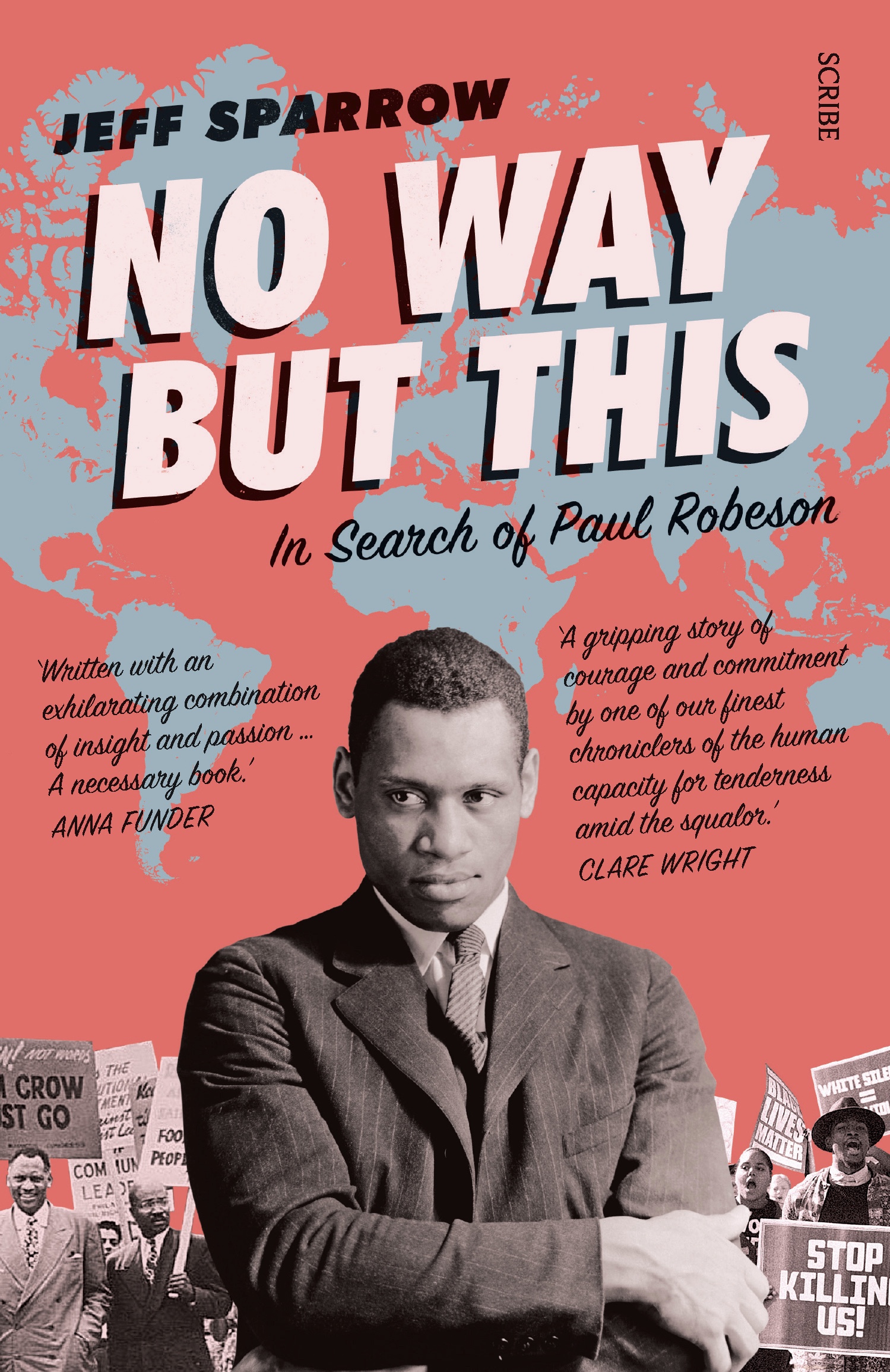
When I ran out of available appealing books to read recently, I searched for something about Paul Robeson, as he is one of my heroes . I had only vague memories of reading his 1958 autobiography and polemic, Here I Stand, many years ago. When I listen and watch him singing on one of many platforms, particularly his various renditions of Old Man River, from Showboat, as I have many times, it always brings tears of joy to my eyes and a chill up my spine as I marvel at his deep bass reverberating voice. His handsome face and expressive gestures as he sings are, in my opinion, unparalleled in the world of theatre, so I yearned to learn more about him-his radical political views, his unflinching championship for all oppressed people, his illustrious acting, including controversial stage productions of Othello, his championship sports career at Princeton and Rutgers and his private life, of which I knew only snippets. I had not realized that many of the songs and stage roles were changed as they were vilified as racist or politically unacceptable by both the blacks and whites and by the left and the right alike, until I read this book. It seems that the minefield of political correctness is not new.
He can be viewed as the successor of such black leaders as John Brown, Frederick Douglas, and Washington T. Booker and the forerunner of Malcolm X and Martin Luther King Jr. but on a more global scale. He championed the cause of Welsh coal miners, Australian construction workers, and the Republicans fighting the Fascists in the Spanish Civil War, where he risked his life to entertain and encourage the troops.
Put in the context of his poverty-stricken background as the son of a former slave who became a starving clergyman, and his experiences with overt American racism, his endorsement of communism that resulted in him twice losing his American passport and to hounding by McCarthyite red baiters in the 1950s is entirely understandable. He never denounced communism, but his late recognition of the terrors of Stalinism probably contributed to his late-life angst.
But he was also human, experiencing marital difficulties, yielding to temptations for affairs with numerous women who were seduced by his unequalled charisma, experiencing severe depression when one of them, British actress Yolanda Jackson, backed out of plans to move to America and marry him after he obtained a divorce. The divorce never transpired, although he and his wife thereafter led largely separate but supportive lives. He had some elements of the imposter syndrome, doubting that he deserved his fame and wealth. Late in his career, he experienced many further episodes of severe suicidal depression before succumbing to a stroke at age 75.
The Aussie author’s format of the book is to relay to readers the details of his own travels around the world as he tries to retrace those of his subject. But this fails to follow Robeson’s life accurately chronologically. The details related to the lives of those travels and interviews with locals who could shed light on Robeson’s life are distracting, and largely irrelevant. The first section of 95 pages presents a somewhat confusing maze of his family history and background history of slavery in the North Carolina, his youth in segregated Princeton, his athletic career there and at Rutgers and his rise in Harlem, mixed in with comments about current American racial conflicts.There is extensive name-dropping as Robeson’s encounters with the rich and famous in the arts and politics are recounted.
Although I learned a lot of world history, particularly about the Spanish Civil War, from this book, I was a bit disappointed in this biography because of the author’s lack of focus on his subject and inclusion of a lot of his own irrelevant personal details.
⭐️⭐️⭐️

 The Passionate Reader