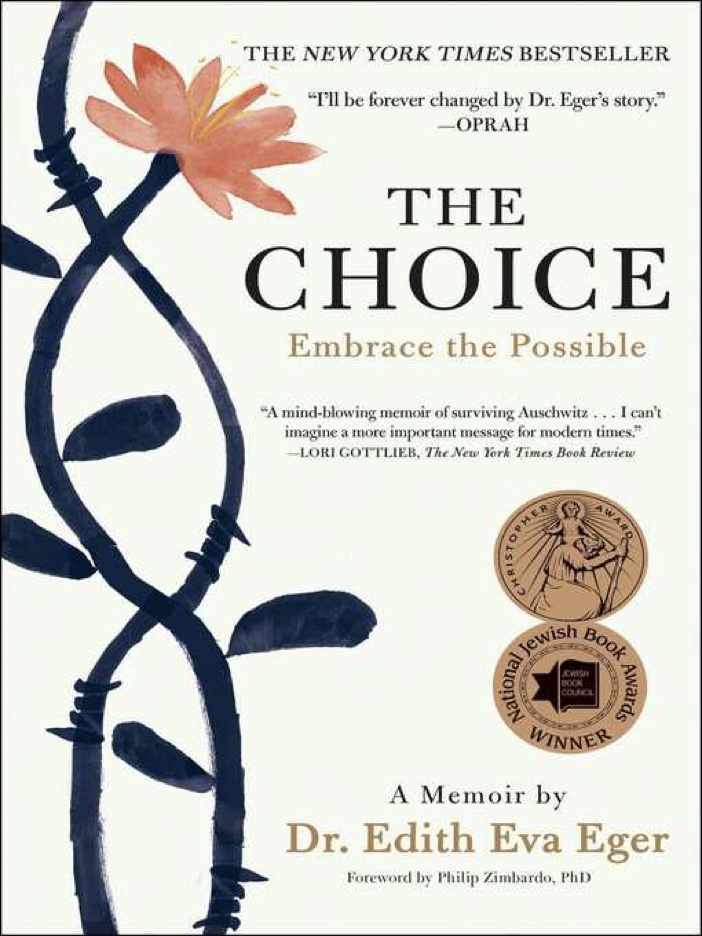
This memoir by a Hungarian/American Jewish clinical psychologist, now aged 94, is not a pleasant read. Rather it is a horrifying documentation of the incredible cruelty meted out to her and thousands of others in Auschwitz and other sites across Europe and later similar cruelty of Communists in the changing border areas between Hungary and Slovakia that she called home as a child, where she is convinced early on that her quarrelling Jewish parents and her two older sisters regretted her very existence. But it’s also ultimately an uplifting testament to the human survival instinct and spirit and the ability to see positives in the direst circumstances and forgive.
Chapter 14, when she is 40, in Jungian therapy and seeking a divorce, is filled with a bit too much introspective self-analysis and self-doubt for my liking, as though she is suffering from the imposter syndrome, the feeling that she doesn’t deserve the remarkable progress she has made in life. And two years later, she remarried her ex.
Forty years after her harrowing year at age 16 in Auschwitz, she returned there and experienced crippling guilt over her use of one correct word (mother) vs another incorrect one (sister) that, unbeknownst to her at the time, condemned her mother to the line of Jews destined for the gas chambers. For me, this lingering powerful guilt demonstrates the dramatically durable power of negative emotions to overpower weaker rational thinking, which she is certainly capable of.
There is abundant good advice for everyone in dealing with emotional pains, griefs, losses, disappointments, guilt and self-doubt feelings that we all experience, but much of it is common sense, a commodity apparently in short supply. There is no doubt about her intelligence, deep insights and positive influence on thousands of others as she reveals her life story to audiences around the world and even to her psychology patients.
The writing is mostly in short, snappy, arresting sentences and phrases such as: “… victimhood is optional” in the Introduction, and “My transgression is life. And the beginnings of cautious joy.” Or “A good definition of being a victim is when you keep the focus outside of yourself, when you look for someone else to blame for your present circumstances or to determine your purpose, fate, or worth.” But she also condemns self-blaming, while advocating for taking responsibility for your decisions. Such nuanced distinctions without a meaningful difference befuddle me. Throughout the book there is a lot of psychobabble, far too much for this reader to enjoy. My wife loved the booked and pointed out that our different takes on it may in part be because historically women have had far fewer choices in controlling their lives than men have. Perhaps because I have led a very lucky and fulfilling life full of choices (to this point), without experiencing much deep emotional trauma or open lasting conflicts, I had a bit of difficulty relating to the lives of people like the author and the patients she describes, much as they deserve everyone’s empathy. Perhaps psychiatrists and psychologists have unflattering words to describe me and my ilk. Shallow, out of touch with their emotions, or callous comes to mind. Stoical would be more flattering.
⭐️⭐️
Thanks, Vera.

 The Passionate Reader