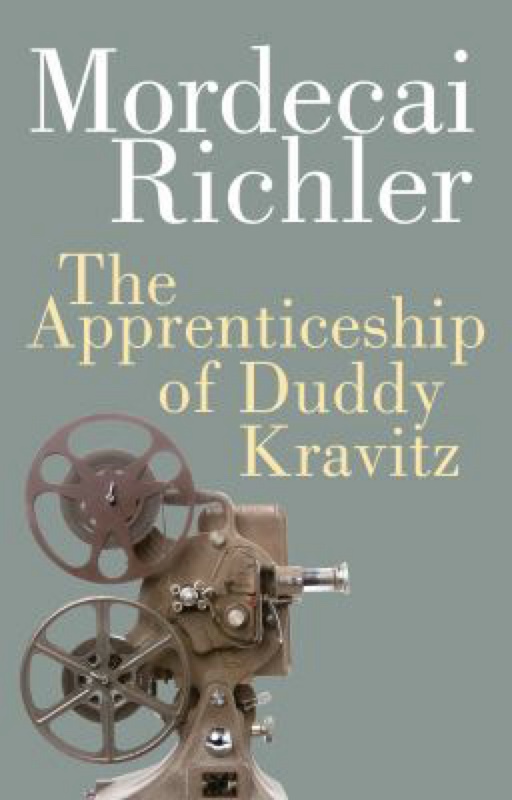
The fictitious protagonist of this story is a mischievous Jewish boy born in 1932 in downtown Montreal. From the first paragraph it is clear that he is not a conformist ordinary school boy. In Part I, heavy-drinking Mr. MacPherson, a teacher at the downtown Montreal Jewish school, finally becomes so enraged by Duddy’s antics that he breaks his personal principle to avoid corporal punishment of the unruly teens and applies the strap to Duddy. This revelation just sets the scene for what is to come.
An ambitious scheming dreamer, there is no doubt that Duddy, had he been born later when every personality quirk has become medicalized, would have been labelled as having ADHD, and perhaps as being on the autism spectrum. And as the story progresses, with his many enterprises thriving and then failing, one could also see Duddy as bipolar, alternately manically scurrying about chasing women or lying in bed for days with lucid disconnected dark dreams, thinking of suicide. A manipulative liar with laughable schemes to make money, he doesn’t hesitate to deceive friends and business partners alike. He always seems to have enough money for cigarettes and lots of booze to blot out his feelings of despair and dope his friends and relatives into supporting his schemes and lending him money. When all of his businesses fail, at one point, Duddy declares bankruptcy and resorts to driving a taxi for his father, all before he turns twenty. He sets an epileptic friend up as a driver for one of his businesses, with predictable results.
Usually just one step ahead of creditors, he drives taxi, sells illegally imported pinball machines, delves into real estate, dreams of developing a resort, produces and distributes movies made from camera recording of bar mitzvahs and weddings, and buys and sells scrap metal. He gets mixed up with an American heroin dealer and towards the end of the story, forges a cheque to finally purchase his dream resort lake property. To add to the diagnoses in the modern DSM -IV diagnoses that I discussed above, he would certainly qualify for the label of psychopathic personality disorder, but like many psychopaths, he can turn on the charm to get what he wants. As the author portrays him he is made to seem likeable to the readers.
Most of the story is concentrated on Duddy’s late teen exploits as a hustler and con artist
The picture of the striving Jewish families of the 1940s Montreal and of that city’s unique culture is interesting and detailed even though most of the families are depicted as highly dysfunctional. There is more than a hint of stereotyping Jews as money obsessed hard bargainers in all of their enterprises. There may be a grain of truth in this in that era; as a preteen, I recall the Jewish man who visited the farm to bicker over the price of scrap metal he was collecting. For the time when the book was first published the frank discussion of sensitive sexual issues and the loose mores must have been a bit avant garde. The foul language is confined to the conversations of the characters the reader would expect it from. The writing is mostly in short terse sentences and, like most of the conversations, often incorporates quirky humorous turns. It is as though the author is leading readers into the short attention span ways of the protagonist.
I quite enjoyed this old Canadian classic that had somehow previously escaped my attention.
⭐️⭐️⭐️
Thanks, Williams Court Book Club II.

 The Passionate Reader