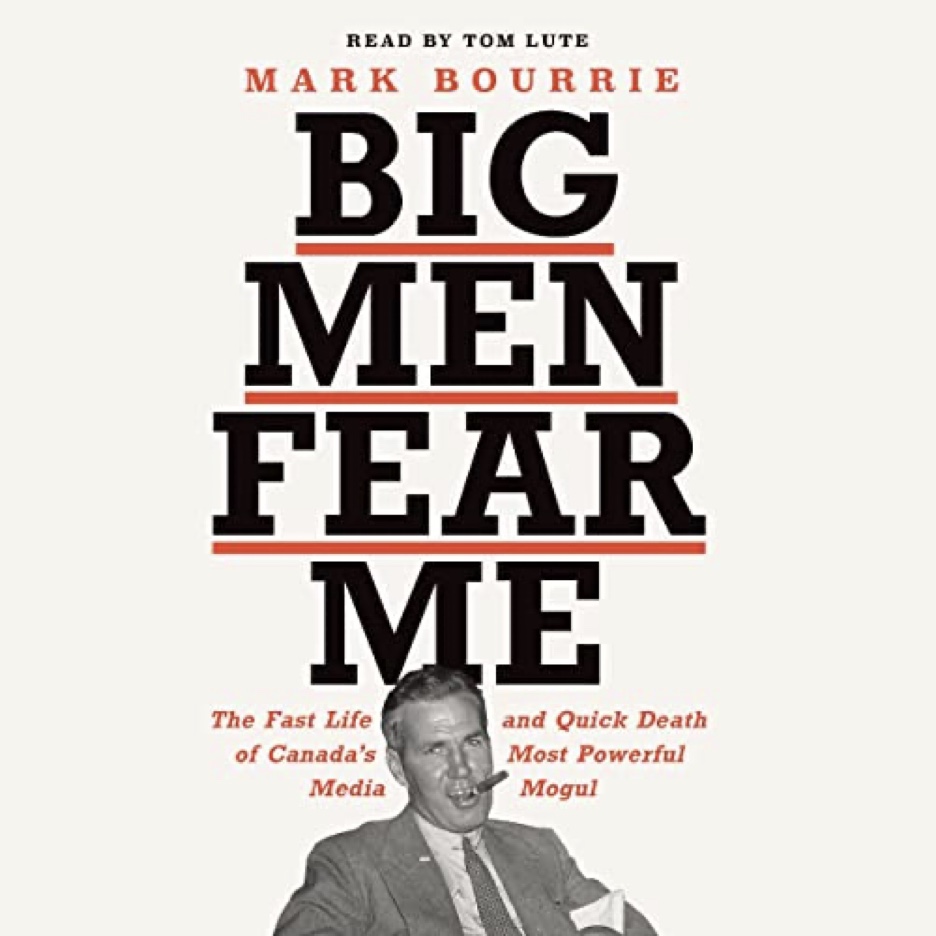
This is the biography of the all-but-forgotten early 20th century Canadian media mogul, George McCullagh. Born in 1905, he went from an impoverished childhood in south central London, Ontario, to hiking the backroads of southwestern Ontario in his early teens, selling subscriptions to the Globe newspaper, to being it’s publisher by the time he was 31, merging it with the moribund Mail and Empire to become the Globe and Mail. Although he dropped out of school before finishing Grade 9, he entered the world of elite well-educated millionaires, advising and befriending politicians, military strategists, royalty, and industry luminaries and labour leaders alike.
McCullagh’s personal wealth came from shrewd speculative investments in various northern Ontario gold and silver mining ventures at the peak of that craze in the early years of the Great Depression. Much of his Bay Street manipulation of mining stock would now likely be considered illegal scams. His friend and financial backer for many of his schemes, William Wright was responsible for most of the mining strikes, and later moved to Barrie and became a horseman, a hobby that McCalllugh also took seriously, winning one King’s Plate race. He was also a part owner of Maple Leaf Gardens and the Maple Leafs hockey team.
There are telling encounters with a rich array of characters, some of whom I have forgotten but they include Mitch Hepburn, the alcoholic Ontario premier, George Drew, conservative power broker, Lord Beaverbrook, Sir Frederick Banting, R.B. Bennett, Arthur Meigan, liberal powerbroker, Maurice Duplessis, dictatorial Quebec premier, McKenzie King, long serving liberal prime minister and spiritualist, Roy Thompson of concert hall fame, Isaac Walton Killam, Halifax paper mill baron, R. Samuel McLaughlin,owner of GM’s Canadian subsidiary, Conn Smyth and Foster Hewitt of sports fame, Sir Winston Churchill, FDR, King George V, Leslie Frost, Progressive Conservative Ontario premier and conservative Prime Minister John Diefenbaker. As I was only seven when McCallagh died, many of these movers and shakers were familiar to me only because I eavesdropped on adult conversations as I grew up, or encountered whitewashed versions of them in school history classes. Others who long outlived McCallagh are well known. We currently live in a Isaac Walton Killam apartment and I received a fellowship from the R. Samuel McLaughlin Foundation in 1976, never enquiring where he earned his millions.
The Globe and Mail was (and it can be argued, still is) the mouthpiece for the right-wing business community advocating for less government interference with free market economics, forever battling its more liberal nemesis, the Toronto Star in vicious editorial swipes. At one point, MCCallagh’s Freedom League championed one party political rule, with elimination of all provincial governments. It was sometimes difficult for me to keep the shifting positions of various players straight on issues like freedom of the press, immigration, taxation, censorship, and conscription. But there is no doubt in retrospect that the Globe and Mail was a key player in exposing Canada’s very inadequate contribution to the Allied war effort. The mainly white misogynistic, Protestant, British world of Ontario power brokers often conflicted with the mainly Catholic French ones of Quebec.
Bourrie’s diagnosis of MCCallagh’s mental health problems breaks the Goldwater Rule to never attach a mental illness label to someone you have not examined, but there is little doubt that McCallagh had a major mood disorder, with severe bouts of depression, treated by electroshock therapy administered by his New York psychiatrist. His intermittent self treatment with alcohol is well documented. Severe depression may have caused his death, which was believed by many to have been a disguised suicide, although I am not entirely convinced by the evidence of that presented herein.
This balanced well-researched examination of MCCallagh’s life by the modern Ottawa lawyer and journalist reveals important lessons for the media and political world of today. Our democracy and freedoms are fragile gifts that are constantly under threat by power-hungry billionaires and media moguls and need to be cherished and protected, as trends in the recent U.S political scene clearly show. It also provided me with a far better and more interesting analysis of the mid twentieth history of Ontario and Canada than anything I was taught in high school.
⭐️⭐️⭐️⭐️⭐️⭐️⭐️/10
Thanks, Floyd

 The Passionate Reader