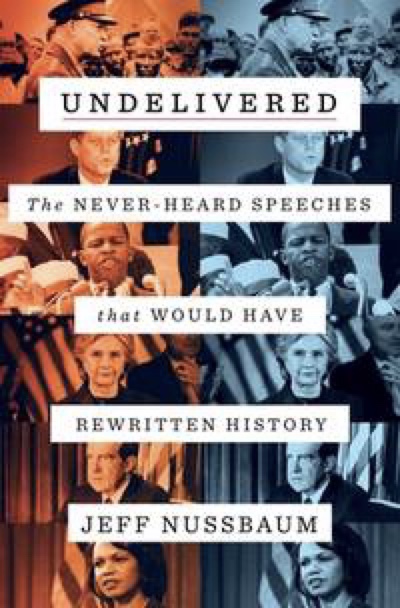
The New York-based former speechwriter for several American politicians including vice-president Al Gore and President Joe Biden, among many other notables, digs deeply into archives to retrieve speeches that were written but never delivered. But strangely, Al Gore”s acceptance speech when he thought he would win the 2000 presidential election is not included. Only three non-Americans are featured: King Edward VIII, Emperor Hirohito, and Pope Pius XI.
Nazi-sympathizer, womanizer King Edward VIII’s 1936 speech refusing to abdicate the throne to marry the equally philandering divorcee, Wallis Simpson, was never delivered but was supported for a time in that decision by none other than Winston Churchill. The chapter on Emperor Hirohito’s undelivered apology for Japanese war crimes comes across as splitting hairs over the nuanced meaning of different Japanese words when translated into English. Among the speeches undelivered because of the sudden death of the intended speaker is Pope Pius XI’s 1939 denunciation of fascism and Naziism at long last ending his warm relationship with Mussolini and Hitler. Others not delivered for the same reason include JFK’s Dallas address, FDR’s Jefferson Day address, and Einstein’s plea for peace and support for Israel. There must be others not cited here.
Most of the actual speeches that were never delivered are contained in the 27 page appendix, not in the wordy speculative text providing the background. Some undelivered speeches such as the powerful one of the aboriginal man, Wamsutta James, at the 350th anniversary of the Plymouth landing are included without any explanation as to why they were never delivered. For some, such as JFK’s undelivered speech announcing a 1963 invasion of Cuba, there is still dispute about who wrote it for the president. Richard Nixon’s 1974 undelivered speech refusing to resign reflects the confusion and chaos of the White House staff that summer.
Condoleezza Rice, George W. Bush’s National Security advisor, prepared a speech to be delivered on the afternoon of September II, 2001 for an audience at Johns Hopkins School for International Studies. The full speech remains classified but it is known that she would have strongly advocated for development of defensive antimissile systems and downplayed the risk from domestic or international terrorists.
In some ways, this is a discourse on the fine tuning of word combinations and nuances of meaning that make for a great speech, or a great piece of writing, that is able to persuade and stir people into action. The discussion of whether to use the passive or more powerful active voice in speaking or writing is ubiquitous in literature classes in all languages.
There are abundant bits of little-known history (mostly American) in this book, but I found it to be very poorly organized and had to frequently jump back and forth from the body of the text to the Appendix, the footnotes, and the bibliography to read in any logical sequence. There is no index to look for where such figures as Wamsuuta James are mentioned.
⭐️⭐️⭐️⭐️⭐️/10.
Thanks, The Atlantic.

 The Passionate Reader