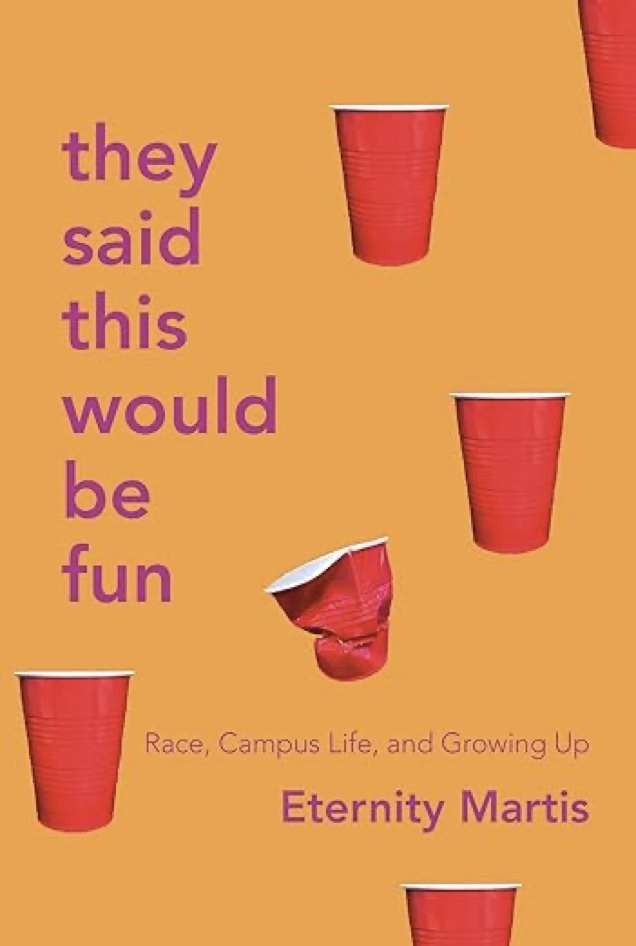
I am not sure where I heard about this memoir by a young black student’s experiences as a student at Western University, from 2010 to 2014. This brought back fond memories of my many years at Western, as a student and later as a faculty member, including the London restaurants, Joe Kools, The Ceeps, Chaucers, and The Barking Frog and the Sydenham-Medway student residences where I lived for one year. She is now a journalist in her home town of Toronto.
Much of the book is devoted to proving that racial discrimination, hatred, and violence is prevalent across Canada, perhaps especially in rich, staid, conservative, WASPy London, and this is certainly adequately documented with examples of individual incidents and data.
The description of the abuse she endured by intimate teenage sexual partners she fell for, demonstrating very poor judgment, is heart-wrenching and goes a way to explain her subsequent dedication to women’s advocacy. Her excessive alcohol consumption at Richmond Row bars to bury her problems in second year, and her subsequent belly pains, is apparently diagnosed by a nurse at Western’s Student Health Services as due to gastritis, seemingly without any laboratory investigation. Why wasn’t the diagnosis of alcoholic pancreatitis considered?
Painting Western as worse and more racist and misogynist than any other Canadian university without citing any experience at any of those other institutions may be true, but is unproven. She apparently does not recognize the irony in Black Londoners organizing ongoing secret Blacks-only segregated meetings at a back room of the Barking Frog bar. How long would such meetings be tolerated if reversed with white folk only meetings in such predominately Black communities as in parts of Detroit or south Chicago?
There is no denying the cruel, unjustified, and pervasive existence of white privilege and racism in Canada and it should be exposed, condemned, and fought vigorously, but this book does not recognize the existence of the majority of white Canadians who do not intentionally discriminate against Blacks. Her complaints about police and security guards profiling Blacks is of a well-known and accepted phenomenon. There is a marked paranoid tone to the writing and rage (which she admits to) and she justifies this rage with questionable racist motivations she attributes to some white peoples’ words and actions. Hanlon’s razor states something to the effect that one should never invoke malice to explain that which can be adequately attributed to stupidity (or incompetence); this author certainly does not follow that advice. It would be neither ‘woke’ nor politically correct for me to suggest that her own insecurity and Toronto childhood experiences with a largely absent, unhelpful father contributed to her interpretation of some personal comments and encounters as racial slurs, when they were not meant as such, but I have never been accused of being ‘woke’ or politically correct, and the thought did occur to me. For example, when she was dining out with her light-skinned Irish-Pakistani mother, she takes offence when the server asks if they want separate bills. She admits to childhood self-hatred because of her colour, being the dark-skinned offspring of a Jamaican father.
As a privileged white male, when I finished reading this rant, I wondered what actions or words I could possibly use to try to befriend a Black person of any gender that could not be twisted into a racial slur by someone determined to do so. But we white folk also need to fully educate ourselves about what others may consider to be racial slurs or actions. Yet I have somehow become good friends with a wide variety of people of various origins and with widely varied amounts of melanin in their shin. Perhaps they are either less attuned to finding racial slurs in the conversations with white folk than this author, or more willing to forgive and forget them. This is a problem that may perpetuate distancing our white selves from people of colour by making us reluctant to try to befriend them or say anything to them lest it be misinterpreted as displaying racism. Na Nehisi Coates, the black activist and writer is perhaps the poster child of those seemingly determined to use the race card to win any debate about any issue. As the saying goes “If all you have is a hammer, everything begins to appear to look like a nail.”
I cannot conscientiously recommend this book, but I am glad I read it, if only to give it a negative review.
1.5/5

 The Passionate Reader