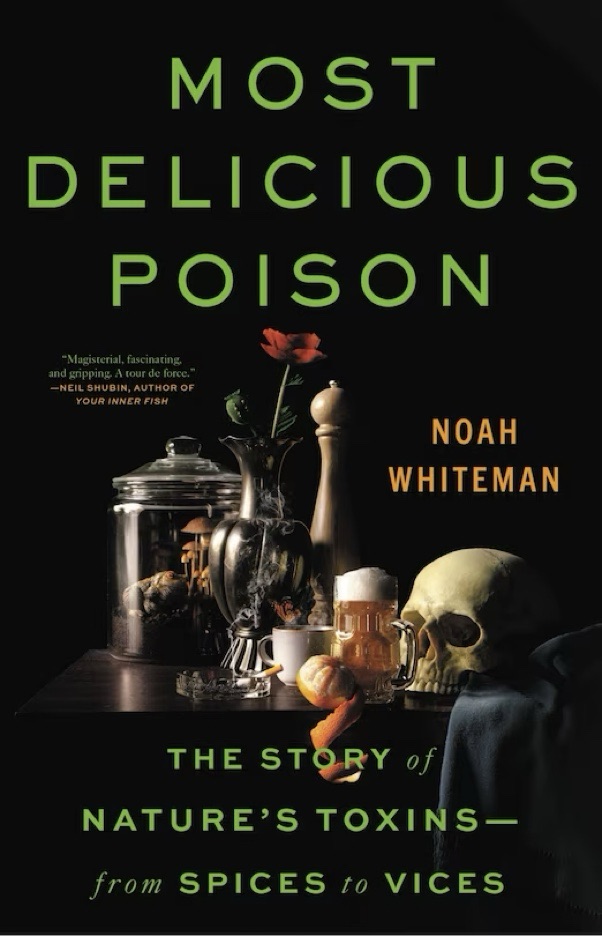
In this scholarly work by the Berkley professor, the definition of a poison is somewhat loose, as he notes early on – it all depends on the dose. One needs to keep the relationships clear as they can be very complex as some plants use a huge variety of compounds in defence while animals and microorganisms sometimes succeed in adapting them fortheir own purposes. Such is the case with aspirin- like compounds and the phenolics and flavonoids that have produced some useful medicines.
In describing the monarch butterfly defence using toxic cardiac glycosides, the long history of this tactic is emphasized as is the complex relationship between our endogenous production of similar products. It seems a stretch to link the author’s father’s fatal alcohol abuse to any specific product in nature and I could not follow the logic. Similarly, to state that “A line can be drawn from the single most influential drug ever, the Pill, to the herbivore-repelling diogenin-laden of wild yams in Mexico, the red trillium birthroot of the Native Americans, and the oubain in the poison-tipped arrows that the Girama people used to defend against the Portuguese invaders in 1505” seems an extreme stretch, but this book is full of speculation.
The long chapter on the death odour is so unfocused as to weave its way into many other areas such as psychedelics and the narcotic epidemic. There is no mention of the revolting odour called fetor heptaticus on the breath of some patients with chronic, but not always severe liver disease. I briefly studied it and showed that it often did not indicate severe disease. It is believed to be mainly caused by a mercaptan, and is so potent that one drop will clear a sizeable building, and is used by gas companies to alert them to leaks.
The history of coffee is interesting but I am concerned that no distinction is made between causation and correlation and the bit about pregnancy made no sense- there is no such thing as first trimester premature birth! The protective effect of smoking on development of Parkinson’s Disease is mentioned, but not the effect on ulcerative colitis. One snippet of interest is Sigmund Freud’s addiction to cocaine. The author totally lost me in his wandering logic under the title. The Herbivore’s Dilemma.
The author seems to regard chapter titles and subtitles as mere suggestions or launching points to then discuss myriad unrelated topics as they occur to him. He never addresses the issue of free will and may not have ever pondered it, but acts as though it doesn’t exist. It is hardly news that there are thousands of poisons, that they serve an evolutionary purpose, or that we vary in our responses to them. Beyond that few will want or need to know more details. There is a huge amount of information conveyed in this book, but it is so poorly organized as to be very difficult to remember. I cannot recommend it.
=
4/10
Thanks, Book Browse.

 The Passionate Reader