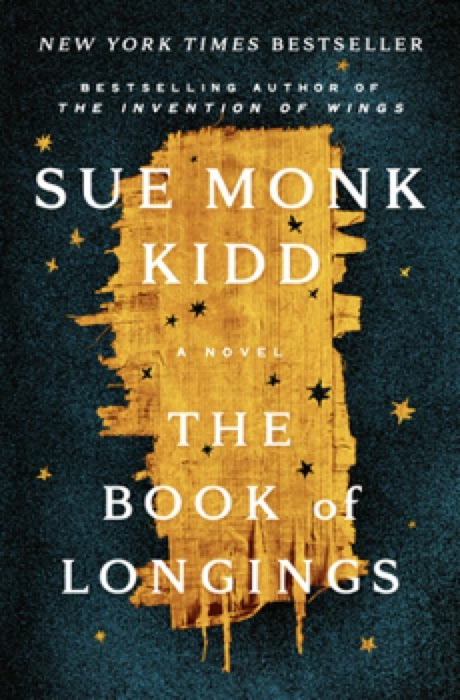
On the first page of this imaginative novel, Ana, the narrator and rebellious daughter of a head scribe for the Roman emperor of Nazareth reveals that she is the wife of Jesus ben Joseph. But 140 pages later it is still about to happen as in the interval all sorts of intrigue and imaginative harrowing events interfere. The life of Jews, and Romans, the role of women and the doubts of even the most devout are carefully explored. The thought of Jesus as a married man is not as radical as it would at first seem as we are never told anything about his life between the ages of 12 and 30 in the Bible, or anywhere else, for that matter and it was expected that Jewish men would marry by their early 20s.
When he finally does get married, his family proves to be very dysfunctional, and he is not shown as divine, but very human. He works as a labourer, fisherman, and stonemason, while Ana tries to find meaning in life by writing poetry and warning letters on shards of broken pottery and papyrus if/when she can find the material and ink, a lifelong obsession that he supports. The intrigue of jockeying for position in the ruling Roman Empire becomes vicious. The Jewish rituals of cleansing and purification are pervasive.
After another 100 pages, Jesus has been dunked in the Jordan River by John the Immerser, the latter has been imprisoned, and then beheaded by the Romans, and Jesus feels called to lead the devout Jewish resistance to Roman rule with the reluctant approval of his wife. But she is banished to Alexandria, where a melodramatic reunion of Yaltha, her aunt and Diodora, Yaltha’s daughter eventually takes place after along estrangement. Ana’s involuntary estrangement from Jesus continues for 18 months with no word about what he is doing. Her eventual escape from Alexandrea to return to her husband comes too late as she arrives only in time to witness his crucifixion.
I have barely scratched the surface of the extremely complex plot, all of it quite plausible, but at times very melodramatic. The life and character of Jesus, as related by his wife is fully compatible with that related in the Bible, down to the smallest detail, omitting only the thieves allegedly crucified with him, but including his betrayal by Judas. There is nothing heretical about this Jesus, although some no doubt claim that his lack of divinity makes it so. But the divine nature of Jesus was in reality confirmed only at the Council of Nicaea in the fourth century, and only by men who had a clear interest in making that proclamation. (See How Jesus Became God, 2015.)
A map of the area was very helpful, but a list of the characters could have also been usefully included.
I quite enjoyed The Secret Life of Bees and The Mermaid Chair both by this North Carolina author but this with a very unique thesis, an exceedingly complex plot, and a deep insight into the lives of the times is even better. Highly recommended.
9/10
Thanks, Pat and John.

 The Passionate Reader