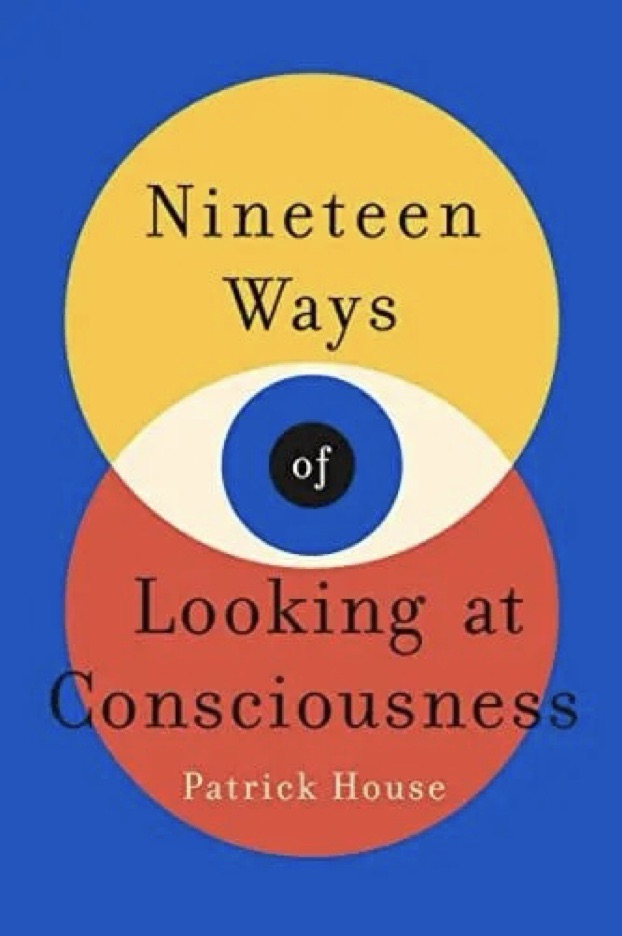
Always interested in neuroscience, I had high hopes for this book by a Stanford neuroscientist, but they were dashed as soon as I got started into it. I wish I could honestly say that I understood at least one of the chapters, but I would be lying.
Several chapters deal with a girl undergoing conscious surgery for epilepsy with stimulation of her brain in various places and her responses, but with no conclusion about her consciousness as far as I can tell. Others deal with dropping a pigeon and a bowling ball from a height and concluding that the pigeon has consciousness based on the response. “The measure of how conscious the pigeon is can be determined by the maximum value of its so-called phi which stands for the intrinsic cause-effect power of the local maximum cause-effect power- in other words the ability of any group of communicating things to act on itself.”
One further confusing quote to give you a sense of this book: “Consciousness is present in all timekeeping brains because it has to be in order to coordinate asynchronous inputs into any kind of meaningful purposeful motion.”
Perhaps someone is able to understand this book full of erudite facts, but I just found it frustratingly confusing. It seems to me that consciousness itself will always be problematic precisely because it is so broadly defined and one needs to have it to study it. The lexicon simply does not accommodate this.
1/5
Thanks,
Kirkus Reviews.

 The Passionate Reader