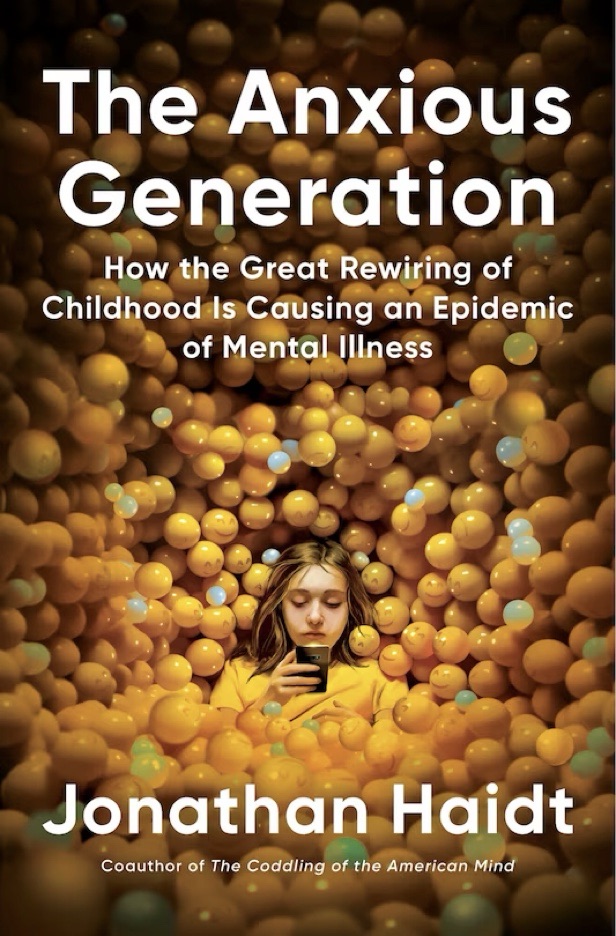
In this modern book, the New York University psychology professor makes a very convincing, but dry, very scholarly erudite case for limiting youngsters access to the internet while increasing their exposure to risks in nature and the outdoors. He calls the problem of excessive personal use of smart phones and the internet “the great Rewiring” and shows the deeply disturbing effects on the mental health of teenagers, particularly girls. An atheist, he nevertheless recommends the practice of meditation, developing a sense of awe at the wonders of nature, and then comes up with suggestions for how governments, schools, and parents can lessen the impact on vulnerable youths.
Replete with graphs and theoretical concepts, he provides a point form “In Sum” at the end of each of the detailed 13 chapters that is a good summary of points made in the chapter for those readers who do not want or don’t have the time to read the entire book.
The most specific recommendations include prohibiting social media accounts before age 16, banning use of phones completely in schools, and allowing and encouraging more face-to-face interactions and “free-range” group activities without adult supervision, including more risk-taking.
“…we are overprotecting our children in the real world while under-protecting them online.”
“The advertising-driven business model turns users into the product, to be hooked and reeled in.”
There is considerable overlap with the content of Leonard Sax’s Why Gender Matters, in discussion of how boys and girls at various ages differ remarkably in use of social media.
As I read this, I recalled my very ´free range’, childhood and felt very fortunate, although at times we took risks that were pure madness, such as during spring breakup, riding down the swollen South Saugeen River on an ice flow from one bridge to the next one although none of us could swim.
Abundant good advice for parents, schools and politicians, much of this is common sense, which seems to be quite uncommon. It is also unnecessarily wordy and repetitive.
8/10
Thanks, Andra.

 The Passionate Reader