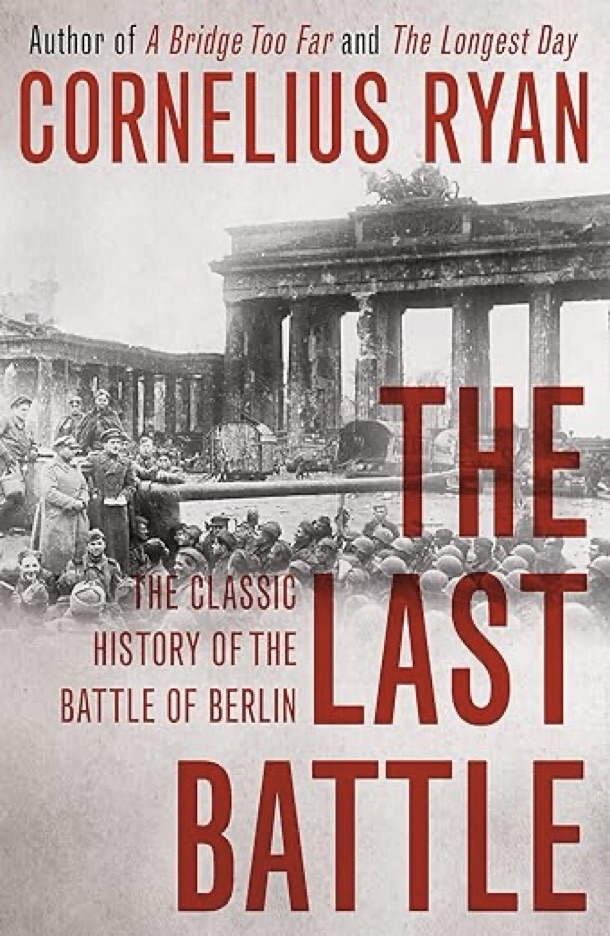
I am often intrigued by the choices of books that friends recommend to me. I know some who only read fiction, or science-fiction, or magic realism. And some refuse to read anything by female novelists, claiming that they are obsessed with sex. Others read mainly science and still others almost entirely confine their reading to religious texts, biographies, or history. If one uses the analogy of medical specialists and sub-specialists, I am a general practitioner; I like a variety of different genres, although I prefer good science writing to all others. This detailed old account of the last few battles of the European part of WWII which a good friend who gave me is certainly a history for a sub sub specialist, as befits a secret intelligence officer, but he gives me far more credit for knowledge of old European geology, history and politics than is warranted.
The late writer, an Irish/American war correspondent for the Reader’s Digest among other publications, seems to assume intricate and detailed knowledge of the geography of not just Germany but most of Europe. And he also must assume a familiarity with many military terms and strategies as they then existed if this book is to make any sense. Maps included are of limited help although there are also several pages of black-and-white photographs. Although many names such as Churchill, Montgomery, Roosevelt, Truman, Eisenhower, Stalin, Hitler, Goebels, Goering, Speer, and other top Nazi staff will be familiar to most readers of a certain age and education level, others such as the hundreds of top military leaders are less memorable. The list of names under What they do today at the end of the book occupies 20 pages of fine print and must include at least one thousand names. Yet when I looked for a couple of names that were prominent in the narrative, they were not there.
When everything you have believed in and strived for becomes unattainable, suicide may be an acceptable option. However, the forced killing of dozens and perhaps hundreds of their own children and infants by cyanide is inexcusable, but was carried out by many dedicated Nazis as the regime crumbled.
The author had access to many fighters, and leaders, with extensive interviews reviewing their war diaries and archives. The constant tension between the British/American forces and those of Russia in the effort to get to Berlin first is detailed and was one feature documented here that had lasting consequences.
I just got frustrated by endless detail and cannot recommend this book.
1.5/5
Thanks, Maurice.

 The Passionate Reader