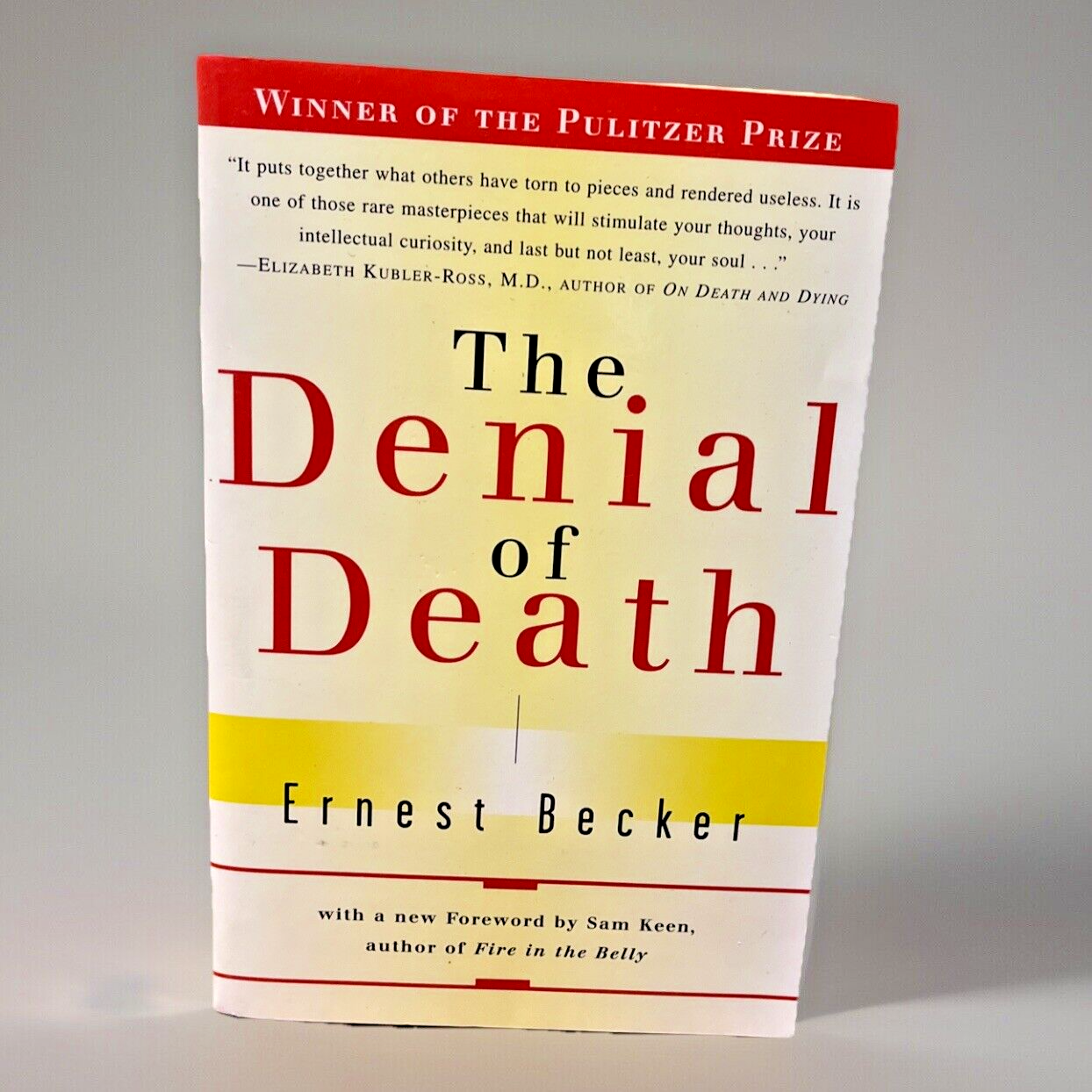
No one recommended this 1973 book to me. I bought it simply because it was referenced in so many books that I have read that I was curious as to its details. It was written by a late American cultural anthropologist. The 2023 edition I bought includes a lengthy preface by Brian Greene, the original Preface, and an Introduction.
A deep dive into classical Freudian psychoanalytic theory is combined with existential philosophy in the first chapters; the book was written when Freudian psychoanalysis was very popular. Then he argues that Kierkegaard’s theology, which I have never been able to fully understand, is psychoanalytic in nature.
The chapter on group psychology and transference is interesting but only peripherally related to the topic of the title. But it helped me to at least partially understand the psychological dynamics within the current Republican Party in the United States.
There is the statement that Freud claimed to have a secret death wish for his younger brother when he himself was only 19 months old. Perhaps not absurd to assert, but certainly absurd to believe.
Quoting a wide variety of supposed experts, the author waxes eloquent on an equally wide variety of subjects from loss of instincts in humans, and all kinds of mental illness including schizophrenia and sexual perversions. If there is a unifying theme, it must be his admiration for Freud. But to claim that this is science is almost laughable.
I hoped that this book would help me understand why many old folk undertake irrational enterprises such as starting a new business or taking up farming as though they believed they personally would never die, in spite of all the evidence around them. And there is a lot of discussion of the fear of dying, but little about the actual denial of the inevitable.
Some quotes may help you understand the opaque vagueness of this book.
“ Schizophrenia is the limiting test case for the theory of character and reality: the failure to build the defendable character defences allows the true nature of reality to appear to man.”
“…what was need was a framework into which to put the corpus of psychoanalytic insight, so that the truth of it could emerge clearly and unambiguously, free of the 19th century reductionism, instinctivism, and biologism that Freud fettered it with.”
This book won the Pulitzer Prize in 1974, so many readers must have appreciated it. But for this reader, it was just wordy, dry, profoundly confusing, and dissapointing. I only persisted because I bought it rather than borrowing it and I hoped to find some gem that I could quote and failed.
1.0/5

 The Passionate Reader