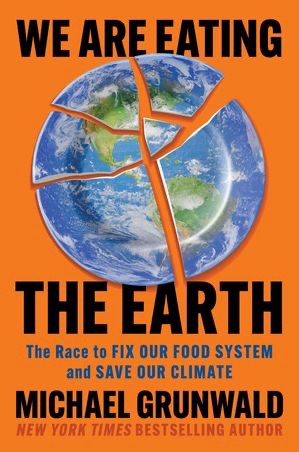
This book by a peripatetic Miami journalist is by far the most informative nonfiction that I have read this year so far. Wide-ranging and scholarly, (31 pages of Notes and Index) he traces the. dismal history of the environmental movement from its beginnings to 2025. Much of it concerns the work of the brilliant and abrasive Princeton enviromental lawyer, Tim Searchinger, and his frequently counter-intuitive but factual science.
The farm subsides throughout the world are thoroughly trashed as is the biofuel industry. There is throughout detailed science that includes the regenerative farming movement with all of its limitations, and the start-ups that include genetically modified crops, vegan fads, meat substitutes derived from meat or plants, fertilizers, deforestation, methane production from belching and farting cattle and efforts to scientifically increase the efficiency of photosynthesis.
The perspective is global and although the science is erudite, most of it should be understandable by anyone with a high school education.
I occasionally volunteer at a small ecofriendly regenerative farm and was a bit surprised by the limited impact he claims this movement could have, but the science seems irrefutable. That land is not free is a recurring theme, making efforts to increase yields of crops mandatory, while decreasing farm acreage and increasing forested land cover.
«The key, as always, will be to get the incentives right- so farmers can make more money, by making more food with less land: forests are worth more standing, and storing carbon than logged and burned… »
Much of the book seems like a doom and gloom documentary, but he ends up with some optimism and a plea for each of us to do our part.
5/5
Thanks, Book Browse.

 The Passionate Reader
think you mean subsidies, not subsides, in second paragraph
LikeLike
Your right, but I
LikeLike