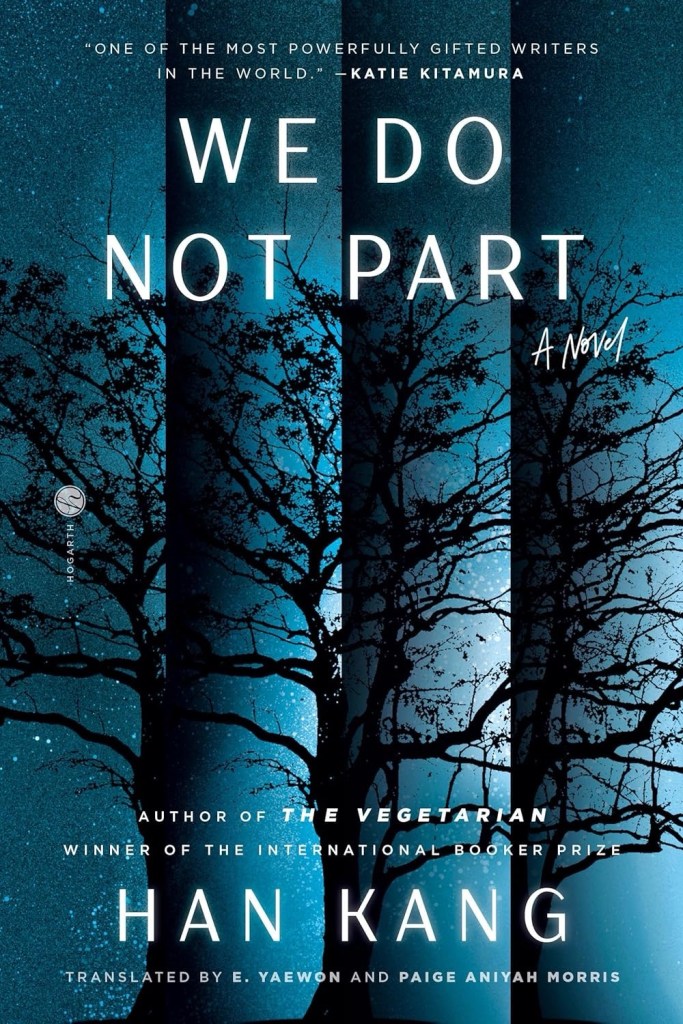
At an unspecified modern time, a female film photographer/carpenter from the southern Korean island of Jeju and an artist from Seoul work together and become fast friends. With a shared interest in a past massacre that is kept secret, they plan to memorialize it.
Snow becomes a symbol of burial and forgetting and everything about snowflakes is discussed in great detail from their intricate geometry, their chemistry, their gravity and their ethereal and ephemeral nature as they hit the earth and melt. Other white objects also feature prominently, including two talking parakeets, one of which dies, is buried, and then magically reappears.
It gets very confusing and difficult to distinguish reality from the tortuous dreams and nightmares of the principal characters.
There must be some reality to the largely forgotten random mass killings and torture of up to 100,000 citizens of Korea just before, during and for thirty years following the Korean War, under a dictatorship, for suspected communist leanings, with mass graves in a deep cobalt mine and under the runway of an airport.
There may be reluctance to pan the book of a Nobel prize writer and critics have described this one with such meaningless adjectives as ‘astounding’ and ‘profound’ but my adjectives to describe it are ‘confusing’ and ‘disjointed’.
2/5
Thanks, The Economist.

 The Passionate Reader