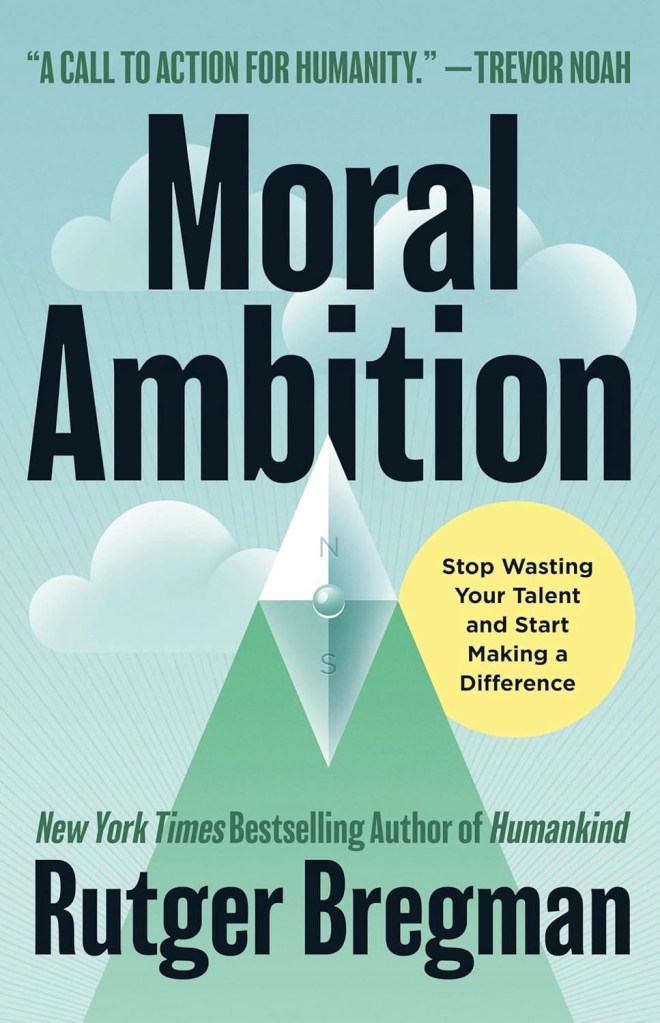
This Dutch historian relates the stories of many forgotten altruistic individuals and some that are well-known. They include a Dutch resistance fighter in WWII, August Landmaster, Ralph Nader, Rosa Parks, the Quakers, suffragettes, and abolitionists like, Oludah Equiano, Martin Luther King Jr., and Wilberforce, Rob Mather of The World against Malaria Foundation, and Peter Singer the famous Princeton philosopher. What they seem to usually, but not always have in common is some sacrifice of lustrous careers to pursue altruistic goals that have had a greater impact with recruitment of others to multiply their effect. The author implores others to do likewise.
Those goals include fighting climate change, (Ronald Reagan had the solar panels on the White House roof, installed by Jimmy Carter, removed) ensuring food security, abolishing slavery, reducing racism, allowing women to vote. Also included is increasing protection from bioweapons, and reducing the risk of nuclear war. Beatrice Finn won the Nobel prize for her efforts against nuclear weapons, while Andy Weaver documented disassembly of nuclear weapons in a former Soviet republic.
Developing nuclear fusion and alternative energy sources, and guarding against runaway AI are also mentioned.
The emphasis in health care is on prevention rather than care with things like new vaccines and antimalarial nets. To that end, Doctors Without Borders, my favourite charity, is downplayed, but it seems to me that both prevention and treatment are desperately needed.
I was surprised that Bill Gates is not mentioned and that Peter Thiel is included. I don’t think there is anything remotely admirable or altruistic about the latter. Some of the projects mentioned seem off the wall, such as space ladders and colonizing Mars, -too far out of the box for me.
The author alludes to some PDF files that of course are not included in the audio version.
A good read with lots of readily understandable information and an interesting perspective.
4/5

 The Passionate Reader