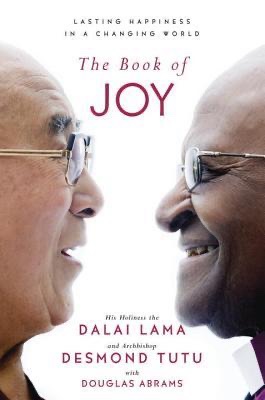
It is hard to assign a genre to this book or even a primary author. Although Douglas Abrams organized it, much of the text is just conversations between the late Archbishop Desmond Tutu, and the Dalhi Lama, the leaders he, an American Jewish journalist and film maker, brought together over a week, in a remote part of India.
There are endless, aphorisms and self -evident common sense truths about suffering, compassion, looking beyond oneself and generosity, and development of mental immunity to suffering. The commonalities of Buddhism and at least parts of Christianity are emphasized. The remarkable Anthony Ray Hinton, who wrote The Sun Does Shine, a wonderful story about forgiveness after spending 39 years on death row for a crime he did not commit is quoted at some length.
I greatly admire both men for their intelligence, altruism and idealism. But I have some criticisms as well. Popular psychology and neuroscience is detailed when it strengthens their argument, but ignored in other places, such as when they perpetuate the myth that stomach ulcers are caused by stress. There is no acknowegement that at least 95 % of adult worldwide religious beliefs originate in childhood indoctrination, not in universal truths. Richard Dawkins has called this the worst form of child abuse. And there seems to be the tacit assumption that the mind is separate from the brain, and enters some kind of nirvana or heaven at the time of bodily death, with no evidence.
Much as I would like to believe in the power of prayer, and the benefits of Buddhist meditation, I am skeptical of both.
This book is unnecessarily long, ethereal, nebulous and idealistic.
3/5
Thanks, Din.
Thanks, Din.

 The Passionate Reader