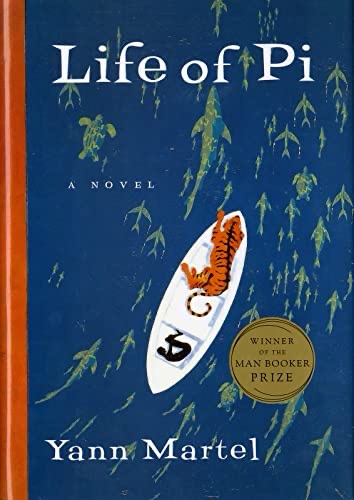
In this novel, by an Indian/Canadian, a man named Piscene Molitor Patel, shortened to Pi, is the son of the zoo owner in Pondecherry India. At age 16, he becomes a radical, espousing Hinduism, Islam, and Christianity, practicing elements of each, and discussing their commonalities in a rambling discourse on philosophy.
When the zoo closes, the whole family with a host of animals board a Japanese cargo ship called Timitsum bound for zoos in North America. But the boat sinks and Pi as well as his mother, an Orang-outan, a lion, an hyena, rats and a Bengali tiger named Richard Parker are stranded together in a life boat for 227 days in the mid Pacific. This is where the first person singular narrative becomes fancifull and unrealistic, sometimes following Pi’s apparent hallucinations, but it still informative with insights about the nature of nature and of wild animals. Eventually only starving Pi and the weakened, but trained Bengali tiger reach Mexico.
The highly unlikely survival tale with confusing ploys to conserve water, construct a hand-crafted primitive raft and avoid being eaten by the tiger may turn readers off, but I found enough surprising insights in it to keep me engaged.
Although this was made into Hollywood motion picture and was the winner of the Booker Prize in 2002, I put little faith in either of these accomplishments.
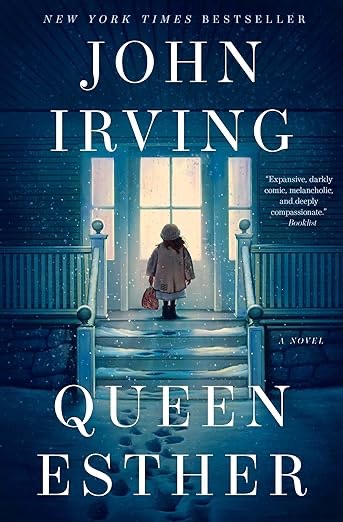
This American/Canadian writer now 84, needs no introduction to most avid readers. I loved one of his books and hated others. This is his latest.
A free floating stream of consciousness is woven into the long history of the Jews, the Holocaust, the longstanding pettish biases of New Englanders and wars, the history and pros and cons of circucision, and a host of other topics, in an almost schizophrenic narrative.
A married school teacher and a librarian in a fictional town in New Hampshire in the post Civil War period, ruminate endlessly about who to adopt next from an orphanage, already having several children. They shun any religious institutions, or any from Maine, and support the right to abortions. Then the narrative switches to the 1940s and beyond. There are so many characters that it is impossible to keep track of all of them. By half way through, I was totally lost. It seems as though the author is determined to show off his impressive knowledge of a wide variety of subjects, including the languages and geography of Austria, the techniques of wrestlers, and the details and hidden meanings in old Hollywood classics.
The queen Esther of the title is really a minor character in much of the book, although the surrogate mother of the much more prominent character, Jimmy Winslow. As usual with Irving, sex is a dominant theme, with Jimmy trying to find a suitable mate to marry and procreate with among the amoral women of Vienna and thereby avoid being drafted into the army and sent to Vietnam.
In my opinion, this book is far inferior to Last Night in Twisted River, and almost as bad as The Last Chairlift. Not recommended.
This late Australian/American wrote this personal memoir largely about the abuse of herself and many others at the hands of her father, and the late Jeffery Epstein. His partner in crime, Ghislane Maxwell first lured the author while she was a minor into the sex trade at Mar a Lago. As such it is very current and controversial, with Prince Andrew also implicated. But it is also agonizingly detailed and tragic, describing the vast network of powerful men with their wealth used to silence their many victims. And it is doubly tragic as the emotional scars inflicted on her lead to her suicide last year.
The shamelessness and endless use of legal professionals to cover up the sex crimes of the rich and famous raises questions about the morality of the whole legal profession as well, as they willingly and knowingly tell what are clearly lies, in smear campaigns to discredit victims.
I have little sympathy for most of those who want to live a life as victims, wallowing in self-pity, but this is a clear exception. Her heroic efforts to expose the perpetrators of these heinous crimes deserve the highest praise.
For me, the book raises troubling questions about the whole fashion and modelling industry, which still portrays women as needing to be physically beautiful to please men rather than to be themselves.
This is deeply troubling read about a brave, troubled devoted soul that exposes a pervasive social evil of our times. Not at all fun to read, but important.
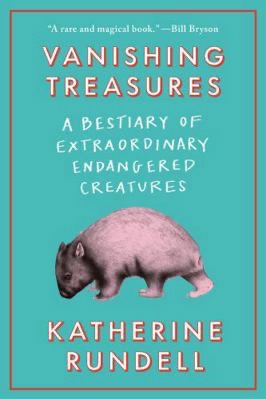
This Oxford scholar of everything living was previously unknown to me, but when I got this small book, I consumed it in just 24 hours. She outlines the fascinating lives of 23 species or subspecies that are endangered, usually nearing extinction as a result of human activity including human beings. Some of this seems to be a stretch and her claim that there has been a 70 % decline of species in the last 50 years seems to me to me to be an exaggeration.
The species featured include the crow, the stork, the hermit crab, the tuna, the spider, the pangolin, the elephant, the giraffe, the wolf, and the bear. While some of these are certainly in danger in parts of the world or for some subspecies, I doubt that most of them will become extinct worldwide. There is an emphasis on the critical destructive role of habitat destruction and climate change.
There is extensive discussion of the role that these 23 species have played in folklore and mythology, some of it quite outrageous. But there are also fascinating little known facts of their unique life cycles and their interactions with Homo sapiens, most of it new to me and I am in awe of her vast knowledge. Highly recommended.
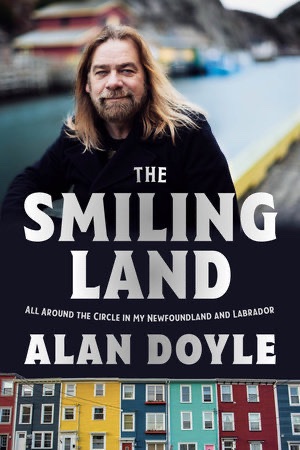
The well known Neufie and Great Big Sea band guitarist and singer waxes eloquent about the land he loves, i.e. Newfoundland and Labrador, as he takes the reader on a grand guided tour. This includes a lot of history that was new to me, and makes the Rock seem extremely attractive. I think the Newfoundland Tourism agency or whatever it’s name is should be rewarding him handsomely.
Anyone who has spent any time exploring the newest Canadian province will recognize some of the unusual features of this remarkable island and some of the places he features, but by no means all. Those who have not done so will want to after reading this book.
They do not take themselves too seriously and provide a remarkable often humourous perspective on life. Of Cape Spear the most easterly point in North America, he says « It is a great spot to whale watch or gaze out over the cityscape, especially on the three afternoons a year when it isn’t blowing a gale hard enough to take the braces off your teeth. »
The people are certainly unique- uniquely friendly and inviting in their own way, with a culture of acceptance and a language that goes back centuries. Their sporadic hard drinking seems almost forgivable. The history is also intriguing going back to before Columbus discovered America. Although I have been there several times and did a lengthy tour with McCarthy’s Party, I learned a lot more about this one-of-a-kind culture, geography, and people by reading this travelogue. A light and enjoyable read. Highly recommended.
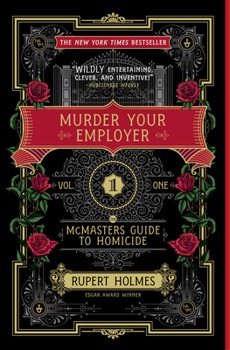
This is a droll account of how to “delete” your boss, by this well known Gloucestershire author, playwright, and photographer based on the experience of others who have attended his fictitious McMasters Conservatory. This is at an undisclosed location and sometime in the mid 2000’s; it masquerades as a 1200 acre Home for the Criminally Insane. What they really teach in the prison-like compound is how to “delete” anyone you want to be rid of, with recruitment in part from those who have made failed attempts. This comes complete with homework, tutorials, and residences, a fake chapel, and hospital, and students matriculate and write a thesis. No one escapes unless their deletion succeeds and is acceptable to the “faculty”.
Cliff Iverson is one such failure and is trapped by recruiters. After trying to escape, he becomes an ardent student, and “graduates” to become a successful “deletist.”
The thesis is preposterous but ingenious. Unfortunately the execution (pardon the pun) becomes convoluted with many layers of confusing and tortuous complications, but continues to be engaging and, while very unrealistic, is nevertheless entertaining, with many puns and double entendres.
One great quote among many: “If he ever did any soul searching, he’d find nobody home.”
Apparently, the author plans a follow-up featuring the same McMaster Conservatory. As good or better than any murder mystery writing, I will nevertheless take a pass on future editions as I only can stand murder mysteries in small doses.
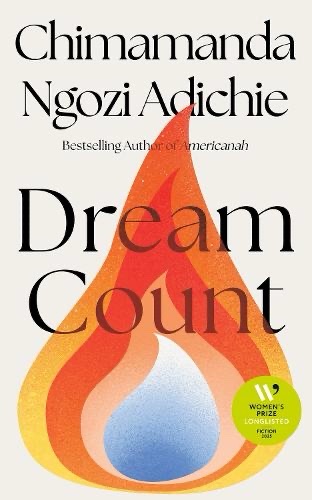
A friend, unlike me, has a penchant for discussing books that have won recognition with international prizes, whether or not he has read them. Such is the case for this book, which I am sure he has not read. I am not sure which of many literary prizes it won. But because of this, I struggled through it.
Four Nigerians, like the author, relate a complicated tale of their lives with far too many characters with foreign names to ever keep track of. They all are extremely insecure and questioning their self worth, trying to understand each other, and forever taking offense where none was intended. For example, traveling around the world, one rich corrupt banker involved in extensive money laundering, in graphic scenes beds many men, consumes huge amounts of whiskey, and claims to be a devout Catholic, attending Mass regularly, while bemoaning her unwed status. Another character, a hotel maid, is raped by a famous guest as a stand-in for the infamous Straus-Kahn case.
The complicated names of food items and the traditions of various tribes of Nigerians and Ghanaians is just too foreign to me to comprehend. Choppy and incoherent, the book does not come to a unifying end- it just stops, but not in time to avoid disappointing me.
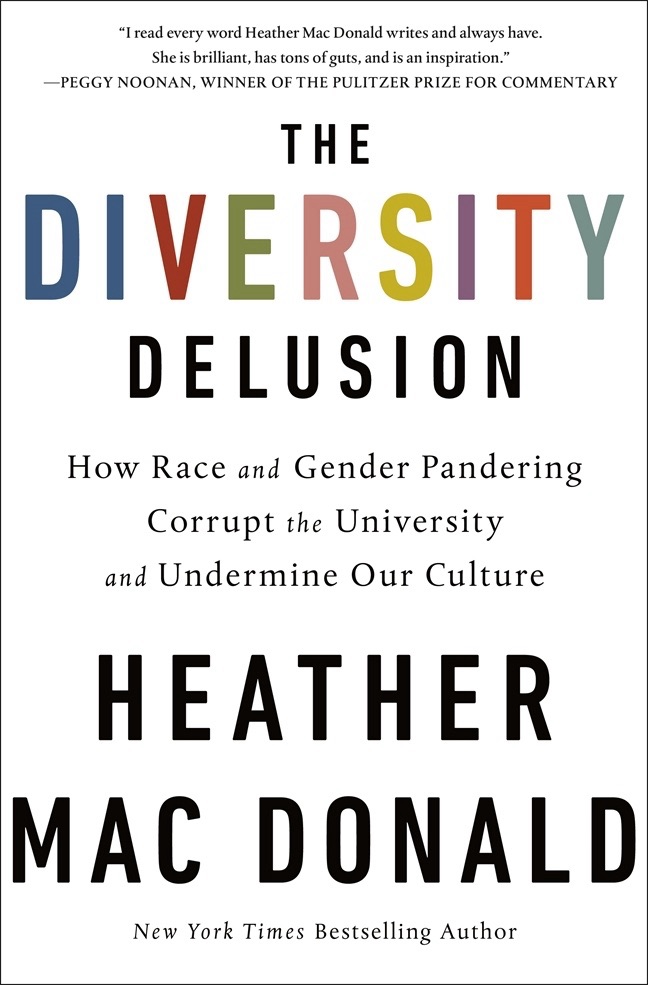
I picked this book up, abandoned in our mail room, and decided to read it even though it seemed unrelated to my situation.
This right wing New York writer and member of the Manhattan Institute seems to despise affirmative action in all of its dimensions as it applies to on-campus life in America. With abundant examples, she documents the negative effects of not just admissions policies, but of the whole process. Seemingly a vocal advocate for freedom of speech, she relates personal experiences where her scheduled lectures have been cancelled by student protests, with inadequate responses to those protests by administrators and police. The expenses of mandatory diversity and inclusion training in universities around the country at the expense of real science and humanities teaching is sarcastically exposed. There is a long section on the largely false peril of on campus sexual assault and rape and the need to teach about inclusion and tolerance of the many sexual categories of students which could be summed up simply as the need for tolerance.
There is much about this book that makes a lot of sense, and it is a counterweight to the popular narrative about prevalent victimhood. However, it is also entirely oriented to American culture and universities with limited application elsewhere. Perhaps most telling of her contradictory stand is that in spite of her advocacy for more teaching of classical music, language, and history she nowhere criticizes Trump, but castigates Obama’s policiesc in several places. To quote Shakespeare: “The lady doth protest too much, me thinks.”
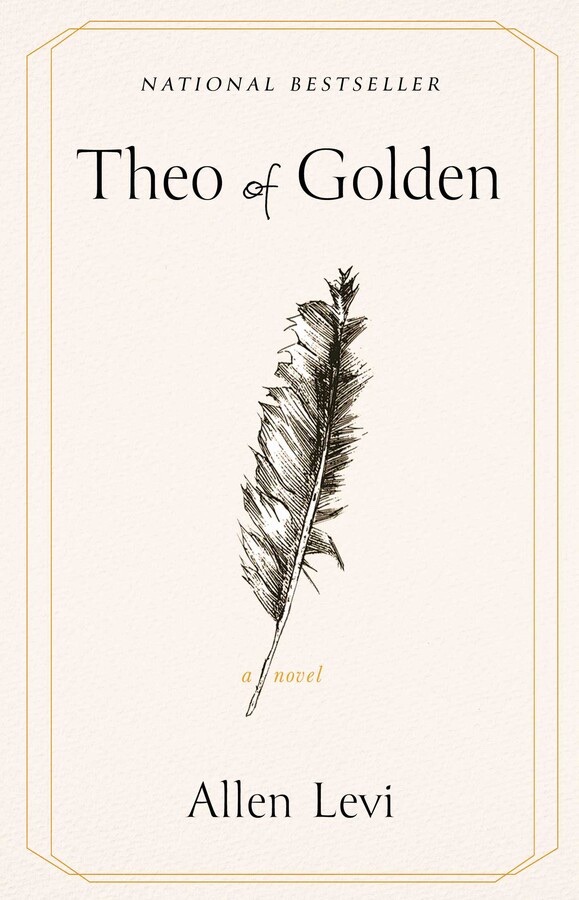
This is the delicious debut novel of a former attorney, judge, and musician from Georgia, U.S.A. From Portugal, obviously very wealthy, with connections around the world, it is unclear why Theo decides to spend a year in the mythical Golden when he is 87, in 2019, until late in the book. He is a total mystery, known only by his first name, an alias, buying up portraits by a local artist hung in a coffee shop, then bestowing them on the people portrayed. His is a connoisseur of fine art, concert music, and nature, seemingly able to detect all kinds of emotions in the eyes of the portraits and everywhere in nature. There is an ephemeral spirituality throughout but with emphasis on the beauty of this life rather than any next one.
I had him pegged as an ex-mob member turned religious fanatic, for much of the book, but could not be more wrong, as revealed in the ending. He seems to be too good to be true.
The character development and scenery of the locals is superb with many very colourful but realistic people and scenes. There is little violence, except for one character’s unparalleled description of his experiences in the Vietnam War , and no foul language nor graphic sex.
The writing is lyrical and engaging, reminding me of Amor Towe’s A Gentleman in Moscow, and it just as good as that one.
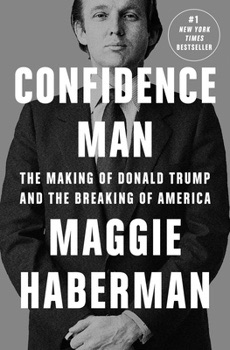
This New York Times reporter has followed Donald Trump’s life for most of its existence and researched carefully what came before her time. She documents in detail his crooked deals as a New York City developer, his misogynistic racist beliefs and his narcissistic all consuming hunger for power, with no consideration for the ordinary American or the law. Many direct quotes, often liberally laced with very foul epithets, testify to his short temper and intolerance of any dissent.
There are few surprises in this document other than the shallowness of his beliefs about such issues as abortion. What was a bit surprising to me was the number of people who seem quite willing to abandon any moral principle or pretence of adhering to the law just to be close to the power he craves, and the constant churn of personnel and infighting, in the chaotic White House.
After the first half, this book becomes a bit stale with ever more examples of the same frightening lack of democratic leadership, even if the details are new. It only covers the story up to the 2020 election and the storming of the Capitol, with vague hints that he would try again.
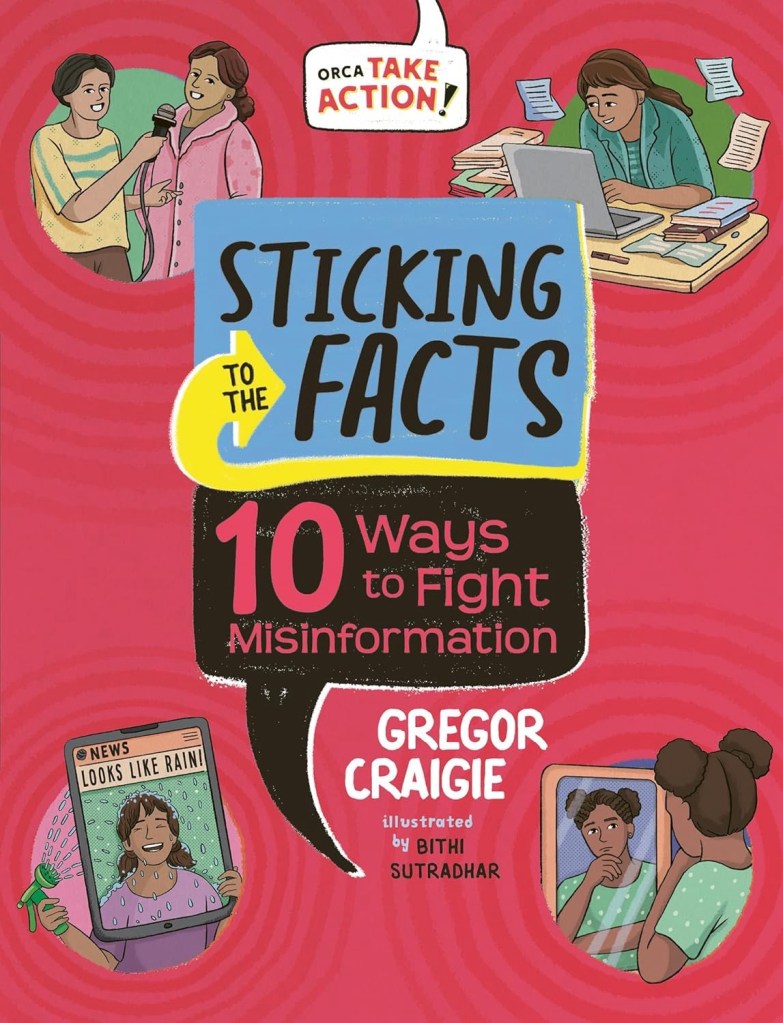
This British journalist has written this timely booklet targeting the relatively naive early teen or even preteen reader bombarded with information from various social media sites. Most of the advice would be considered to be basic common sense by sophisticated readers, but that seems to be a rare commodity on social media sites.
He distinguishes misinformation from the more dangerous disinformation designed to deceive, sometimes for nefarious purposes, and gives examples of both. And he distinguishes between healthy skepticism and more harmful cynicism.
A simple little book well worth sharing and discussing with any teen.
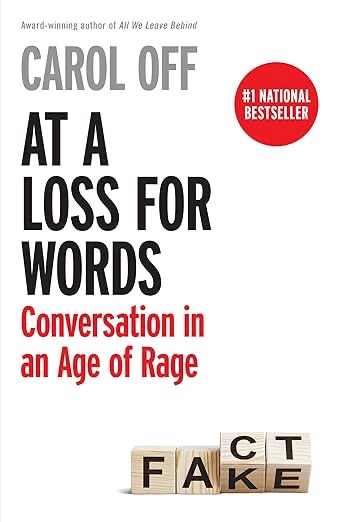
From the London, Ontario journalist, and longstanding host of CBC’s As It Happens, this is not what I exected when I borrowed it from the OPL. It s not mainly anecdotes from her interviews with many public figures, but a discourse on the power and meaning of six different words: Freedom, Democracy, Truth, Woke, Choice, and Taxes, and how those six words are used and distorted by autocrats and the rich and famous of the modern world to maintain their power.
Far ranging and detailed with examples from around the world, and with a very personal touch, she documents how would-be dictators use and abuse these words, changing their meaning, to maintain their status in politics and modern culture.
I will not spoil your reading by giving any specific examples, but this is a must- read book for anyone with interest in world affairs and even an iota of compassion for their fellow human beings, although a bit frightening. The rich and autocratic no doubt use their power to minimize her readership, but her message of tolerance for different viewpoints should be widely appreciated. I did not even find her message to be particularly left wing.
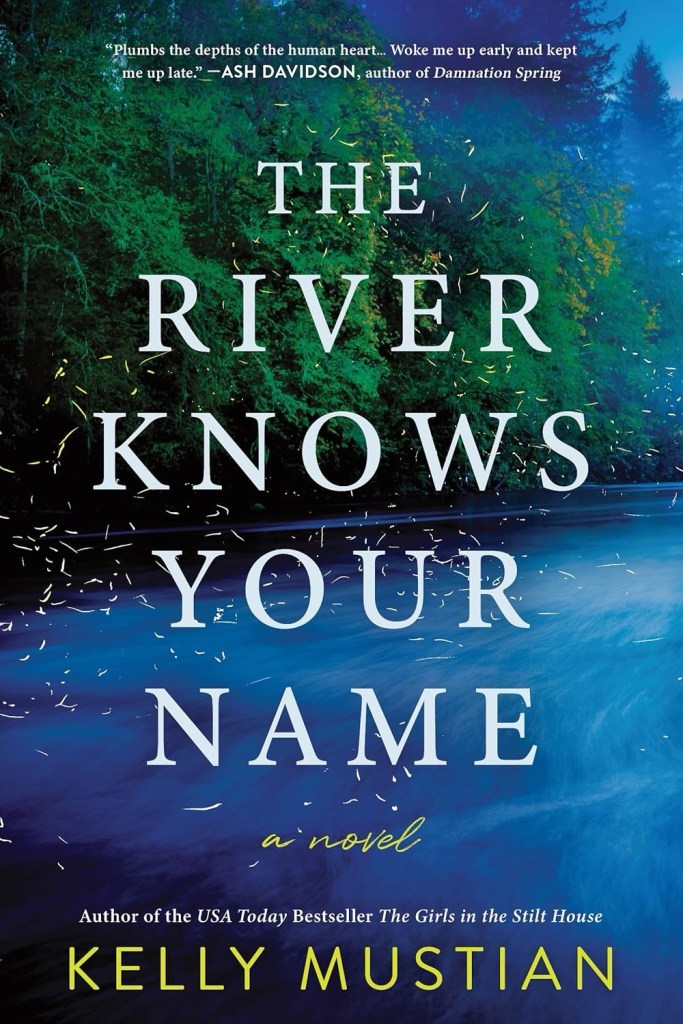
In various parts of Mississippi and the rural south, in the Great Depression era, and in alternating sections with many of the same characters 40 years later, a series of mysteries unfolds and conflicts arise in several families living in the small towns of this southern native author.
The somewhat overwrought theme of disputed paternity, divided loyalties and family secrets rears its head a lot resulting in fierce family fights, child custody battles and a kidnapping. And the ultimate mother-in-law from hell.
Too many characters to keep track of, mostly single mothers, too much emotional conflict, too much time shifting, and too many unexpected deaths spoiled this book for me. Although the Mississippi River is frequently visited, there is nothing to connect it to the title.
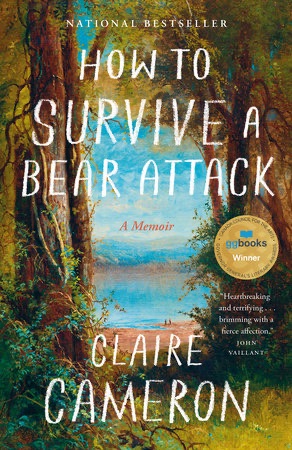
I don’t usually read books about how to do anything but this one came recommended by a reliable source.
This Toronto writer and outdoors person became obsessed with the fatal attack on two people in Algonquian Park in 1991 and mingles her investigation with autobiography in this memoir. With extensive experience and multiple contacts, she details the life of bears, moose and coyotes, with their imagined adventures, thoughts, fights, and musings. She attributes human-like thought processes to bears and shows great respect for their intelligence.
Along the way, mixed in, is her personal story of losing her father to cancer and dealing with melanoma herself. I can’t resist commenting on the common advice to avoid sun exposure to prevent the development of melanoma, when most melanomas develop in areas well covered by clothes, unlike the seldom-fatal squamous cell carcinoma , as I discussed in Medicine Outside the Box, and hers is associated with a genetic mutation. I suspect that her extensive efforts to avoid exposure to sunlight are unwarranted.
I have encountered black bears on many occasions, usually while fishing in Ontario’s backwoods and seldom felt threatened, always yielding territory at some distance.
The writing flows smoothly but sometimes deviates to unrelated reflections on life more generically, but is a good education for anyone interested in an outdoor life.
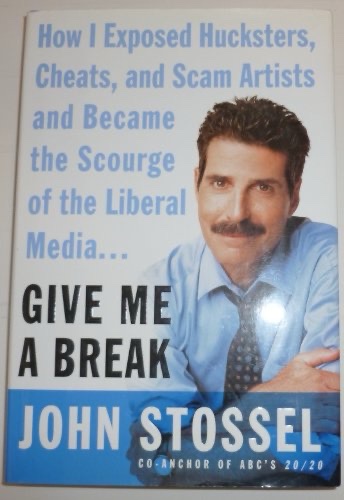
This somewhat outdated screed by a former libertarian New York T.V. host and investigative reporter on ABC’s 20/20 program provides an obviously slanted view of government regulations, that is nevertheless an interesting thought-provoking read. I found it abandoned in our mail room.
He quotes another controversial conservative figure of the same era on climate science, that of Patrick Moore, who wrote Confessions of a Greenpeace Dropout, that I reviewed a week ago. If I am not careful to balance my reading, I may be in danger of becoming a conservative!
The victim mentality comes in for particular scorn. I have some sympathy for this as I was once shown out of a hepatitis C meeting when I pointed out the folly of paying people to be ill. He points out the equal folly of FEMA’s federal flood insurance, saying it is like giving a drunk a new car when he wrecks his.
Amir Raz’s The Suggesible Brain, is an interesting counterbalance as he shows how easily we can deceive ourselves.
It is very easy to point out government overreach and senseless or even contradictory regulation. However, he takes equal delight in exposing the prevalent scamming of the public via promotion of useless cures, deceitful advertising, and monopolies, without ever acknowledging that these widespread practices are the inevitable consequences of the free market economy that he enthusiastically promotes. I am concerned that he is after all, a T.V. broadcaster without any specific training in economics. I am anxious to learn what my Ph.D. economics professor daughter thinks of this book. In the interim, I am giving it a generous
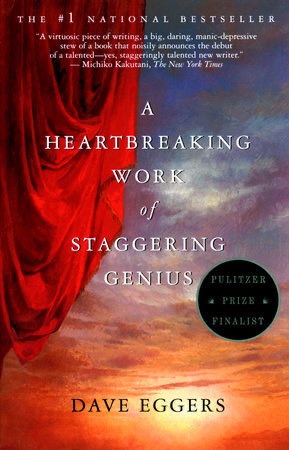
If this is, as stated, a fictionalized memoir by the San Francisco writer, it covers only about seven years of his youth, and the the best word for its first person singular narrative is bizarre.
Both midwest parents die of cancer within five weeks when the narrator is nineteen and he is left to care for his seven year old brother in California, with some help from his older sister. The title seems to be a mockery of the resultant chaos, mostly based in the 1990s.
There a few page-long sentences, and far to much vulgar language with up to ten F words with exclamation marks on some pages. The 70 page interview questions and answers as he applies for a role on a MTV’s series is disjointed and a bit silly. The chapter in which he and other hippies try to make a go of a radical magazine they call Might is no better.
The fanciful dreamy imaginings of the future for the author are very unrealistic, and his fears seem schizophrenic and make no sense: “I feel wretched much of the time, know in my heart that because I do not make him breakfast and drive him to school, he will grow up to skin rabbits, and recreate with crossbows and paint guns.”
The chapter planning the faked death of a movie star to mock the meaning of fame and celebrity does raise interesting questions about why people seek fame and influence even as the author is doing so himself at the expense of the said star.
I often fail to understand what others find appealing in books, especially some influential reviewers. This is no exception. Don’t waste your time on it.
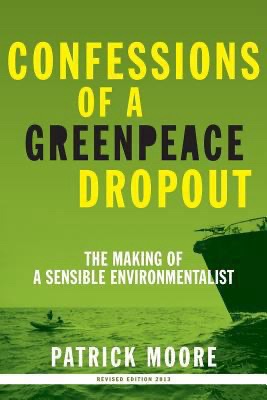
My wife picked up this abandoned dated autobiography by a controversial Vancouver environmentalist who split with Greenpeace in 1986 only to join the Fraser Institute, a well-known right-wing think tank. This led me to be careful about some of his assertions, although he is very scholarly, and convincing. However, my skepticism was reinforced when I read Rudy Juliani’s endorsement of him and some assertions such as that solar panels are ten times more costly than nuclear power plants or hydroelectric dams in producing electricity, even with the concrete needed to produce the latter.
He left Greenpeace, acrimoniously, as it had morphed into a very unstructured protest for the sake of protest movement incompatible with his very erudite approach, with a Ph.D. in ecology.
The 30-page vigorous defence of fish farming in chapter 12 is very convincing as a sustainable form of development but then I was already a fan, and he became heavily invested in this industry. But some of his scathing remarks about opponents in Greenpeace including some of his previous collegues seem unnecessarily harsh.
His defence of the diverse B.C. forest industry is a little less convincing, but still powerful. His comments about the limitations of solar electricity, such as « it will take between 45 and 290 years to pay for these systems » and «It doesn’t take a genius to realize that solar power is a waste of good money on the grid” have been proven dramatically wrong since this book was written as now they produce electricity cheaper than coal does and account for 99% of the increase of electricity production and start to provide profits for installers within 2 to 5 years in most areas, albeit with variable small rebates of installation costs from governments. The owners of our large apartment complex recently installed blanket solar panels on the roofs of 3/5 buildings and they are certainly not naive about finances.
The same lack of foresight applies to his scornful predictions of the demise of wind power, and his enthusiasm for hydroelectric power generation ignores the cost of building and repairing dams, and the initial human displacement. His long and very detailed defence of nuclear power is very educational and insightful. Less compelling is his half-hearted endorsement of Alberta’s oil sands, often denigrated as tar sands.
With his obvious love of iconoclastic bombast, it is not surprising that he advocates for liberal use if inorganic fertilizers, insecticides and pesticides, although the ecological farm where I volunteer avoids these and produces abundant delicious crops. They claim to match production by industrial farms on a per acre basis, if one avoids the very wasteful use of the products by feeding livestock.
His vigorous defence of genetically modified crops is spot on although perhaps a bit exaggerated with no acknowledgement of the corporate interests involved.
The long penultimate chapter on climate change left me confused. On one hand he seems to think that carbon emissions have little to do with atmospheric warming and welcomes global warming, and on the other hand does advocate for alternatives to nonrenewable resources like coal, favouring hydroelectric and nuclear sources for power.
I admire his far-ranging knowledge, but throughout the book there is more than a whiff of smug self-congratulatory arrogance with no thought that he could ever possibly be wrong, as some developments since the book was written have proven.
I am often surprised by the variety of book tastes among friends as revealed by the books they recommend to me. So I should have been cautious about this one as another one recommended by the same unnamed person was a big disappointment. But I am a slow learner. I do know that when one very bright acquaintance recommends a book, I can ignore it because it is always science fiction, a genre I generally dislike.
In this Vancouver- based novel, the home town of the author, three very different people reach the end of their tolerance and snap, producing criminal acts of anger all caught on tape, with career-limiting consequences. As an alternative to criminal charges, they are ordered to perform community service under strict supervision. The plot gets much more complex, with many other colourful characters, and a lot of bed-hopping, but in the end all three are redeemed.
The writing is not particularly inspired but the author does have a vivid imagination. I thought at least one of the characters who snapped should not realistically have been charged with a criminal offence.
This autobiography of a North Carolina neurosurgeon, includes long sections on his struggles with alcohol, with finding his adoptive parents, and his doubts about a loving God, that have little to do with the presence or absence of an afterlife. Out of hand, unlike many brain scientists, he dismisses any idea that free will does not exist- that our thoughts and actions are all simply neurochemistry at work.
On several fronts the author claims to have had a unique experience, including the near death experience, although it seems the only truly unique aspect was its cause and its duration- a rare E. coli bacterial meningitis, lasting a week. Others may have had similar experiences and chosen not to write a very profitable book about it. And he uses his knowledge and experience as a neurosurgeon to claim unique powers of insight, invoking quantum physics and the power of meditation techniques to lead to the only possible conclusion he sees about the universe- that there is a heaven.
I am not convinced. Like the old Scottish verdict “guilt not proven” in this case “existence not proven” the assertion leaves many questions unanswered. If there is a heaven, must there not also be a hell? The existence of some out of body ethereal experience when one’s brain ceases to function transiently is richly documented by many, but to conclude that it is eternal, outside of time, is altogether speculative.
It must be very comforting to be sure one is bound for heaven, but to me it is impossible to be certain. And in some ways, living with uncertainty actually seems preferable.
This is the second book with the same title that to me proves nothing. But maybe that just shows my own biases.
This edition was published in 1967 ten years or so after the first of several movie adaptations of the old classic story by the American novelist. I found it on my book shelf but I am not sure how it got there, and I realized I had not read it. I will not be seeing any movie with this story.
The preparation for a whaling trip out of Sag Harbour and Nantucket, takes up a quarter of the book as the narrator, Ishmael, outlines his reasons for joining the three year expedition on the Pequoid in search of valuable sperm whales for their oil, used mainly for lighting. The Viking invention of the crows nest outlook post and the myth of Jonah is included. The narrator is Ishmael throughout and women are barely mentioned.
Moby Dick, the unique white albino whale that has already removed one of Captain Ahab’s legs on a precious encounter, is introduced first only on page 176, and not seen again until thirty pages from the end. Captain Ahab’s obsession with getting revenge makes him miserable and angry. This reminded me of the great science book The Science of Revenge, even though in this case the perpetrator is nonhuman.
Of the 135 chapters there are several of utter gibberish uttered by sailors of different nationalities, that to me seem to have nothing to do with whaling or even sailing and containing far too many exclamation marks. There are many full page sentences. For example there ten dense pages of musing about the meaning of whiteness in history and cultures, written in old English.
Ahab’s single-minded determination to get revenge on Moby Dick, even as he walks with the assistance of whale bone prosthesis, eventually removed by Moby Dick results in his demise along with all of the mottled crew of the Pequot except for Ishmael, the narrator of this dreamy unrealistic tale.
One quote worth pondering: There are certain queer times and occasions in this strange mixed affair we call life when a man takes this whole universe for a practical joke, though the wit thereof he dimly discerns, and more than suspects that the joke is at nobody’s expense but his own.”
I’ll admit to learning a lot about the ancient whaling industry, the anatomy of the differing species, the reproduction of whales, and primitive navigation at sea but that does not adequately compensate for the many pages of utter unrealistic nonsense in old English.

 The Passionate Reader